
Monday, November 9, 2026Nov 9

Cocaine air corridor zips past Peru’s military

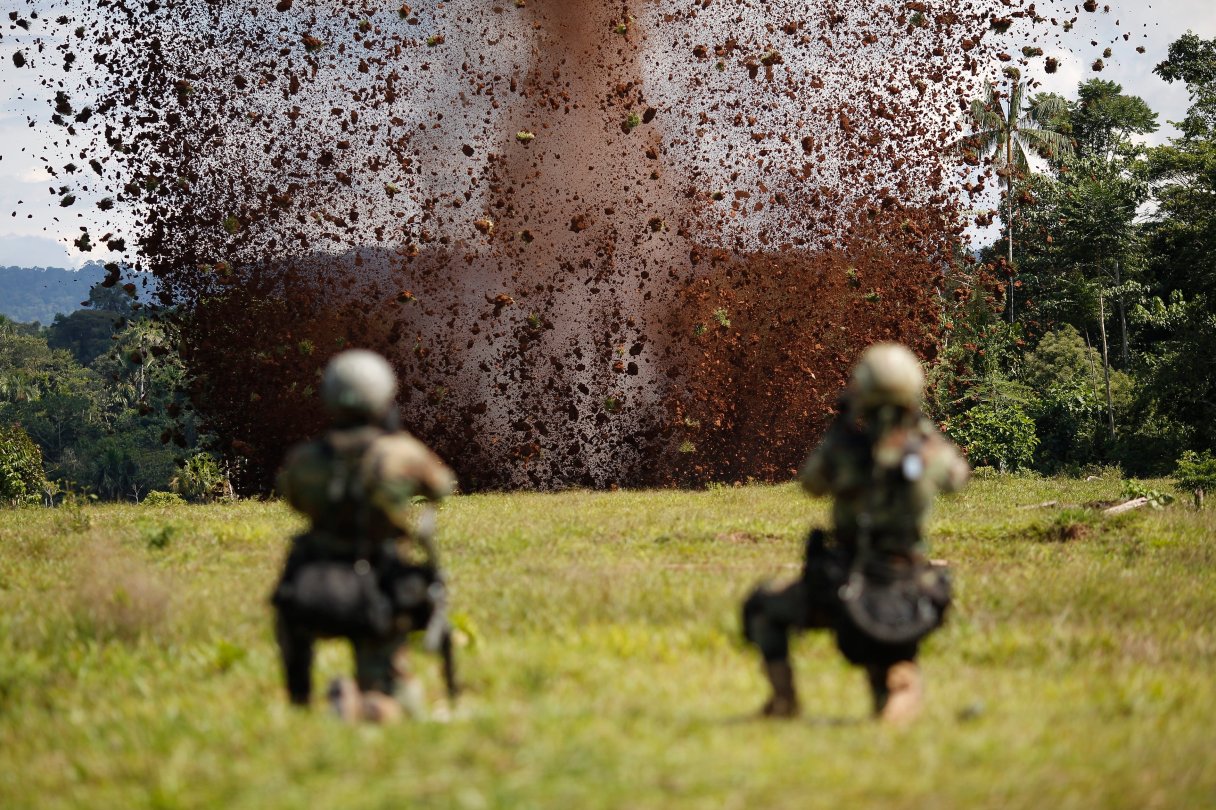
In this July 28, 2015 photo, Peruvian counternarcotics police blast a hole in a clandestine airstrip used by cocaine traffickers in Ciudad Constitucion, Peru. President Ollanta Humala points to the cratering of these landing strips more than 550 times as part of the country's success against the drug trade. Traffickers quickly fill the holes using local labor, police say.(AP Photo/Rodrigo Abd)
In this July 28, 2015 photo, Peruvian counternarcotics police blast a hole in a clandestine airstrip used by cocaine traffickers in Ciudad Constitucion, Peru. President Ollanta Humala points to the cratering of these landing strips more than 550 times as part of the country's success against the drug trade. Traffickers quickly fill the holes using local labor, police say.(AP Photo/Rodrigo Abd) In this July 28, 2015 photo, Peruvian counternarcotics police blast a hole in a clandestine airstrip used by cocaine traffickers in Ciudad Constitucion, Peru. President Ollanta Humala points to the cratering of these landing strips more than 550 times as part of the country's success against the drug trade. Traffickers quickly fill the holes using local labor, police say.(AP Photo/Rodrigo Abd)

MAZAMARI, Peru (AP) – Small planes are hauling more than a ton of cocaine a day out of remote jungles that have become the world’s No. 1 coca-producing region and Peru’s military has turned a blind eye, an Associated Press investigation has found.

Drug corruption is rife across Peruvian institutions.

But the narco-flight plague exposes the armed forces’ drug-war failure because the military controls the valley, from which Bolivia-bound flights stepped up in tempo in 2012, according to prosecutors, drug police, former military officers and current and former U.S. drug agents.

In part because of the nearly unimpeded “air bridge” from the Apurimac, Ene and Mantaro river valley, Peru surpassed Colombia in 2012 as the world’s No. 1 cocaine exporter and police say the airborne flow accounts for roughly half of its production, with each planeload worth at least $7.2 million overseas.

The trafficking got so brazen that congress voted unanimously in August to authorize shooting down the single-engine planes.