
Sunday, November 15, 2026Nov 15

Q&A: The ruckus over Japan’s military legislation

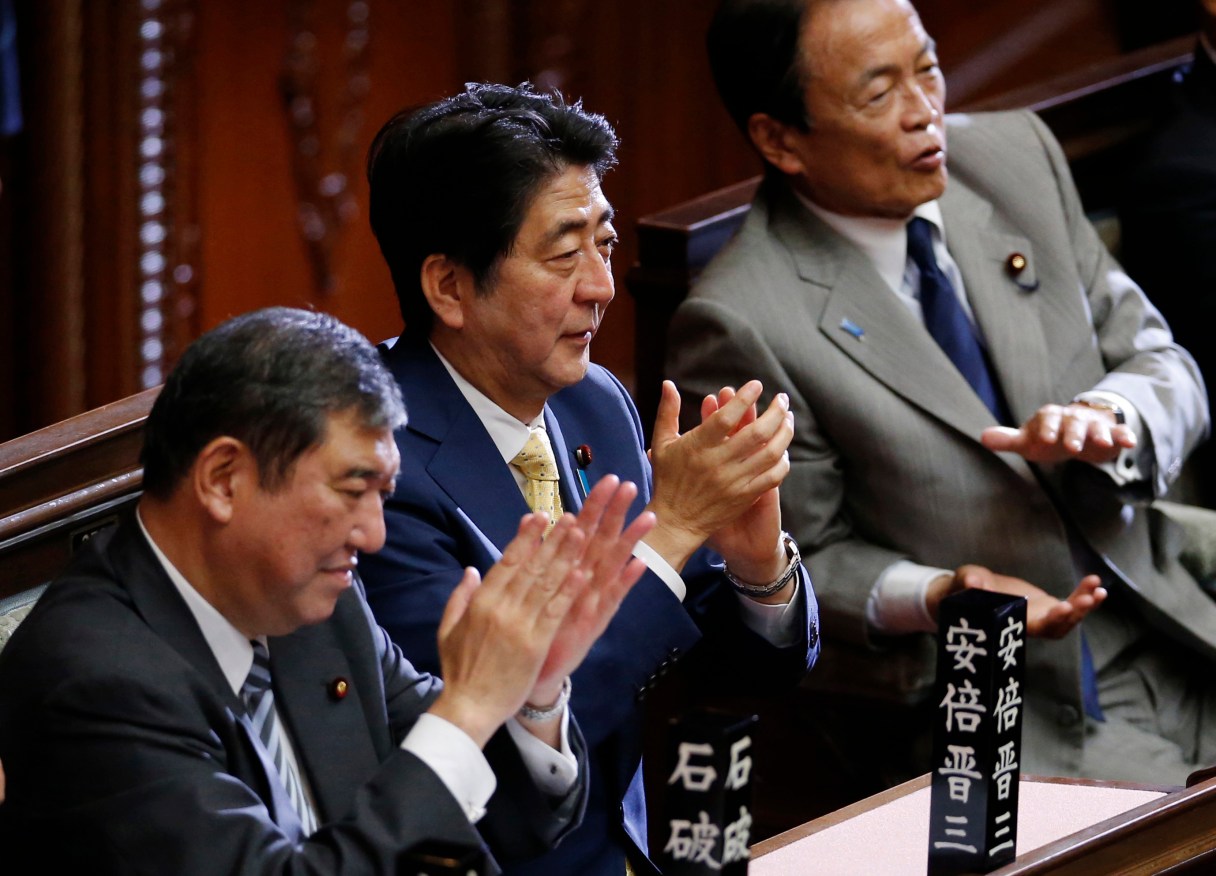
Japanese Prime Minister Shinzo Abe, center, claps hands during a plenary session at the lower house in Tokyo, Thursday, July 16, 2015.  Japan's lower house of parliament on Thursday approved legislation that would allow an expanded role for the nation's military in a vote boycotted by the opposition. Finance Minister Taro Aso is at right.  Shigeru Ishiba, the minister for Vitalizing Local Economy in Japan is seen at left.(AP Photo/Shuji Kajiyama)
Japanese Prime Minister Shinzo Abe, center, claps hands during a plenary session at the lower house in Tokyo, Thursday, July 16, 2015. Japan's lower house of parliament on Thursday approved legislation that would allow an expanded role for the nation's military in a vote boycotted by the opposition. Finance Minister Taro Aso is at right. Shigeru Ishiba, the minister for Vitalizing Local Economy in Japan is seen at left.(AP Photo/Shuji Kajiyama)

TOKYO (AP) – The opposition walked out before the vote, and thousands of protesters took to the streets the previous night, but none of that stopped Japan’s lower house of parliament from approving a contentious set of bills Thursday to allow a greater role for the country’s military.

A look at what the controversy is about:

___

HOW WOULD IT CHANGE JAPAN’S MILITARY ROLE?

Japan’s military, called the Self-Defense Forces, is restricted by a post-World War II pacifist constitution to defending itself and the country. The biggest change would allow the Self-Defense Forces to defend allies that come under attack, under a concept known as collective self-defense – which previous governments have considered unconstitutional.