
Friday, October 30, 2026Oct 30

This story is free to read.

Austrian panel recommends no return of Klimt masterpiece

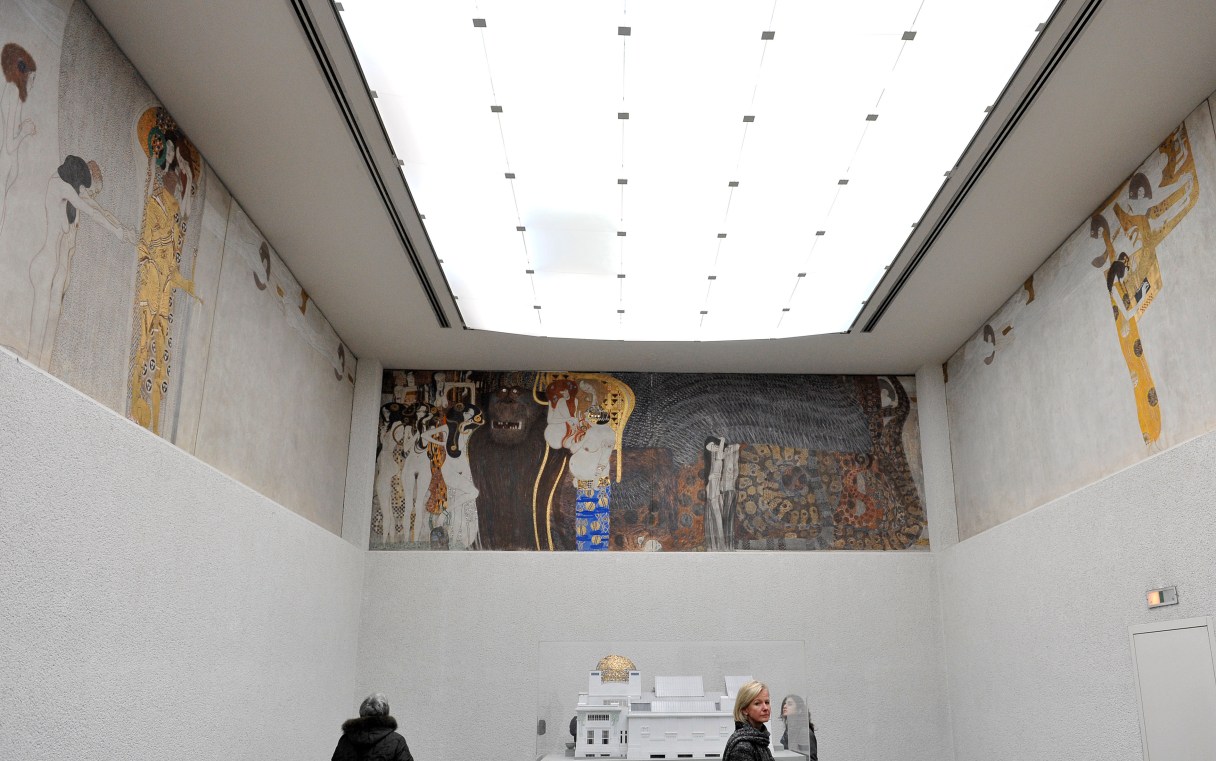
This photo taken Tuesday, Nov. 12, 2013 shows Gustav Klimt's Beethoven Frieze at the Secession gallery in Vienna, Austria. An Austrian panel has ruled against returning one of the country’s most stunning works of art to heirs of the original Jewish owner, Friday, March 6, 2015. The monumental  “Beethoven Frieze” is being claimed by heirs of Erich Lederer. (AP Photo/Hans Punz)
This photo taken Tuesday, Nov. 12, 2013 shows Gustav Klimt's Beethoven Frieze at the Secession gallery in Vienna, Austria. An Austrian panel has ruled against returning one of the country’s most stunning works of art to heirs of the original Jewish owner, Friday, March 6, 2015. The monumental “Beethoven Frieze” is being claimed by heirs of Erich Lederer. (AP Photo/Hans Punz) This photo taken Tuesday, Nov. 12, 2013 shows Gustav Klimt's Beethoven Frieze at the Secession gallery in Vienna, Austria. An Austrian panel has ruled against returning one of the country’s most stunning works of art to heirs of the original Jewish owner, Friday, March 6, 2015. The monumental “Beethoven Frieze” is being claimed by heirs of Erich Lederer. (AP Photo/Hans Punz)

VIENNA (AP) – An Austrian panel ruled Friday against returning one of the country’s most stunning works of art to heirs of the original Jewish owner, and the government said it would keep the masterpiece in line with that recommendation.

The monumental “Beethoven Frieze” was claimed by heirs of Erich Lederer. It was painted by the Austrian symbolist Gustav Klimt directly on the walls of Vienna’s gold-domed Secession Building at the turn of the century and is on permanent display there.

The panel, which examines claims over art works looted by the Nazis, has no enforcement powers. But its recommendations are normally acted on by the government, and Culture Minister Josef Ostermayer said “that is the case now as well.”

“I said before the ruling that I would follow the recommendation,” he told reporters.

Lederer gained restitution of the frieze after the war. He sold it to the state for $750,000 (now 680,000 euros) in 1973 – an amount that lawyers for the heirs say was less than half its value back then and sold under duress only after decades of government refusal to let Lederer take it out of the country under laws prohibiting the export of valuable art works.