
PARIS (AP) – France is trying to shake up a top-down system of teaching, end an elite bilingual program and give schools more say in how students spend their time, saying entrenched inequality in education threatens the country’s future.
The plan from the Socialist-led government came after an international study ranked France among the developed world’s most unequal school systems, with students’ performance highly dependent upon their socio-economic status. The changes set to start in 2016 are relatively modest: scaling back Latin and Greek, rescheduling and expanding foreign language teaching, and letting schools – rather than the central government – decide how to spend 20 percent of students’ time.
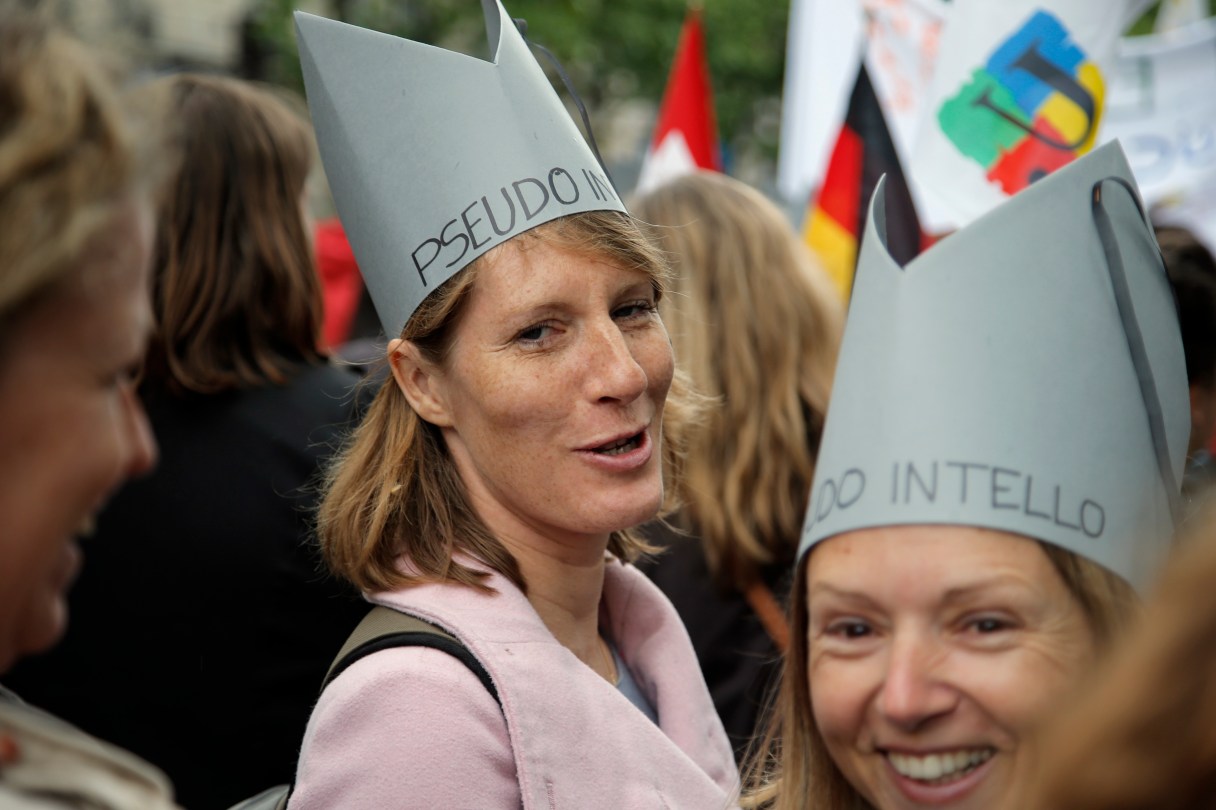
But the plan prompted a strike on Tuesday, drawing criticism from both left-leaning teachers’ unions and French conservatives. It’s a debate that is similar to discussions about underperforming students in the United States.
French teachers’ unions, which routinely protest any changes, complain the reforms are superficial and were pushed through without consultation. Conservatives fear an attack on France’s intellectual tradition.
The government wants to add multi-disciplinary classes and cut a well-respected bilingual program that enrolls about 15 percent of top students in favor of expanding foreign language classes to a broader range of younger children. Students will start learning their first foreign language – usually English – in the equivalent of first grade and their second foreign language around age 12.