
Thursday, October 29, 2026Oct 29

This story is free to read.

Rampell: Tax ‘report’ reads like fan fiction

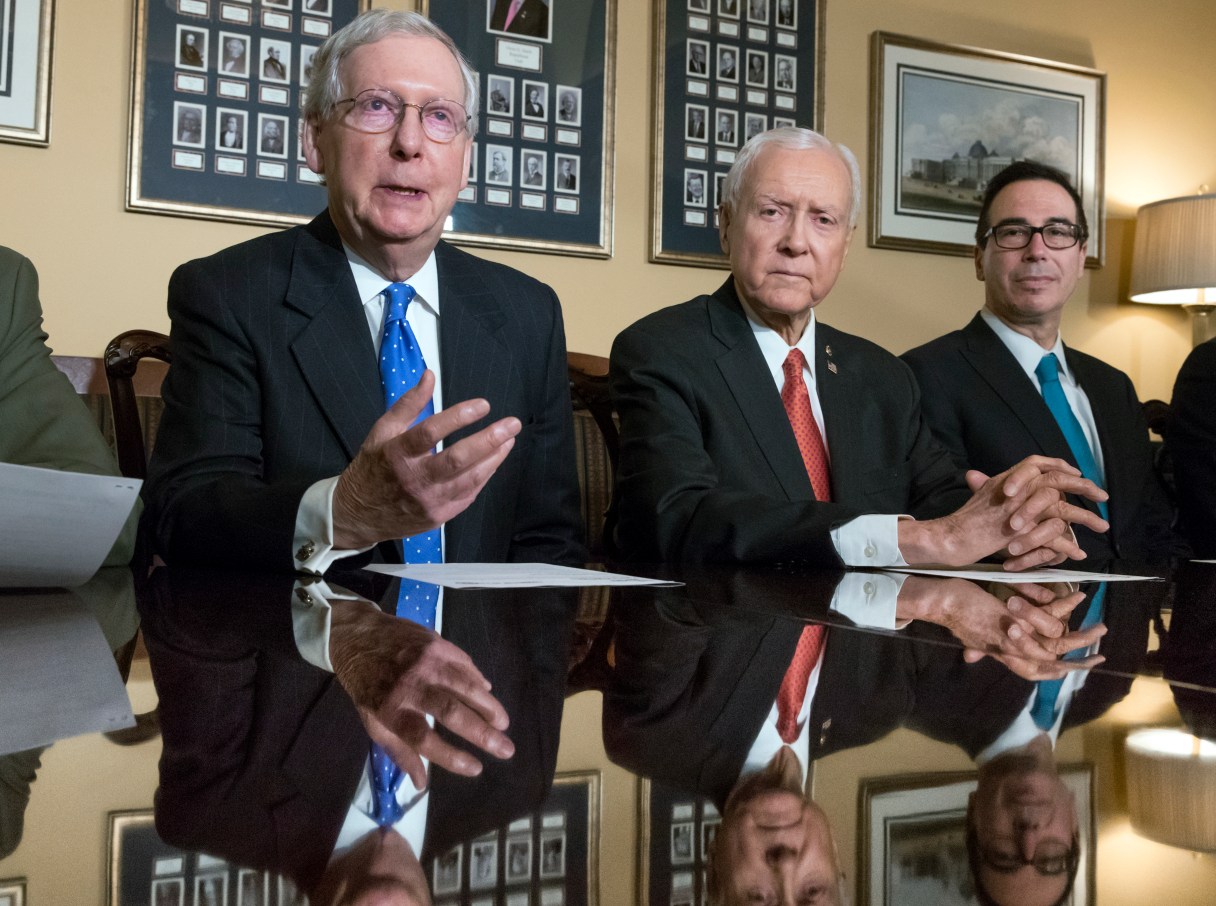
From left, Senate Majority Leader Mitch McConnell, R-Ky., Senate Finance Committee Chairman Orrin Hatch, R-Utah, and Treasury Secretary Steven Mnuchin, make statements to reporters as work gets underway on the Senate's version of the GOP tax reform bill, on Capitol Hill in Washington, Thursday, Nov. 9, 2017. (AP Photo/J. Scott Applewhite)
From left, Senate Majority Leader Mitch McConnell, R-Ky., Senate Finance Committee Chairman Orrin Hatch, R-Utah, and Treasury Secretary Steven Mnuchin, make statements to reporters as work gets underway on the Senate's version of the GOP tax reform bill, on Capitol Hill in Washington, Thursday, Nov. 9, 2017. (AP Photo/J. Scott Applewhite) From left, Senate Majority Leader Mitch McConnell, R-Ky., Senate Finance Committee Chairman Orrin Hatch, R-Utah, and Treasury Secretary Steven Mnuchin, make statements to reporters as work gets underway on the Senate's version of the GOP tax reform bill, on Capitol Hill in Washington, Thursday, Nov. 9, 2017. (AP Photo/J. Scott Applewhite)

WASHINGTON – Unable to produce an actual analysis of its tax plan, the Trump administration has resorted to cooking the books.

Again.

White House officials and Republican lawmakers have repeatedly claimed that their tax plan will unleash such tremendous growth that the bill will pay for itself.

Of course, no one remotely credible backs this up. Not the Tax Policy Center, not the Tax Foundation (which uses relatively rosy assumptions about growth), not the Penn Wharton Budget Model, not Goldman Sachs, not the usual gang of Republican economists.

Not even the Joint Committee on Taxation, Congress’ nonpartisan internal scorekeepers on such matters, has found that the bill would be self-financing. Its most recently available analyses determined that even after accounting for economic effects, both the Senate and House bills would still cost about $1 trillion over the coming decade.