
Monday, November 16, 2026Nov 16

North Korean diplomat who negotiated ’94 deal with US dies

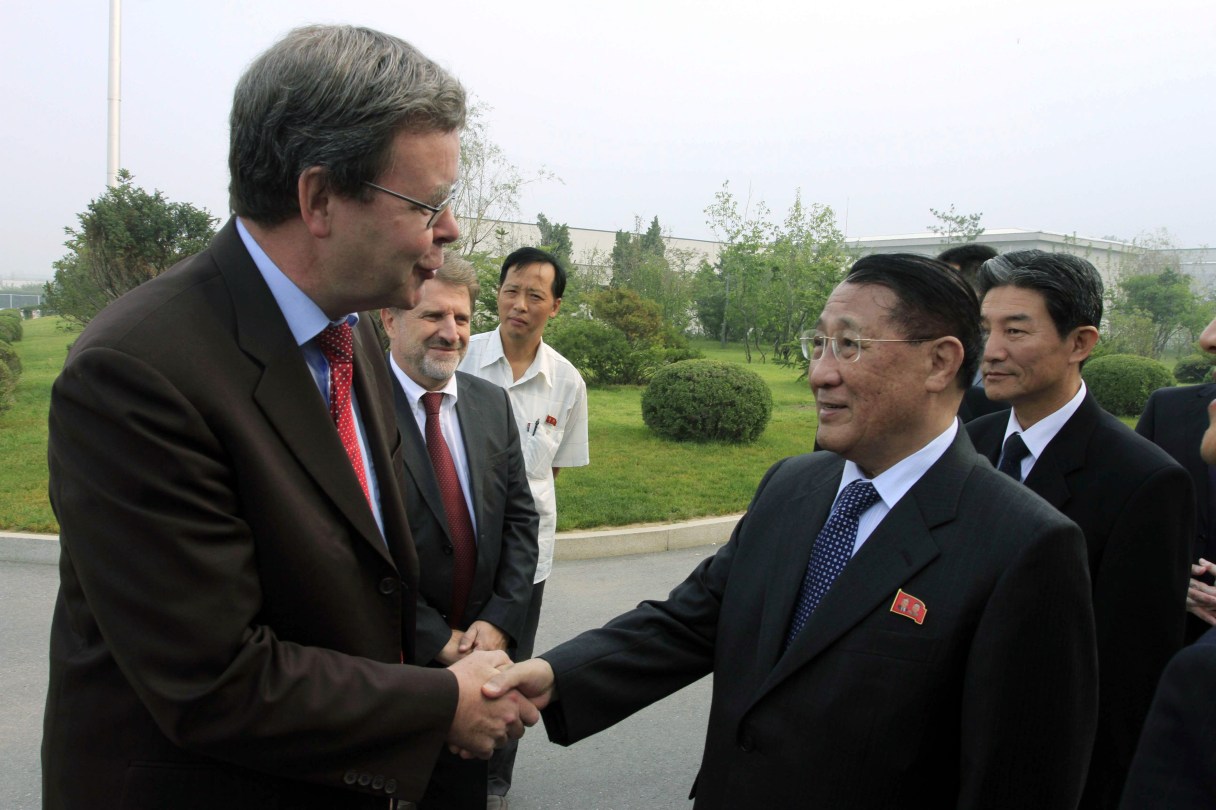
FILE - In this Sept. 6, 2014 file photo, North Korea's Kang Sok Ju, right, a member of the Political Bureau of the Central Committee of the Workers' Party of Korea (WPK) and secretary of the WPK, shakes hands with German Ambassador to North Korea Thomas Schaefer as he leaves Pyongyang Airport in Pyongyang, North Korea to visit Germany, Belgium, Switzerland, Italy and Mongolia. Kang, a top North Korean diplomat who negotiated a short-lived 1994 deal with the United States to freeze its nuclear programs in exchange for international aid, has died of cancer, the country's state media said Saturday, May 21, 2016. (AP Photo/Kim Kwang Hyon, File)

SEOUL, South Korea (AP) – A top North Korean diplomat who negotiated a short-lived 1994 deal with the United States to freeze its nuclear programs in exchange for international aid has died of cancer, the country’s state media said Saturday.

The North’s Korean Central News Agency said Kang Sok Ju, a “trustworthy revolutionary comrade” of North Korean leader Kim Jong Un and an “excellent son” of the country’s ruling party, died of esophageal cancer Friday afternoon at the age of 76.

Kang, a longtime foreign policy specialist for the North, was Pyongyang’s chief negotiator when it reached a landmark agreement with Washington in 1994 to freeze and eventually dismantle its nuclear facilities in exchange for international aid to build two electricity-producing nuclear reactors.

The deal fell apart in 2002 after revelations that the North had operated a secret nuclear weapons program in violation of the agreement.

South Korea’s spy agency told the Associated Press on Tuesday that it believed senior North Korean diplomat Ri Su Yong had been promoted to vice chairman for international affairs of the ruling Workers’ Party to replace Kang, whose absence from the party’s first congress since 1980 earlier this month further fueled speculation about his health problems.