
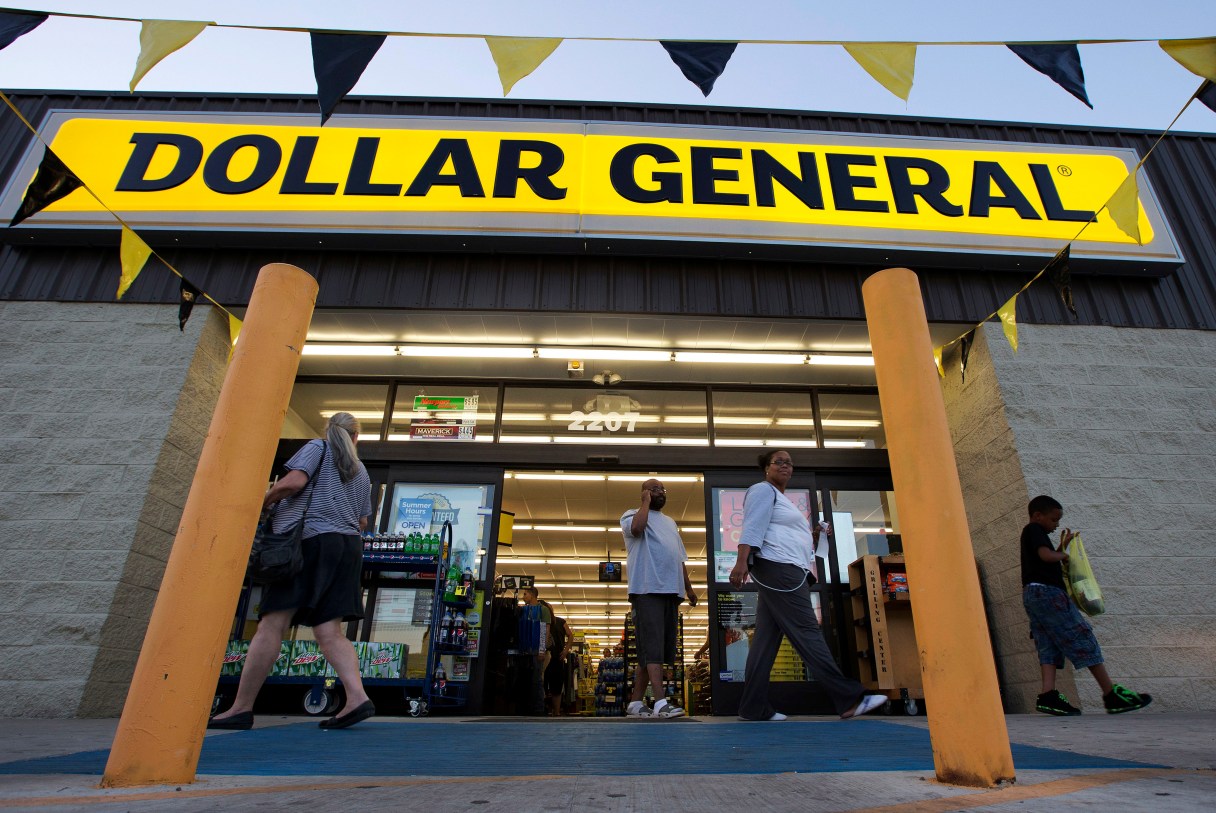
When developers moved a Dollar General to a bigger, better location down the street in Flintstone, Ga., three years ago, they gave Walker County about $50,000 to sweeten the deal.
The money was supposed to pay for sidewalks, allowing elderly neighbors to ride to the store on their scooters from an extended living facility off Villa Way. But more than three years later, the path is still sidewalk-free. And a new administration is trying to figure out what to do.
The issue came up last week when a neighbor called and complained about a broken promise, county spokesman Joe Legge said. Legge dug into the complaint and found some meeting minutes from January 2014 that told him part of the story. Back then, developers were trying to move a Dollar General from the 3200 block of Chattanooga Valley Road to the 4000 block.
The new area was bigger, allowing for a larger store with more products. But more importantly, developer Bobby Howard said at the time, the area would include a larger parking lot, which gave delivery truck drivers a space to park when they dropped off food. At the old spot, the truck had to stop in front of the store, blocking traffic through Chattanooga Valley Road.
As part of the deal, Howard agreed to give Walker County $10,000. The money was initially going to build a walking path around the nearby homes, Howard said. County administrators told him they also wanted to build a park in the area, and the walking path would be an asset.
But then some neighbors complained, Howard said. They didn’t want strangers walking behind their yards. So, according to meeting minutes, then-Commissioner Bebe Heiskell decided to use the money to put in sidewalks. Howard’s company paid an additional $12,000 to grade the land to prepare the path, an email obtained through an open records request shows.
Four months later, emails show, County Attorney Don Oliver told Howard the cost for the sidewalk actually would be $42,000. Instead, Howard’s company cut the local government a check for $52,000. Though the deal went down three years ago, Howard thinks the company paid out the extra money because of an internal miscommunication.
At any rate, county codes do not require a sidewalk for the property. Oliver and Heiskell simply asked for the sweetener before the approval of the rezoning request, changing the property from residential to commercial. For Howard, who has brought other Dollar Generals to the county, the sidewalks were the cost of doing business.
“If you’re going to do more work in that county, you can’t fight every battle,” he said. “It’s almost like politics. It’s not about what’s right and wrong. You just do it. Usually, it’s for the public benefit. At least if I’m spending more money, I’m making something better.”
Howard did not complain. He said the practice is common among local governments.
But the sidewalks never came. On Wednesday, Heiskell said the $52,000 Howard paid wouldn’t cover the cost of labor, only the materials. She doesn’t know why Oliver didn’t simply charge Howard more, which would have covered the added cost.
“We don’t put in sidewalks,” Heiskell said. “If the county put in sidewalks, we’d go broke.”
She said her successor, Commissioner Shannon Whitfield, can still put in the sidewalks. On Wednesday, Legge said county employees are searching for more records in the commissioner’s office, hoping to find any preliminary plans for the sidewalk.
Some parts of the area have small shoulders; other parts have drainage ditches. He thinks a sidewalk might need to switch to different sides of the road between the extended living facility and the Dollar General, with crosswalks connecting the sidewalks.
Heiskell said she planned to put the sidewalks in, eventually. She simply lost an election three years later, before she had time.
“Nobody said anything else about it,” she said this week. “I kind of forgot it. I don’t think I should go to jail or anything over this.”
Contact staff writer Tyler Jett at 423-757-6476 or tjett@timesfreepress.com. Follow him on Twitter @LetsJett.