
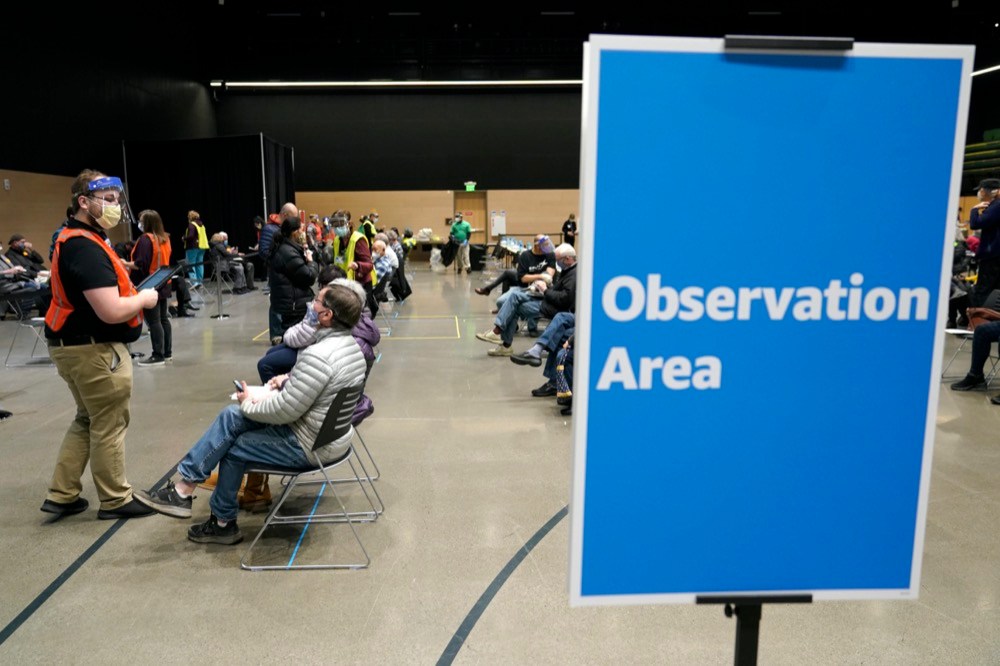
OKLAHOMA CITY (AP) – The Biden administration’s plan to open 100 vaccination sites by the end of the month was initially embraced by governors and health officials, who considered it a much needed lifeline to get more Americans inoculated against the coronavirus.
But reality has quickly set in: Some are hesitating to take the offer, at least for now, saying they don’t need more places to administer doses. They just need more doses.
Eager to protect more people against the coronavirus, health officials in Oklahoma jumped at the chance to add large, federally supported vaccination sites. They wanted them in Oklahoma City, Tulsa and a third, mid-size city, Lawton, thinking the extra help would allow them to send more doses to smaller communities that had yet to benefit.
“We felt like if we could get them in the metro areas, what that would allow us to do is … free up a lot of our other resources to do more targeted vaccinations in underserved areas,” said state Deputy Health Commissioner Keith Reed.
Those plans are now on hold after the state learned that the sites would not come with additional vaccines. Instead, the doses would have to be pulled from the state’s existing allocation, and the three sites alone might have used more than half of Oklahoma’s vaccine supply.