
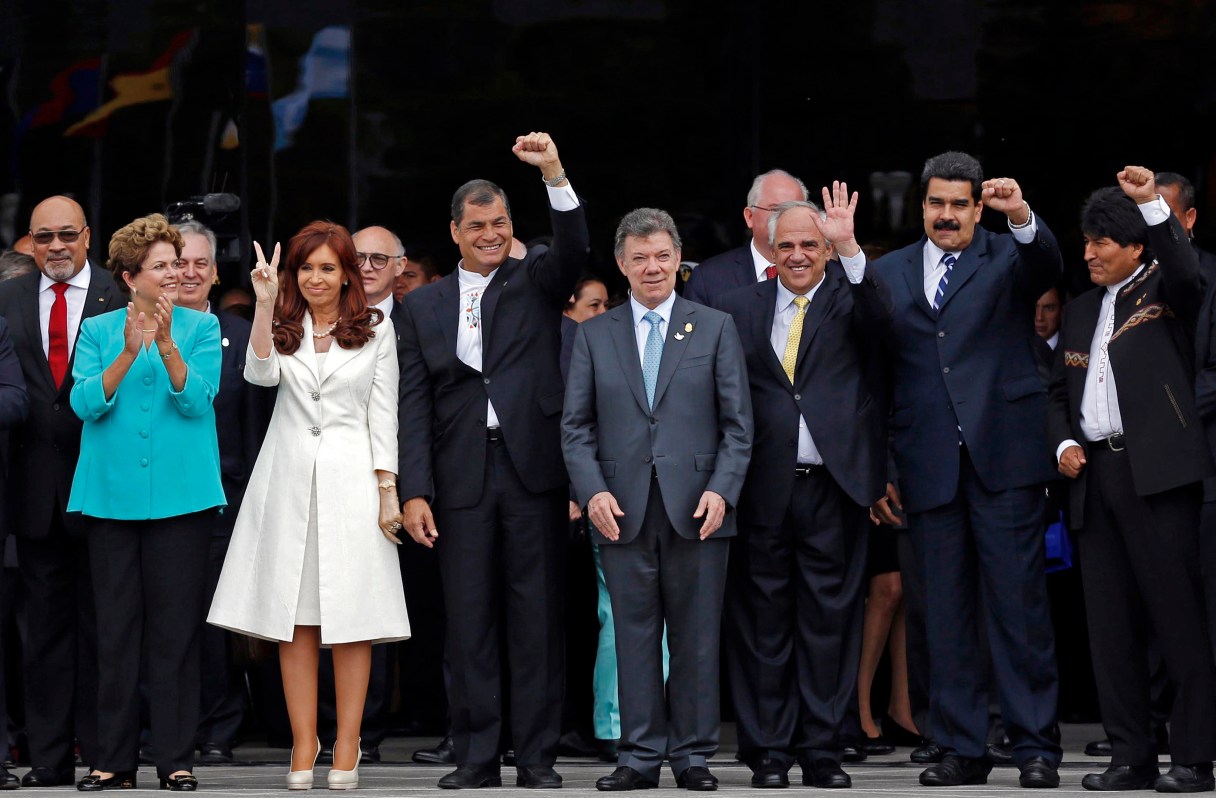
PANAMA CITY (AP) – From Mexico to Brazil, leaders in Latin America have largely kept silent amid charges of human rights abuses in Venezuela and are unlikely to speak out against their neighbor at this week’s Summit of the Americas.
Many Latin American heads of state gathering in Panama City are bound to oil-rich Venezuela by business dealings if not ideology, and are put off by recent U.S. sanctions against some of the country’s officials. Others do not want to be seen as doing Washington’s bidding, particularly as they face protests and plunging approval ratings at home.
“Venezuela has successfully played the history of U.S. imperialism and U.S. heavy-handedness cards, in a way that has made people want to back away from public criticism,” said Geoff Thale, an analyst at the Washington Office on Latin America.
The Obama administration last month froze the U.S. assets and revoked visas for seven senior officials accused of human rights violations related to protests last year against President Nicolas Maduro’s socialist government. The unrest is blamed for more than 40 deaths and triggered a crackdown on criticism that led to the jailing of several opposition leaders, including last month’s surprise arrest of Caracas Mayor Antonio Ledezma.
But rather than highlight alleged abuses, the sanctions have drawn widespread condemnation in Latin America, denying Obama a hoped-for diplomatic victory lap at the summit for his decision to restore ties with Cold War nemesis Cuba. A reference to Venezuela as a threat to U.S. national security included in the sanctions declaration is standard bureaucratic language for the United States, but disturbing to a region with a long history of U.S. interference, from support for past military regimes to efforts to topple leftist governments.