
Here’s a rule of thumb. When a news source confirms all your deepest convictions about the depravity of the people on the other side, think twice before reacting. Otherwise, you might fall into the Maus trap.
Consider this headline: “Tennessee school board bans graphic novel ‘Maus’ right before Holocaust Remembrance Day.”
When I first saw that in my Facebook feed, I imagined some jackbooted, antisemitic Tennessee school board deliberately timed this book ban to publicize its hatred of Jews.
But it seemed too bad to be true. And, of course, it was. For one thing, “right before” turned out to be 17 days before Holocaust Remembrance Day.
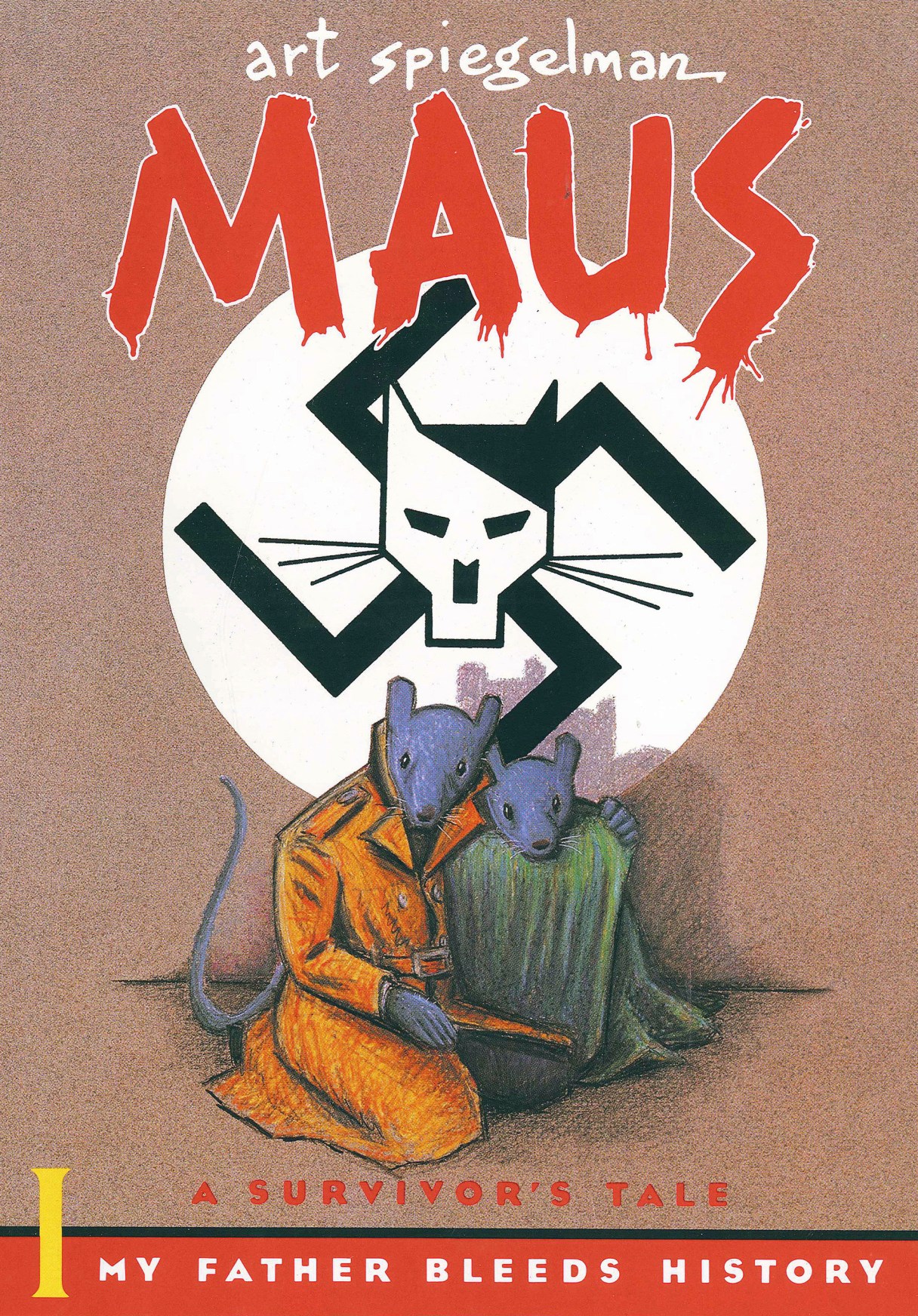
For those of you who don’t know, “Maus” is a graphic novel – i.e., comic book for adults – written and drawn by Art Spiegelman, a second-generation Holocaust survivor. His memoir relates both his father’s survival story and his own struggle with the shadow of pogroms, concentration camps and the murder of 6 million Jews. The comic is notable for depicting Jews and Germans as anthropomorphized mice and cats, respectively. The book was the first graphic novel ever to win the Pulitzer Prize – and rightfully so. It’s an amazing, thoughtful, humane work of art.
The McMinn County Board of Education, however, objected to the presence in it of some mild profanity, a story of a premarital affair, and a drawing of Spiegelman’s mother naked “in a pool of her own blood” after committing suicide. Board members voted unanimously on Jan. 10 to remove the book from their eighth-grade curriculum. A little more than two weeks later, newsfeeds erupted with headlines declaring that “Maus” was banned by a repressive, bigoted, small-minded school board which wanted to erase history.
But it wasn’t so simple.
First, the word “ban” in such a context is hyperbole. Yes, it means “to prohibit,” and you might say the board prohibited the teaching of “Maus.” However, removing a book from a public school curriculum is hardly a ban in the true sense of the word. State school curricula require students to read designated books. Choosing not to compel someone to read something is not a “ban.” (Spiegelman says when he was a kid, New York schools forced him to read “Ethan Frome,” a book that bored him. When the state decided Edith Wharton’s novel no longer fit its curriculum, was that a “ban”?)
Moreover, much of the news coverage didn’t mention that “Maus” was just part of a Holocaust curriculum in McMinn County schools extending through high school. As a result, people assumed the board had removed the only book on the Holocaust its students would ever read. The truth, however, was board members said they planned to replace it with another Holocaust book they deemed more age appropriate.
Such misleading articles and headlines played upon a perennial hostility toward Southern Christian conservatives and led to an avalanche of self-righteous posts, tweets and opinion pieces. And, unfortunately, the fans were flamed by people who could have tempered the debate, including the Jewish Federation of Chattanooga, which tied the need to continue teaching “Maus” to “the fight against rising antisemitism” and publicly called for the board to rescind its decision. The author of “Maus” himself went a step further, calling the decision “Orwellian” and the people of Tennessee “demented.”
Spiegelman had a chance, but largely chose not to, to moderate his position last Monday night in a Zoom town hall sponsored by the Jewish Federation and others. Though he admitted he didn’t write Maus for children; that he was “furious” when he first learned the book had been awarded a “Young Adult” literature prize; and that he, himself, would hesitate to distribute the second volume of Maus to grades 8-12; he rammed the board’s move as an authoritarian threat to democracy – and took another shot at Tennessee, suggesting he would have fled the state if he had to teach here.
I’ve documented in a Quillette essay why this book, great as it is, may not be the best choice for young teenagers. Moreover, I’ve argued it’s nonsense to suggest that “Maus” – and no other book – can enlighten students on the Holocaust and that it must be taught specifically in eighth grade. Such arguments defy reason.
But this was never about reason. It was about exploiting people’s emotions for political and economic purposes, in short, demagoguery.
Unfortunately, many fell into this trap, including some who should have known better. The most well-known Jewish book of wisdom, “Ethics of the Fathers,” states, “when in doubt, you must judge every person favorably” (1:6).
In this case, that would have meant granting the possibility that the McMinn County Board of Education might have had the best interests of its students in mind, that it did not deliberately besmirch a work that is, for some, an unparalleled expression of Jewish suffering, that maybe even smart, caring, good people could disagree about whether “Maus” is the right Holocaust book for 13-year-olds.
Thomas P. Balazs, a second-generation Holocaust survivor, is a fiction and essay writer and professor of English at the University of Tennessee at Chattanooga. Contact him at thomasbalazs@yahoo.com.