
Monday, November 16, 2026Nov 16

NASA’s Cassini spacecraft at Saturn nears fiery finale

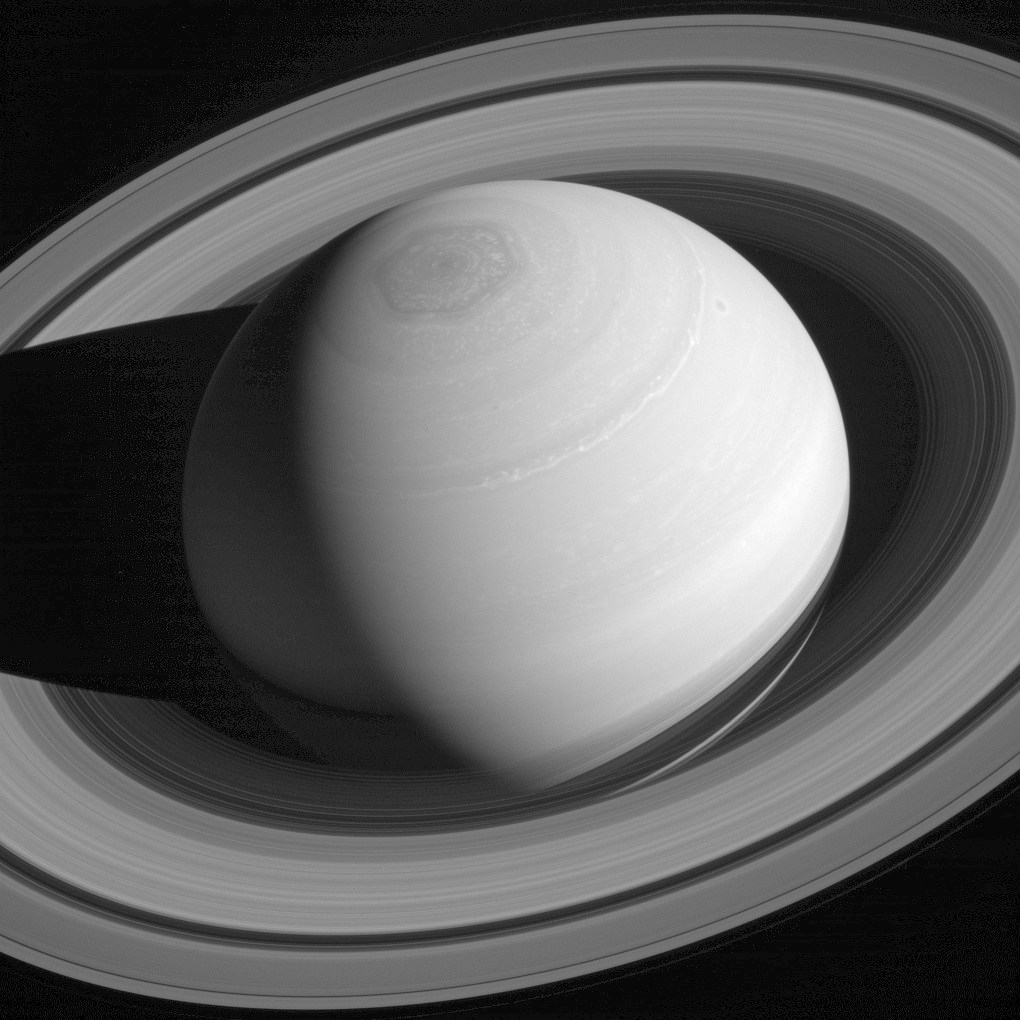
This May 4, 2014 image made available by NASA shows the persistent hexagonal cloud pattern on Saturn's north pole, as seen from the Cassini spacecraft. The hexagon is similar to Earth's polar vortex, which has winds blowing in a circular pattern around the polar region, and is nearly 25,000 kilometers (15,000 miles) across. Nearly four Earths could fit inside it. (NASA/JPL-Caltech/Space Science Institute via AP)

CAPE CANAVERAL, Fla. (AP) – NASA’s Cassini spacecraft at Saturn is closing in on its fiery finish, following a remarkable journey of 20 years.

Cassini is on course to plunge through Saturn’s atmosphere and vaporize like a meteor Friday morning.

Flight controllers at California’s Jet Propulsion Laboratory expect one last burst of scientific data from Cassini, before the radio waves go flat – and the spacecraft falls silent.

The only spacecraft to ever orbit Saturn, Cassini showed us the planet, its rings and moons up close in all their glory.

Cassini departed Earth in 1997 and arrived at Saturn in 2004. Its hitchhiking companion, Huygens, landed on the moon Titan in 2005. Nothing from Earth has landed farther.