
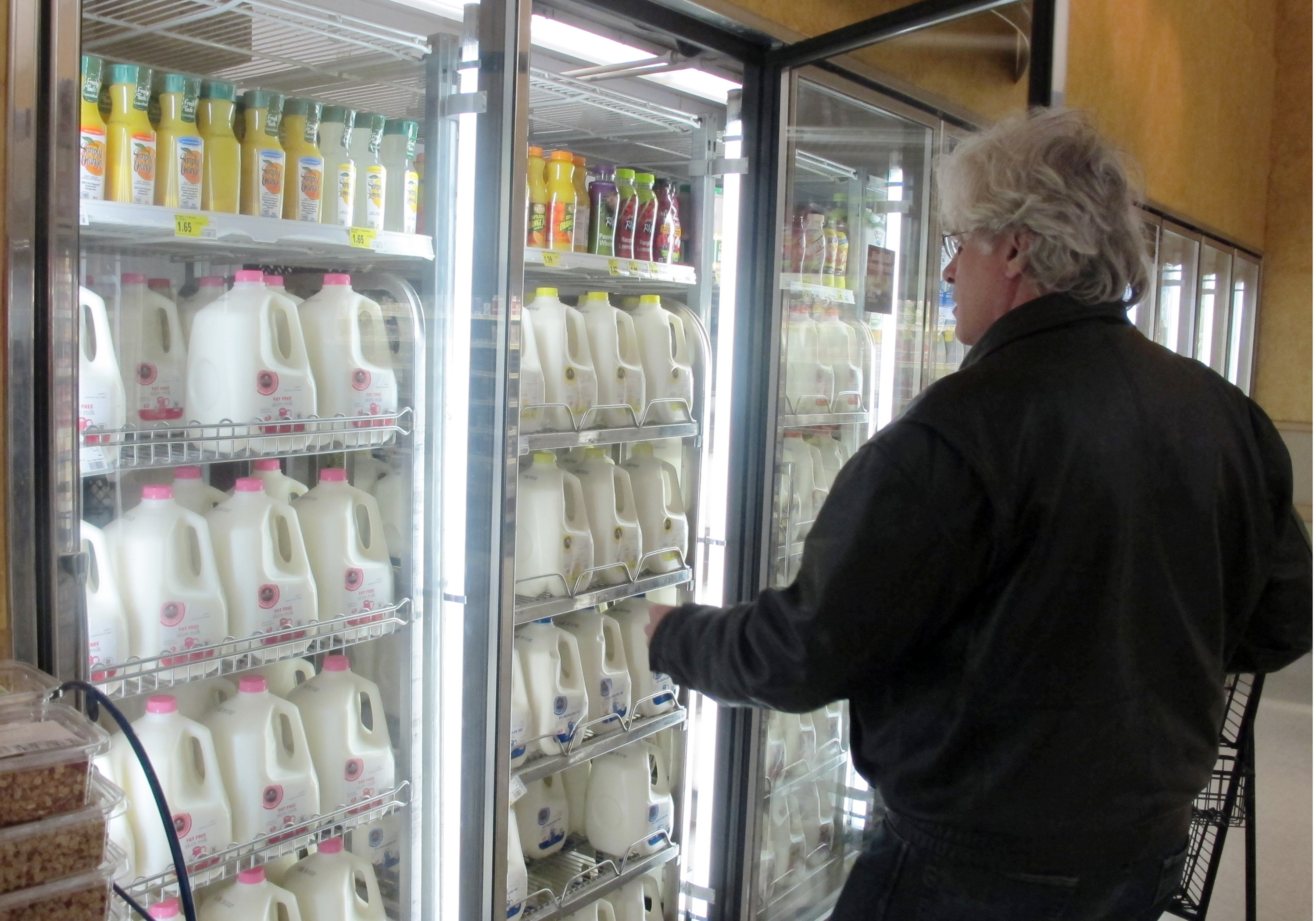
 Jim Mitchell selects a gallon of milk at a Milwaukee grocery store. While the nation inches toward the economic fiscal cliff, a lesser-known dairy cliff also looms that could send milk prices as high as $6 per gallon if Congress doesn’t act in time.
WASHINGTON – Americans are living longer, and Republicans want to raise the Medicare eligibility age as part of any deal to reduce the government’s huge deficits.
But what sounds like a prudent sacrifice for an aging society that must watch its budget could have some surprising consequences, including higher premiums for people on Medicare.
Unlike tax hikes, which spawn hard partisan divisions, increasing the Medicare age could help ease a budget compromise because President Barack Obama has previously been willing to consider it. A worried AARP, the seniors’ lobby, is already running ads knocking down the idea as a quick fix that would cause long-term problems. House Democratic Leader Nancy Pelosi, D-Calif., doesn’t like it either.
But for Republicans seeking more than just tweaks to benefit programs, raising the current eligibility age of 65 has become a top priority, a symbol of their drive to rein in government. If Obama and the GOP can’t agree soon on a budget outline, it may trigger tax increases and spending cuts that would threaten a fragile economic recovery.
Increasing the eligibility age to 67 would reduce Medicare spending by about 5 percent annually, compounding into hundreds of billions of dollars over time. But things aren’t that simple.