
U.S. warns against traveling to Ebola-hit countriesNEW YORK – U.S. health officials on Thursday warned Americans not to travel to the three African countries hit by an outbreak of Ebola.The travel advisory applies to non-essential travel to Guinea, Liberia and Sierra Leone. The outbreak in those West Africa countries has killed more than 700 people this year.The Centers for Disease Control and Prevention say the risk of the deadly disease coming to the United States remains small. The last time the federal agency issued such a travel warning was in 2003 because of a SARS outbreak in Asia.At the White House, press secretary Josh Earnest said the U.S. is looking into Medevac options to bring two American aid workers diagnosed with Ebola back to the U.S. While the U.S. government would facilitate the response, private companies would be used.Earnest said that type of response would be consistent with how the U.S. handled other situations, including outbreaks of SARS and drug-resistant tuberculosis, and the goal would be to ensure Americans can benefit from modern medical treatment available in the U.S.Although the CDC has concluded it’s unlikely Ebola would spread if detected in the U.S, Earnest said the CDC is alerting health care workers in the U.S. and reminding them how to isolate and deal with cases of Ebola.The CDC has about two dozen staffers in West Africa to help try to control the outbreak. Officials announced Thursday they will send 50 more in the next month.- The Associated Press
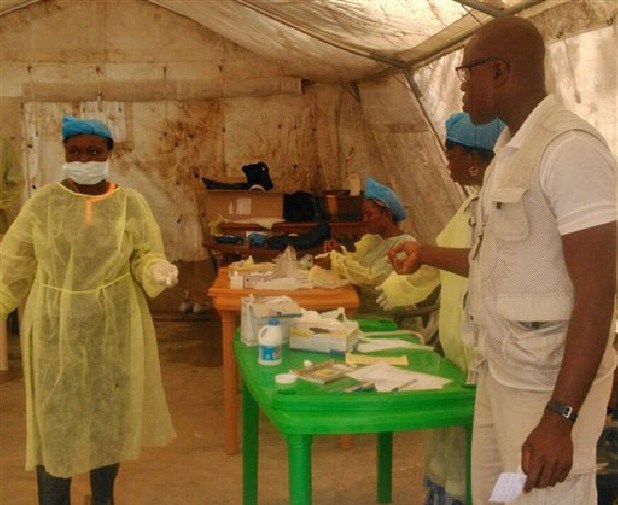
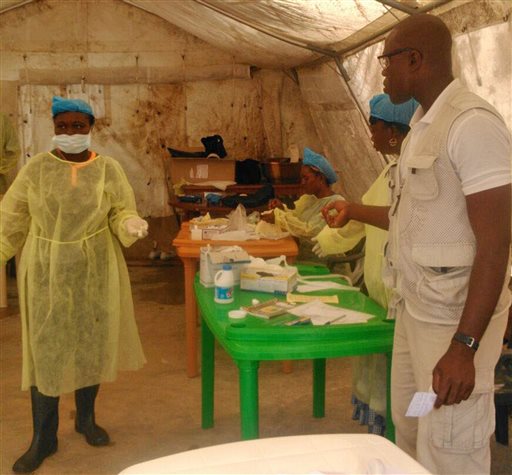 In this photo taken on Sunday, July 27, 2014, medical personnel work at the Doctors Without Borders facility in Kailahun, Sierra Leone, where Dr. Sheik Humarr Khan died.
DAKAR, Senegal – The worst recorded Ebola outbreak in history surpassed 700 deaths in West Africa as the World Health Organization on Thursday announced dozens of new fatalities.
In Sierra Leone, President Ernest Bai Koroma vowed to quarantine sick patients at home and have authorities conduct house-to-house searches for others who may have been exposed as the country struggles with families resisting treatment at isolation centers. Some have kept loved ones at home given the high death rates at clinics where Ebola patients are quarantined.
His announcement late Wednesday came as neighboring Liberia also ramped up its efforts to slow the virulent disease’s spread, shutting down schools and ordering most public servants to stay home from work.
“It could be helpful for the government to have powers to isolate and quarantine people and it’s certainly better than what’s been done so far,” said Dr. Heinz Feldmann, chief of virology at U.S. National Institute of Allergy and Infectious Diseases. “Whether it works, we will have to wait and see.”