
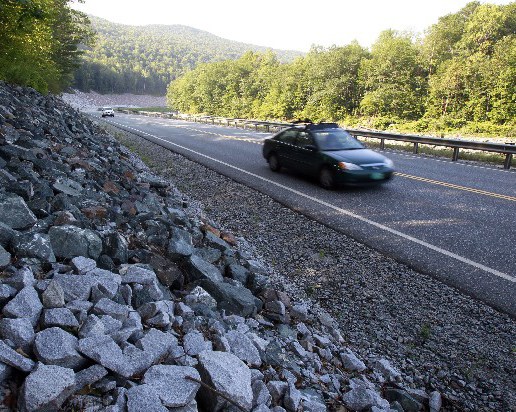
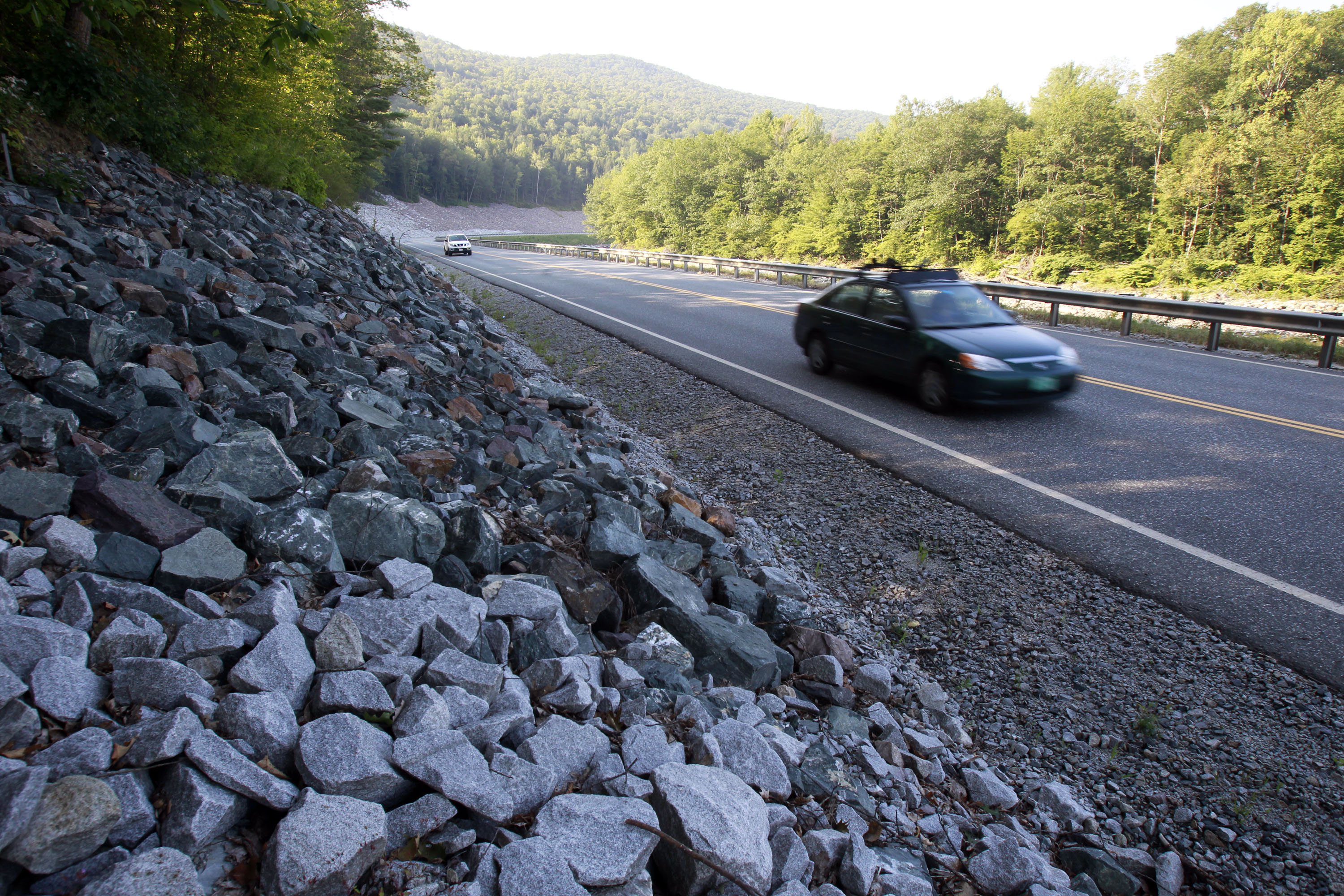
 In what some consider a bit of an engineering marvel, a three-mile section of Vermont Route 107 between Bethel and Stockbridge, a major east-west highway that was destroyed by a storm, was rebuilt and reopened in 119 days, a job that normally would have taken two years. Driving in America has stalled, leading researchers to ask: Is the national love affair with the automobile over? After rising for decades, total vehicle use in the U.S. peaked in August 2007. It then dropped sharply during the Great Recession and has largely plateaued since.
WASHINGTON – Driving in America has stalled, leading researchers to ask: Is the national love affair with the automobile over?
After rising for decades, total vehicle use in the U.S. — the collective miles people drive — peaked in August 2007. It then dropped sharply during the Great Recession and has largely plateaued since, even though the economy is recovering and the population growing. Just this week, the Federal Highway Administration reported vehicle miles traveled during the first half of 2013 were down slightly, continuing the trend.
Even more telling, the average number of miles drivers individually rack up peaked in July 2004 at just over 900 per month, according to a study by Transportation Department economists Don Pickrell and David Pace. By July of last year, that had fallen to 820 miles per month, down about 9 percent. Per capita automobile use is now back at the same levels as in the late 1990s.
Until the mid-1990s, driving levels largely tracked economic growth, according to Pickrell and Pace, who said their conclusions are their own and not the government’s. Since then, the economy has grown more rapidly than auto use. Gross domestic product declined for a while during the recession but reversed course in 2009. Auto use has yet to recover.
Meanwhile, the share of people in their teens, 20s and 30s with driver’s licenses has been dropping significantly, suggesting that getting a driver’s license is no longer the teenage rite of passage it once was.