

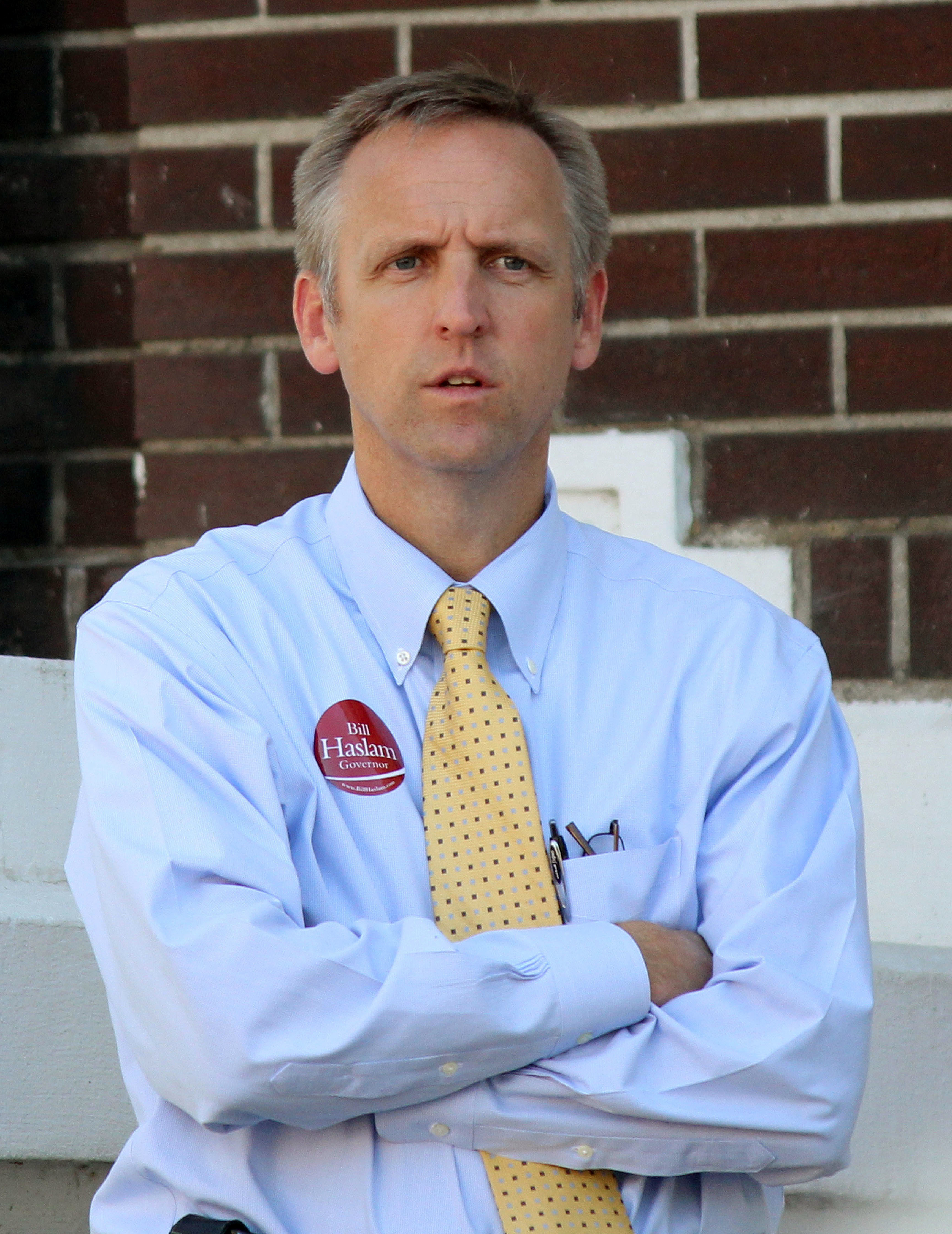
 Mark Cate
NASHVILLE — Mark Cate, who resigned Aug. 1 as Gov. Bill Haslam’s chief of staff, has since signed a $10,000-per-month contract to serve as “project coordinator” in developing a new Tennessee State Museum, scheduled to open in December 2018.
“He will oversee the entire project,” said Robert “Bobby” Thomas, a Nashville attorney and chairman of the Tennessee State Museum Foundation. “Mark Cate knows all the players extremely well and I think he will be an excellent person to coordinate the effort.”
Officially, the contract is between Cate’s newly established consulting firm – Stones River Group, LLC – and the foundation, which raises money to support museum operations and is now responsible for collecting at least $41.75 million in private donations to go with $120 million in state funds allocated for building a new state museum.
Effectively, Cate will be a middleman in coordinating efforts of the foundation, its fundraisers, a separate board that oversees general museum operations, the museum staff headed by veteran Executive Director Lois Riggins-Ezzell, and Haslam’s administration. The state Department of General Services is lead agency in the project for Haslam, who presided last week in a “steering committee” meeting.
In July, the foundation board voted to hire two veteran political fundraisers, Kim Kaegi and Emily Reynolds, to lead in soliciting donations for the new museum. Cate at the time said he hoped to have a role in the process, but did not know what that would be.
The foundation’s approved plan, outlined at the July meeting, budgets $1.26 million for fundraising and $515,000 for related expenses.
 The front entrance of the Tennessee State Museum. Gov. Bill Haslam’s budget for the new fiscal year includes $120 million for construction of a new museum on the Bicentennial Mall and is expected to be bolstered by a $40 million private fundraising campaign.
The separate board overseeing museum operations, officially known as the Douglas Henry Tennessee State Museum Commission, is engaged in some turmoil with at least one member, former Knoxville Mayor Victor Ashe, seeking ouster of Riggins-Ezzell as executive director. Thomas said he has some concern about that flap, though he’s confident in Cate’s abilities.
The Cate contract calls for a “retainer” of $10,000 per month for Cate and up to $500 per month in expenses. Cate said that’s standard contract language.
“We don’t expect many, if any, monthly expenses, but it’s in the contract to protect us, especially if any major travel is involved,” he added.
Cate received an annual salary of $165,000 as Haslam’s chief of staff and will receive at least $120,000 per year as museum project coordinator, presumably until December 2018, which will be Haslam’s last full month in office.
Both Cate and Thomas said they anticipate the contract continuing for the duration, though that could change as things progress. The contract says either party may terminate the arrangement with 30 days notice.
“I think this is a project where I am uniquely qualified,” said Cate in an interview.
Ben Cunningham, a conservative activist and leader of the Nashville Tea Party, and Dick Williams, Tennessee president of the government watchdog group Common Cause, both expressed some misgivings about the move.
“The ‘revolving door’ for both elected officials and their staff is worrisome for taxpayers because, over time, this practice facilitates the creation of a group of people whose connections and power become part of what has euphemistically come to be called the ruling class of government officials,” said Cunningham in an email.
Though saying Cate is “clearly a capable administrator,” Cunningham added, “I think the preference for most citizens is that elected officials and the appointed staff who serve them see government service as a brief interval of time after which they join the rest of the private sector.”
Williams noted the move is “just another instance of somebody in a high government position getting a nice, well-paid job – one where they didn’t advertise for anyone else.”
“It’s legal, of course,” Williams said. “It smells a little fishy, I guess, for lack of a better term. But I’m sure he’ll do a good job though maybe a state employee could have done it at a lower salary.”
Cate worked for Maryville College – with duties including fundraising – before becoming campaign manager for Haslam’s 2010 gubernatorial campaign and also served as an executive with the real estate development firm Lawler-Wood in Knoxville. Both those endeavors, he said, provided experience to draw upon in developing a new museum.
Cate said he will steer clear of a dispute over 75-year-old Riggins-Ezzell’s continued service as executive director, which Ashe plans to bring before the commission board in October.
But Thomas said a change in leadership should be considered.
“I do think, in building a new museum, that the person who will be leading that new museum needs to be on board during the planning and construction period,” Thomas said in an interview.
Riggins-Ezzell has been executive director since 1981 and now heavily engaged in planning the new museum. Ashe contends she has shown a geographic bias toward people in the Nashville area in art purchases, including two cases involving artists with political ties.
Ashe, 70, says Riggins-Ezzell should be replaced in her $90,000-per-year position and a new executive director brought aboard to oversee preparations for the new museum.
Riggins-Ezzell, in an interview last week, vigorously asserted her ability to continue leading the museum.