
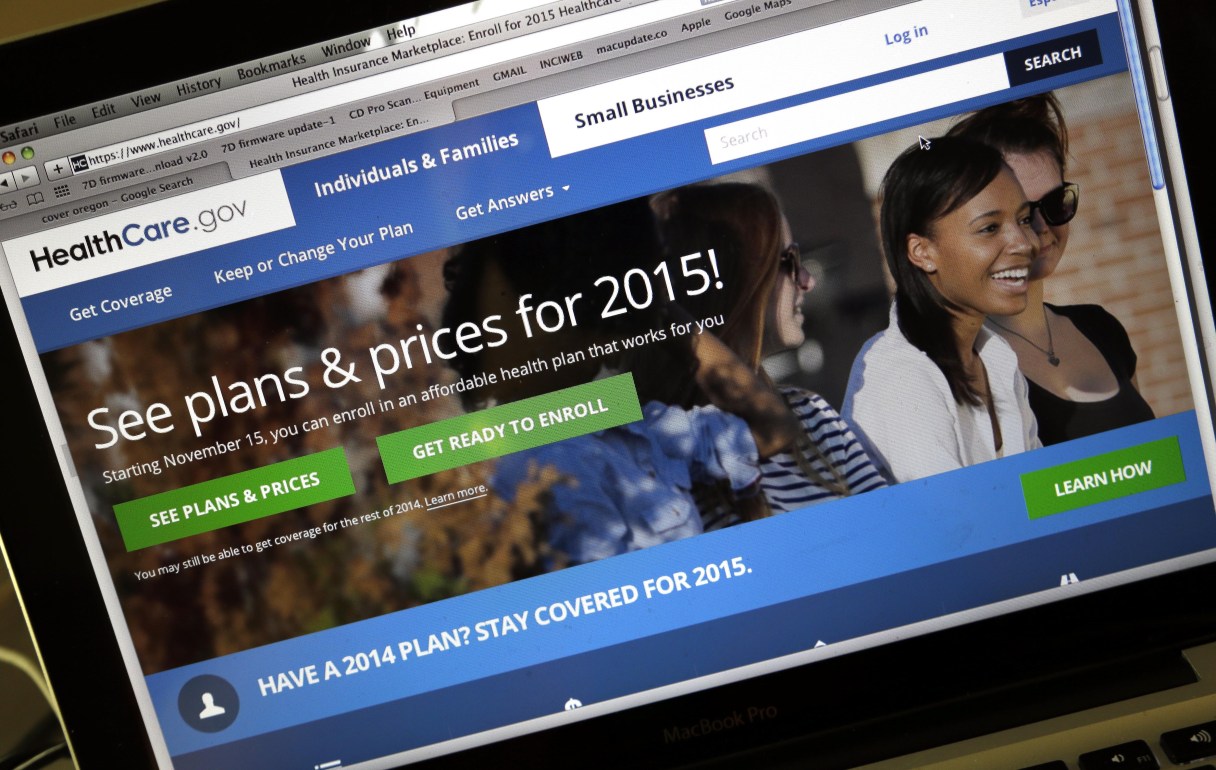
WASHINGTON (AP) – Many of the 7 million consumers who got insurance under President Barack Obama’s health care law will see their premiums rise next year unless they switch to another plan, independent analysts said as the government released details Friday.
The Health and Human Services department released a massive computer file of 2015 premiums one day ahead of the start of open enrollment. Those numbers will take time to crunch.
Overall, they are expected to show that premiums for a type of low-price plan that the government uses to set subsidies for consumers will cost roughly the same as this year, about $330 a month. Many people will pay much less after subsidies, about 25 percent of the cost, which will be good news for first-time customers.
But there is a catch if you are already a customer: Your plan may no longer be the lost-cost benchmark in your community. In that case, you’ll pay more unless you switch.
“Just because you enrolled in a low-cost plan this year is no guarantee that your plan will also be low-cost next year,” said Larry Levitt of the nonpartisan Kaiser Family Foundation. He analyzed a 48-city sample of 2015 premiums from data available earlier this week.