
Friday, November 13, 2026Nov 13

Fiji’s military ruler sworn in as elected leader

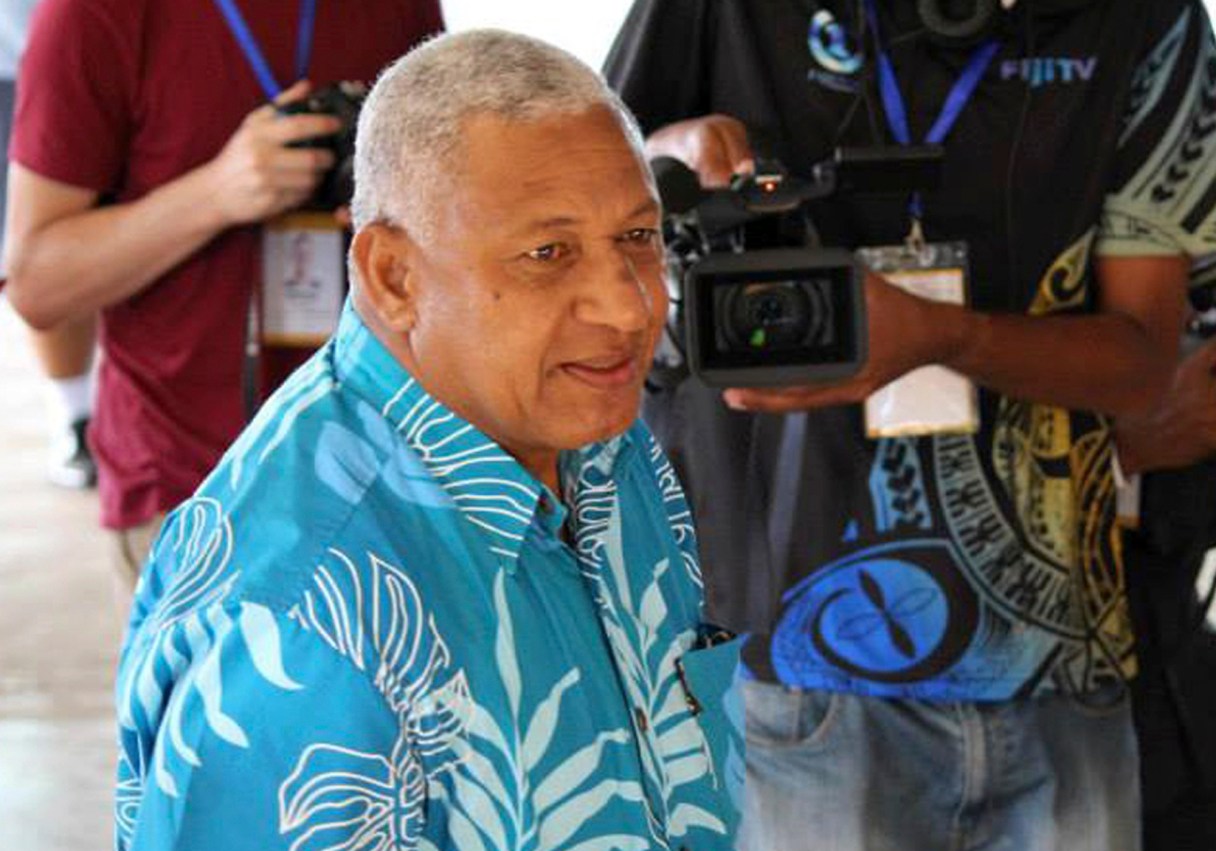
FILE - In this Sept. 17, 2014 file photo, Fiji's military ruler Voreqe Bainimarama arrives at a polling station to cast his vote in a national election in Suva, Fiji.  Official results Monday, Sept. 22, 2014,  from a landmark Fiji election confirm a big win for the nation's military ruler.  Bainimarama and his Fiji First party won an outright majority in the Parliament by taking 32 of 50 seats, according to results released by the Fijian Elections Office. (AP Photo/Pita Ligaiula, File)
FILE - In this Sept. 17, 2014 file photo, Fiji's military ruler Voreqe Bainimarama arrives at a polling station to cast his vote in a national election in Suva, Fiji. Official results Monday, Sept. 22, 2014, from a landmark Fiji election confirm a big win for the nation's military ruler. Bainimarama and his Fiji First party won an outright majority in the Parliament by taking 32 of 50 seats, according to results released by the Fijian Elections Office. (AP Photo/Pita Ligaiula, File)

SUVA, Fiji (AP) – Fiji’s military ruler was sworn in as the South Pacific nation’s elected leader Monday after results confirmed his big win in the first election since he led a coup eight years ago.

Voreqe Bainimarama was sworn in as prime minister-elect during a ceremony and said he plans to travel Wednesday to the U.N. General Assembly in New York, where he will describe his nation’s move to democracy.

“I will tell the world what we have just accomplished in Fiji,” he said. “It will be a landmark occasion.”

Bainimarama and his Fiji First party won an outright majority in the Parliament by taking 32 of 50 seats, according to results released Monday by the Fijian Elections Office. The opposition Social Democratic Liberal Party (Sodelpa) won 15 seats and the National Federation Party won three.

Last week’s election was the first since Bainimarama seized control in a 2006 coup. At a Sunday church service, Bainimarama defended the coup and thanked the military, whom he credited with creating the conditions for democracy.