
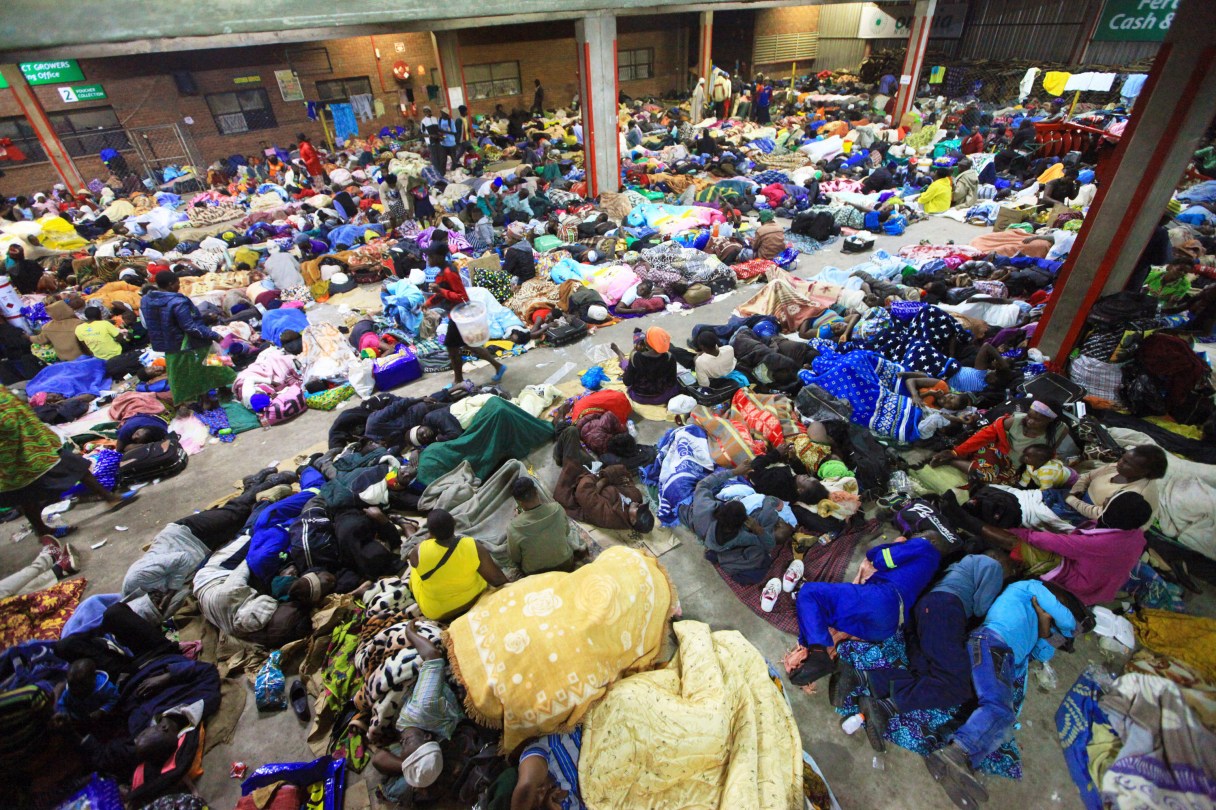
HARARE, Zimbabwe (AP) – Farmer Simon Kahari recently sold tobacco worth more than $6,000 at an auction in Zimbabwe, a small fortune reflecting the golden leaf’s resurgence in this southern African country. Yet because of Zimbabwe’s dire economic problems he ended up sleeping in an auction house toilet that night, hungry and wondering if and when he would be able to access his earnings.
“I don’t have any money for food or anything,” Kahari said. “I came here expecting to be paid, so now I will have to borrow.”
Many of Zimbabwe’s tobacco farmers share the same plight during the ongoing selling season of the crop, Zimbabwe’s second biggest earner after gold. While exported tobacco rakes in hundreds of millions of dollars, small-time farmers feel left out of the lucrative cycle.
A cash shortage that underlines the country’s deepening economic woes has left farmers who travel long distances to auctions unpaid, stranded and desperate.
Farmers like Kahari are not paid in cash because of the currency shortage. But they need the money because much of Zimbabwe, especially rural areas where there is little infrastructure, is a cash-based society.