
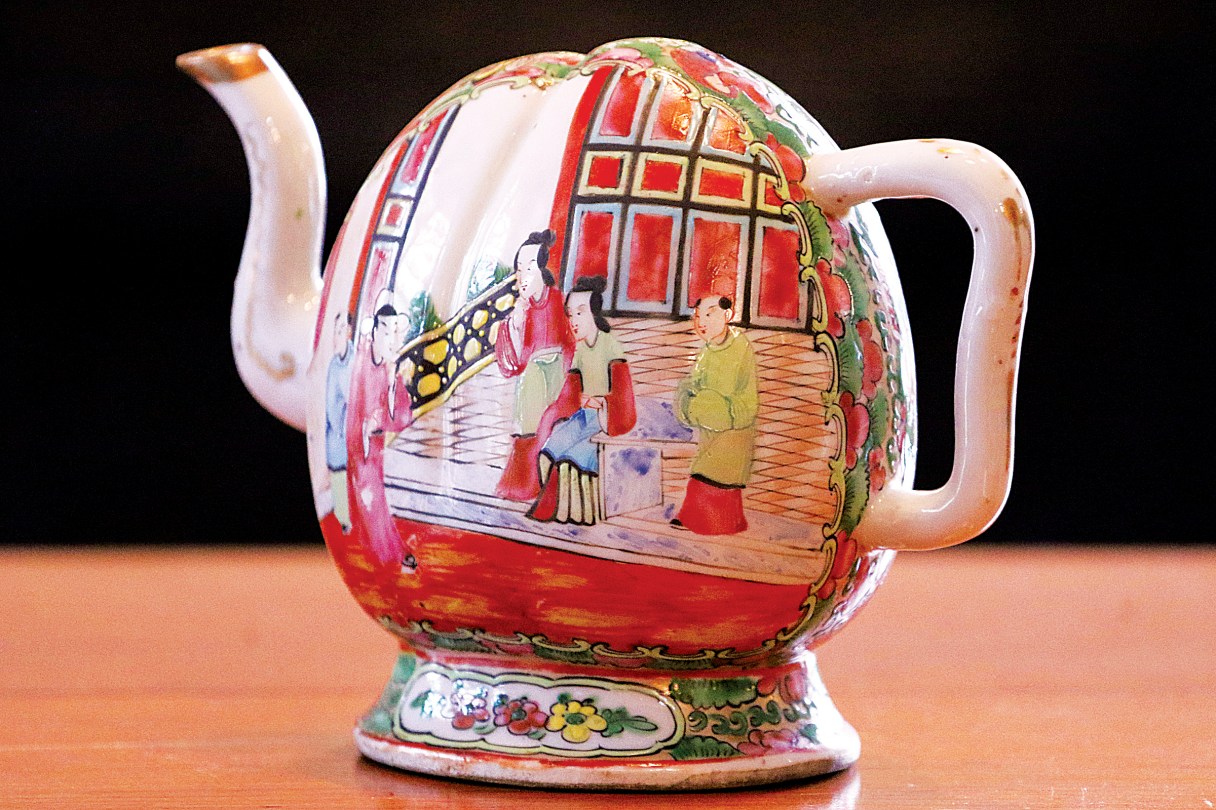
Mixed among the hundreds of pieces of glass in the Houston Museum of Decorative Arts are items that are not pitchers, lamps, goblets or dishes. They’re deemed “nontraditional.”
“These are the few things that stare me in the face, jump out at me fairly often,” says Houston manager Amy Autenreith. “They kind of blend into the background because there is so much to see, but when extracted and put in a place together, they are intriguing.”
She has pulled these rarely seen pieces from the Houston collection for the new exhibit, “Novelties, Whimsies & Oddities, Oh My,” which runs through July.
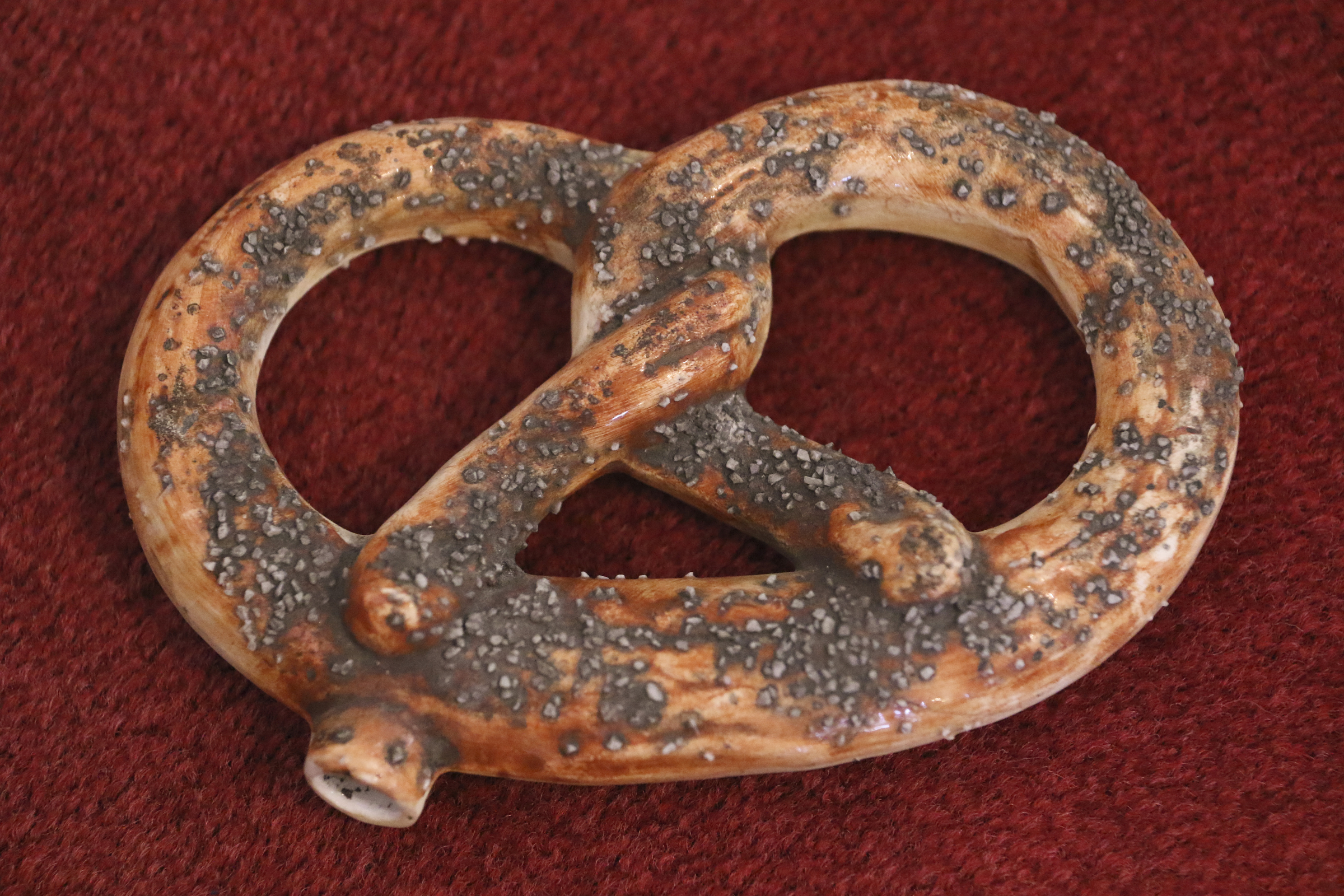 A 20th century ceramic pretzel flask is on display at the Houston Museum as part of their oddity, novelty and whimsical glassware exhibit.
Each of the three title categories have descriptive features that define them. Whimsies, for example, are nonproduction-line glass pieces made by 19th-century glass workers on their own time. The glass possibly was made for their own use, for gifts or as presentation pieces.
The Whimsey Club, an Internet site for collectors of glass-house whimsies, explains that they’re often referred to as “end-of-day items” because they were made with scraps of glass left over at the end of the work day.
“Whimsies were handwrought items made by glass workers after work hours to show off their skills. I’ve got some very large glass staffs that are 5 to 6 feet tall that would have been used in a funeral processional for a glass worker,” says Autenreith. “We have a flask that looks exactly like a pretzel. It would have been used to hide booze during Prohibition.”
Well-known whimsies — pieces with which viewers are familiar but probably don’t know fell into this glass category — include colorful tabletop glass hats, canes, sock darners, doorstop turtles, banks and wands.
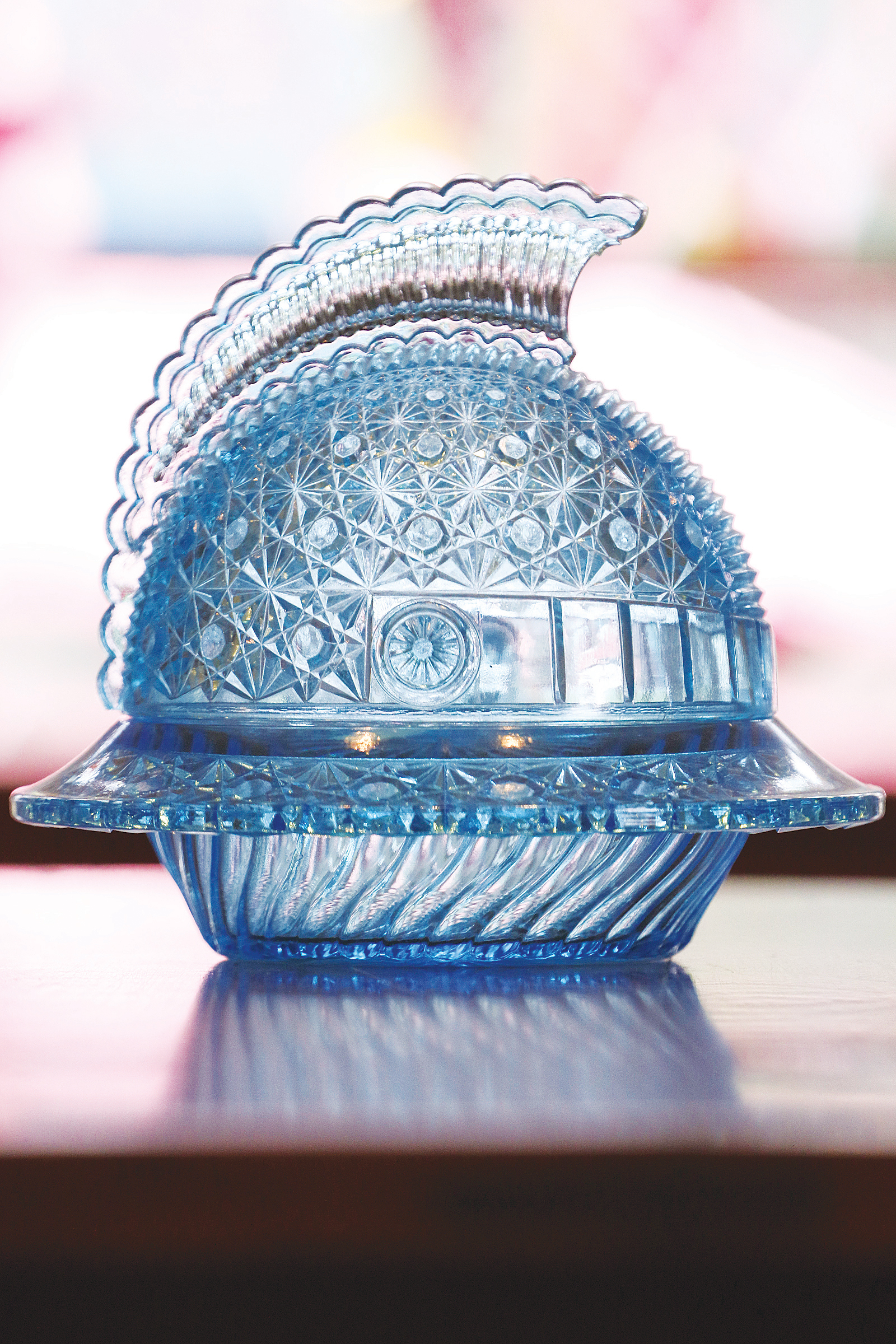 A King & Son butter dish shaped like a warrior’s helmet is an example of a glass novelty.
Oddities are — just as the name suggests — strange pieces of glassware.
“An oddity is an unusual piece that causes you to think, ‘What could this be?’ For example, I have a mystery Cadogan teapot that has no lid. That’s an oddity — really strange,” explains Autenreith.
The exhibit includes a pipette such as the kind used in chemistry class that is etched with the words “Little Hungary.” Researching Little Hungary on the Internet, Autenreith learned it was an area of New York City and also the name of a restaurant there. An ad for the restaurant shows the exact pipette, so it was used as a presentation piece by the owners to guests.
Novelty glass pieces were the result of competition between glass houses during the 19th century, says the museum director.
“The 19th century was a period of great growth and change in the glass industry,” she says. “Technology advanced and America’s middle class increased. Glass companies competed with each other for the American dollar. They had to think how to attract consumers and get them to spend their money at their shops, so they created pieces that weren’t typical table pieces.”
Novelties in the exhibit include glass replicas of old-fashioned wood stoves and a butter dish with a lid shaped like a Trojan helmet.
The Houston Museum of Decorative Arts, located in a Victorian home on the High Street entrance into the Bluff View Art District, is a regionally known glass museum housing the extensive collection of Anna Safley Houston. She collected rare examples of cut glass, satin glass, Burmese glass, cameo glass and cranberry glass, to name a few. Upon her death in 1951, she left her estate to museum trustees to develop appreciation of art glass and antiques in future generations.
Contact Susan Pierce at spierce@timesfreepress.com or 423-757-6284.