
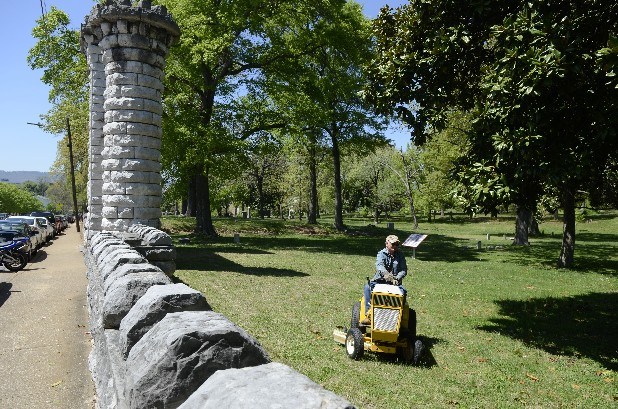
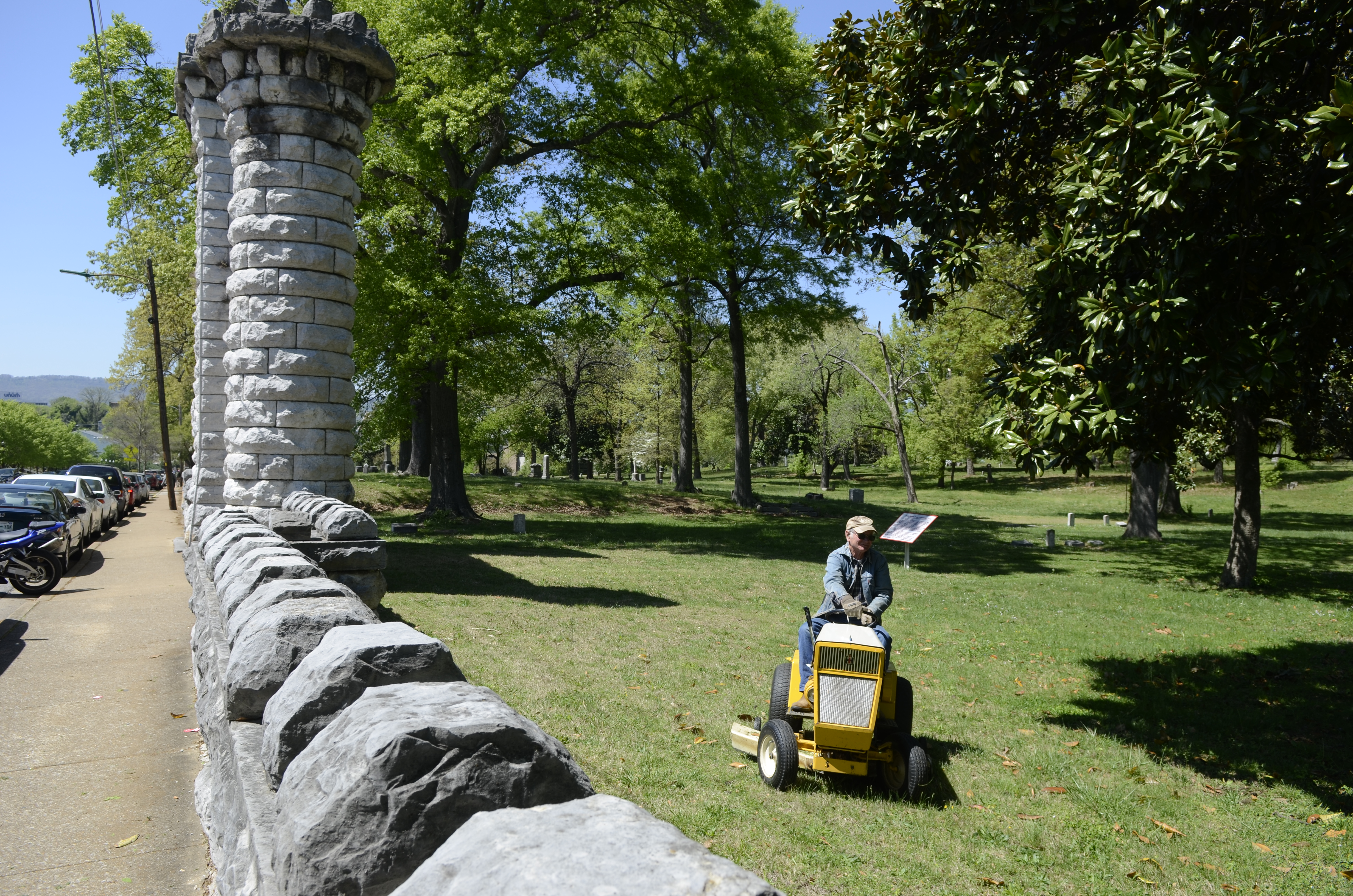
 Herb DeLoach, of the Sons of Confederate Veterans, mows the grass Wednesday at the Chattanooga Confederate Cemetery, located in between the campuses of the University of Tennessee at Chattanooga and the Chattanooga School for the Arts and Sciences.
WHO IS BURIED THERE?Five of the most notable:Samuel Frazier: The man for whom Frazier Avenue is named was born in Rhea County and became a first lieutenant in the 19th Tennessee infantry. He fought at Shiloh and Vicksburg before he was wounded at Chickamauga and taken as a prisoner of war to Chattanooga. Following his recovery, he was sent north to a prison camp for the remainder of the war. He settled in Rhea County after the war and practiced law before abandoning the profession in 1882 and moving to Chattanooga where he started “Hill City” just north of downtown. He donated $10,000 for the construction of the Walnut Street Bridge, which was built in 1890. Frazier died in 1921.Martin Fry: Enlisted in the Tennessee infantry at age 16 and saw action in many of the war’s major battles in the western theater. While returning to his middle Tennessee home after the war in 1865, he was arrested in Pulaski, Tenn., on charges that he killed a man and burned a bridge. Fry was pardoned by President Andrew Johnson, a Tennessean, and returned to live in the rural countryside of Alton Park. He died in 1926.Ben Goulding: A notable Chattanooga philanthropist who began a weather bureau in the city among numerous other civic actions following his participation in the war. Goulding died in 1934.Shadrick Searcy: An African-American who received a Confederate pension and opted to be buried in the Chattanooga Confederate Cemetery after the two brothers he served with died in action during the war. Following their death, Searcy remained in the Confederate service. He moved to Chattanooga in 1903 to work for the railroad and died in 1935.Edward Wentworth: A sergeant in the Union’s 19th Michigan Infantry, Wentworth was captured at Thompson’s Station in Williamson County by Confederates and transported to Chattanooga where he died.
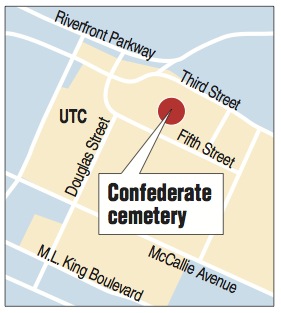 Site of Chattanooga Confederate Cemetery.
The American Civil War has been over for nearly 150 years, but the struggle to preserve the history of those who fought continues.
And Herb DeLoach is doing everything he can to win the battle at the Chattanooga Confederate Cemetery on Fifth Street.
Things look better at the historic resting place of hundreds of Confederate veterans than they did 20 years ago, but without federal funding, corporate backing or much city help, the cemetery relies on a local camp of the Sons of Confederate Veterans for maintenance and upkeep.
At the moment, that means DeLoach, the great-grandson of Alabama infantryman Robert DeLoach, hops on his 46-year-old lawnmower every so often and spends the day keeping the cemetery from becoming overgrown like it did in the early 1990s.