
Monday, November 16, 2026Nov 16

Pro-China party likely to lose in Taiwan’s election

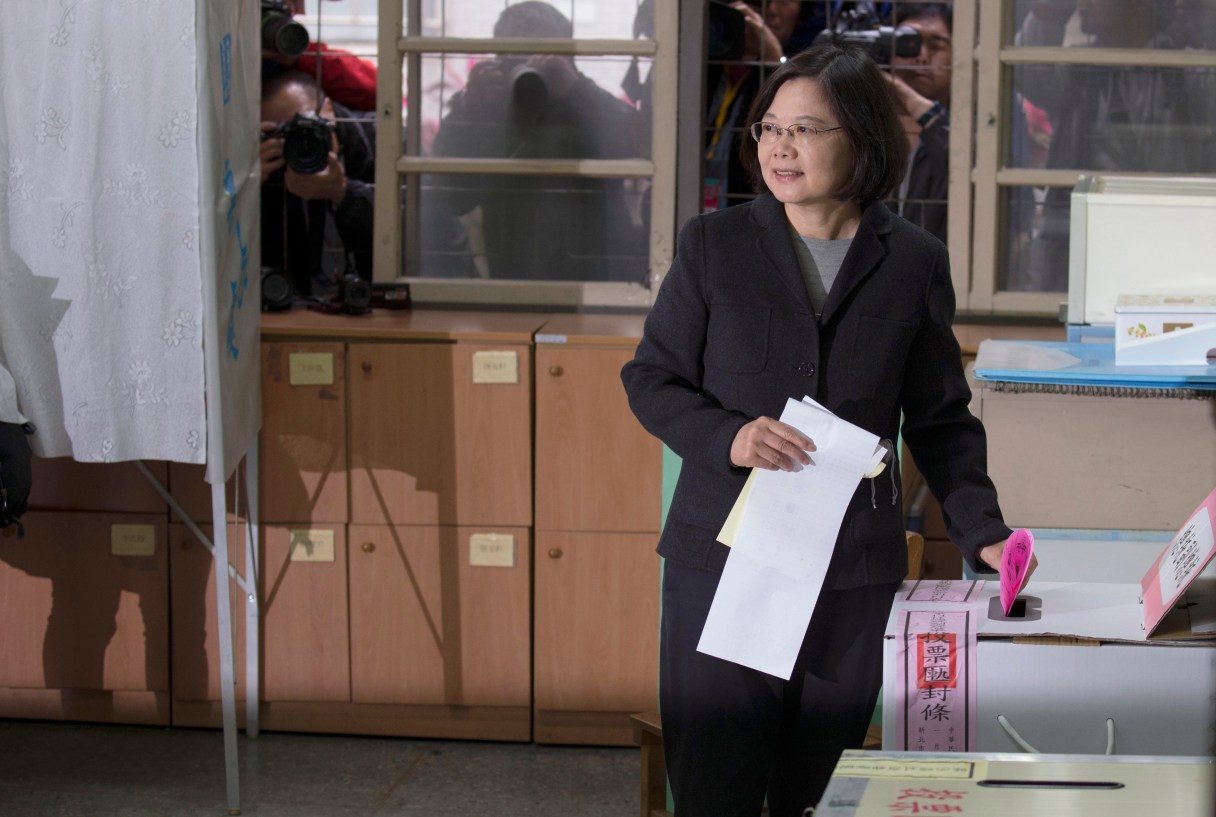
Taiwan's Democratic Progressive Party (DPP) presidential candidate Tsai Ing-wen prepares to cast her vote at a polling station for the presidential election in Taipei, Taiwan, Saturday, Jan. 16, 2016. Voting began Saturday in the presidential election in which the island's China-friendly Nationalist Party appears likely to lose power to the pro-independence opposition, amid concerns that the island's economy is under threat from China and broad opposition among voters to Beijing's demands for political unification. (AP Photo/Ng Han Guan)

TAIPEI, Taiwan (AP) – Taiwanese turned out to vote for a new president Saturday, with the China-friendly Nationalist Party likely to lose power to the pro-independence opposition amid concerns that the island’s economy is under threat from China and broad opposition to Beijing’s demands for political unification.

The Democratic Progressive Party’s Tsai Ing-wen is poised to become the self-governing island’s first female president, returning the main opposition party to power after eight years under Nationalist President Ma Ying-jeou, who is constitutionally barred from another term.

The outcome of the contest for a majority in the 113-seat legislature remains uncertain, with independents and smaller parties posing a threat to both the Nationalists and the DPP.

“Taiwan and China need to keep some distance,” said Willie Yao, a computer engineer voting in Taipei who said he backed Tsai. “The change of president would mean still letting Taiwanese make the decision.”

Reflecting unease over a slowdown in Taiwan’s once-mighty economy, undeclared voter Hsieh Lee-fung said that providing opportunities to the next generation was most important issue.