
Modest and majestic at once, the films of James Gray patiently burrow their way into the souls of their characters and, maybe, into you. Gray is painterly and exacting – some might say to a fault. But his movies’ revelations are complex and contradictory – full of life’s messiness – and their formal textures break open with moments of transcendence.
So, yeah, I like them – particularly his last one, “The Immigrant,” and his new one, “The Lost City of Z.” Both are period films with a pulse and a now-ness the genre often lacks. Each plunges us into the passages of early 20th century strivers and leaves us with a shattering final image of departure. Like the tide, they overwhelm and then recede.
‘The Lost City of Z’
Rating: PG-13 for “violence, disturbing images, brief strong language and some nudity.”Running time: 140 minutes.

“He’s been rather unfortunate in his choice of ancestors,” is how one character explains Percy Fawcett’s predicament early in “The Lost City of Z,” based on David Grann’s nonfiction book. Fawcett (Charlie Hunnam) is a British officer but decoration has eluded him, and his deceased, disgraced father has soiled his name.
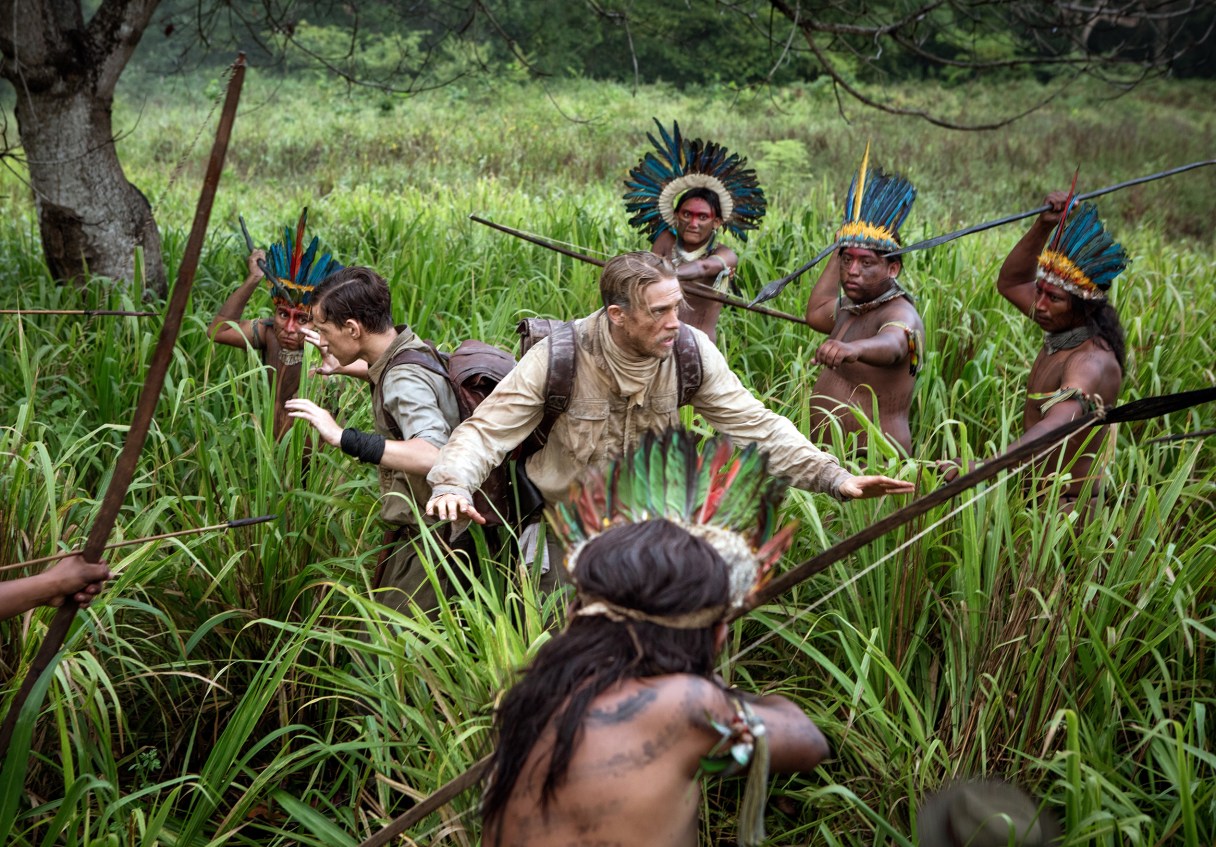
Though craving action, he’s assigned in 1906 on a map-making mission to the “blank spaces” of Bolivia where the British are meant to act as “referees” in a territory dispute with Brazil. The expedition into the Amazon jungles soon fills him with a romantic sense of exploration (his wife, Nina, played by Sienna Miller, reads him Kipling’s “The Explorer”), and he travels across the Atlantic in search of glory and redemption. Success, he’s told, would change his lot “considerably.”