
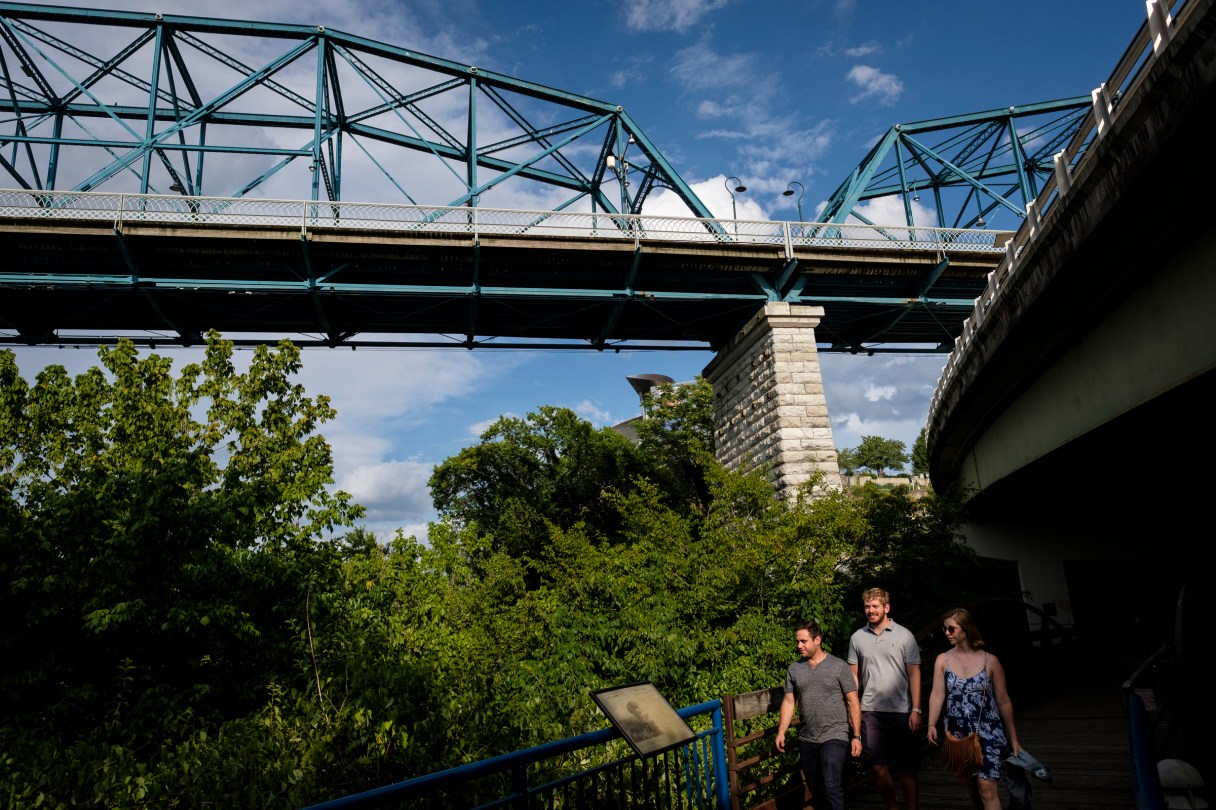
 David Cook
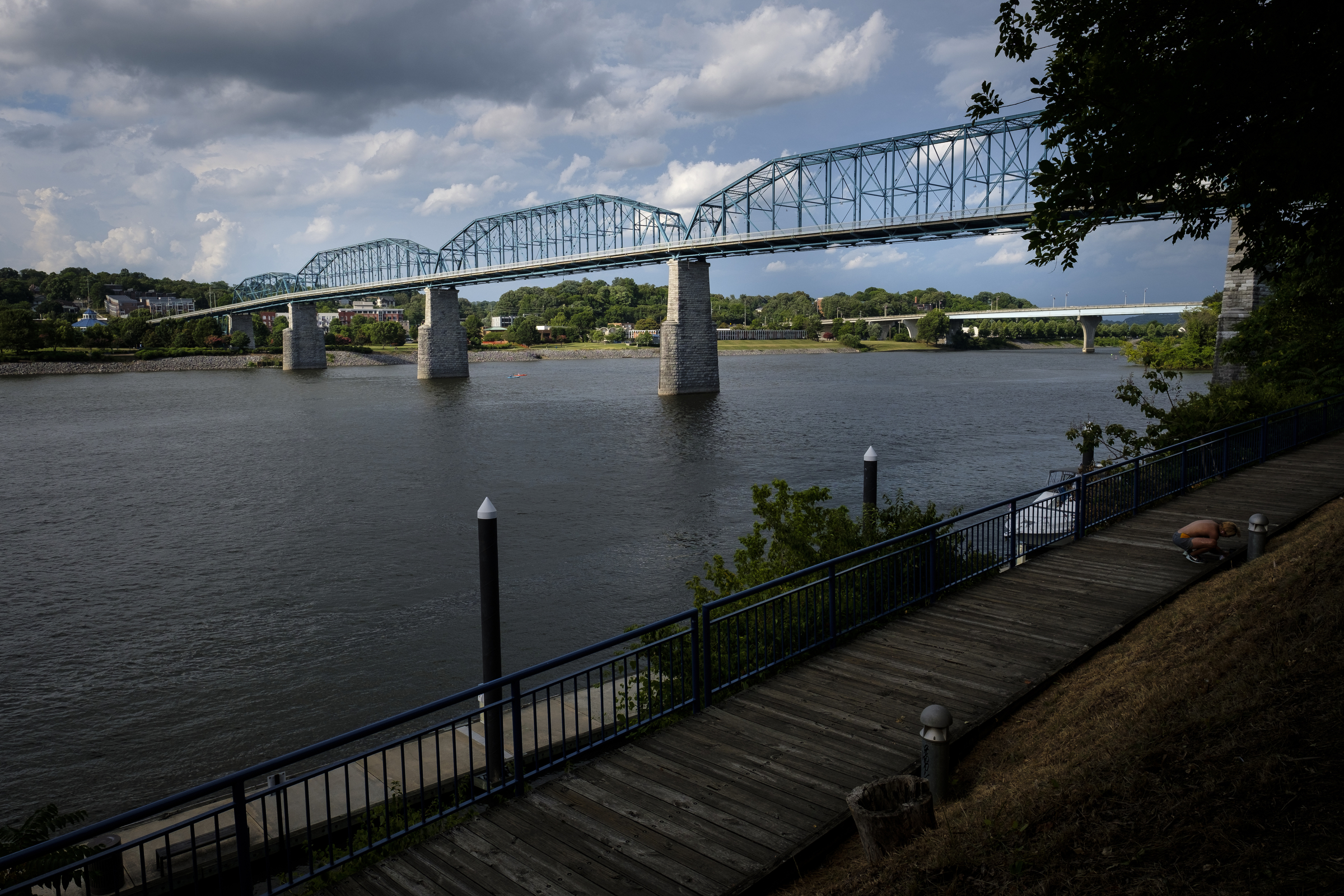 The Walnut Street Bridge is seen on Wednesday, July 6, 2016, in Chattanooga, Tenn.
 Joggers run across the Walnut Street Bridge on Wednesday, July 6, 2016, in Chattanooga, Tenn. $9 million are planned for rehabilitation of the bridge.
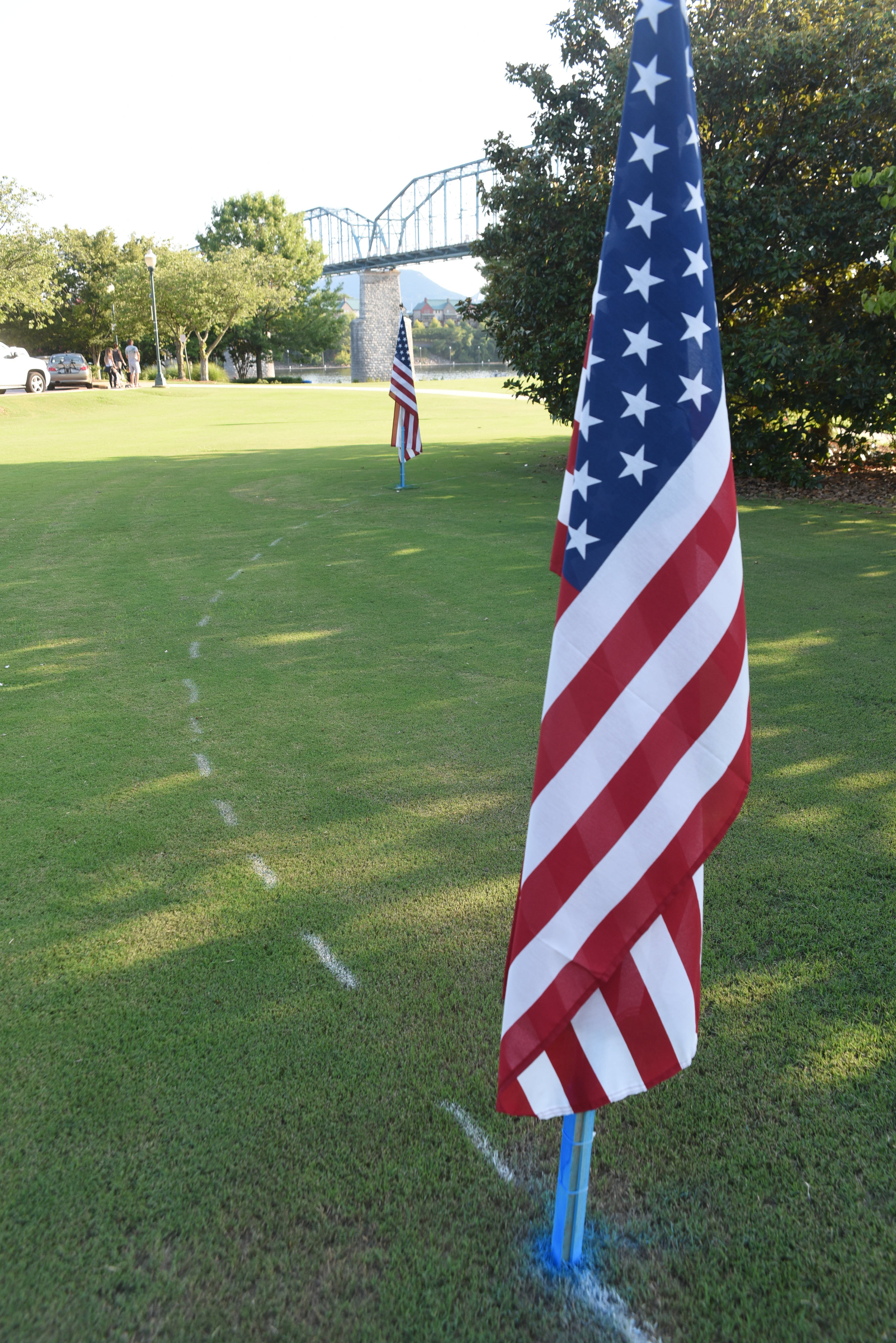 American flags and a dotted white line denotes the area where the Charles H. Coolidge Medal of Honor Heritage Center would be located in Coolidge Park.
View other columns by David Cook
If a new Medal of Honor museum is built, it should be done hesitatingly, mournfully and without celebration.
Especially if the museum is built at Coolidge Park.
No matter how refined or stately the museum – or heritage center, as it’s also called – might be, it would remain, at its heart, a museum of warfare. And warmaking and its history should never be something we memorialize lightly and casually, as carousel music plays nearby.
To build such a museum at Coolidge Park seems to drag the scent of warfare into a place that has always represented the opposite. Children at play. Families and fellowship. The open, democratic greenery. The noble circle of trees from our sister nations. The powerful community of arts and theater nearby.
Warfare destroys such things.