
Friday, November 13, 2026Nov 13

Space station marking 20 years of people living in orbit

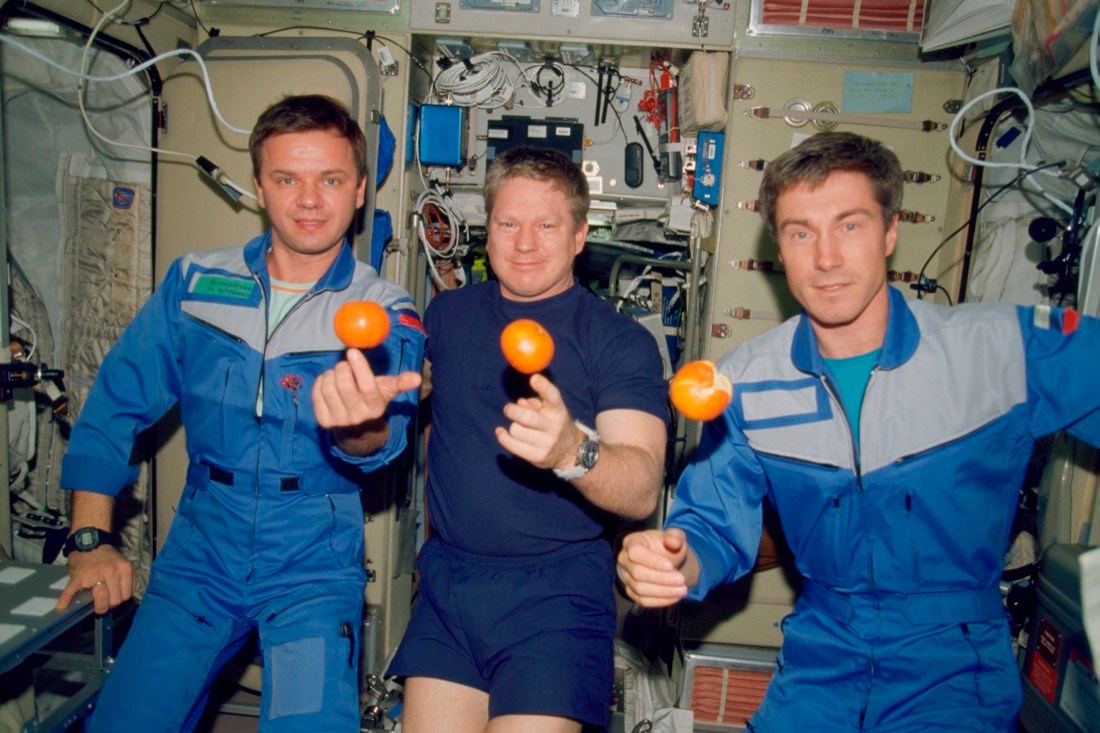
In this photo provided by NASA, the Expedition 1 crew members pose with fresh oranges onboard the Zvezda Service Module of the Earth-orbiting International Space Station on Dec. 4, 2000. Pictured, from left, are cosmonaut Yuri P. Gidzenko, Soyuz commander; astronaut Bill Shepherd, mission commander; and cosmonaut Sergei K. Krikalev, flight engineer. (NASA via AP)
In this photo provided by NASA, the Expedition 1 crew members pose with fresh oranges onboard the Zvezda Service Module of the Earth-orbiting International Space Station on Dec. 4, 2000. Pictured, from left, are cosmonaut Yuri P. Gidzenko, Soyuz commander; astronaut Bill Shepherd, mission commander; and cosmonaut Sergei K. Krikalev, flight engineer. (NASA via AP) In this photo provided by NASA, the Expedition 1 crew members pose with fresh oranges onboard the Zvezda Service Module of the Earth-orbiting International Space Station on Dec. 4, 2000. Pictured, from left, are cosmonaut Yuri P. Gidzenko, Soyuz commander; astronaut Bill Shepherd, mission commander; and cosmonaut Sergei K. Krikalev, flight engineer. (NASA via AP)

CAPE CANAVERAL, Fla. (AP) – The International Space Station was a cramped, humid, puny three rooms when the first crew moved in. Twenty years and 241 visitors later, the complex has a lookout tower, three toilets, six sleeping compartments and 12 rooms, depending on how you count.

Monday marks two decades of a steady stream of people living there.

Astronauts from 19 countries have floated through the space station hatches, including many repeat visitors who arrived on shuttles for short-term construction work, and several tourists who paid their own way.

The first crew – American Bill Shepherd and Russians Sergei Krikalev and Yuri Gidzenko – blasted off from Kazakhstan on Oct. 31, 2000. Two days later, they swung open the space station doors, clasping their hands in unity.

Shepherd, a former Navy SEAL who served as the station commander, likened it to living on a ship at sea. The three spent most of their time coaxing equipment to work; balky systems made the place too warm. Conditions were primitive, compared with now.