
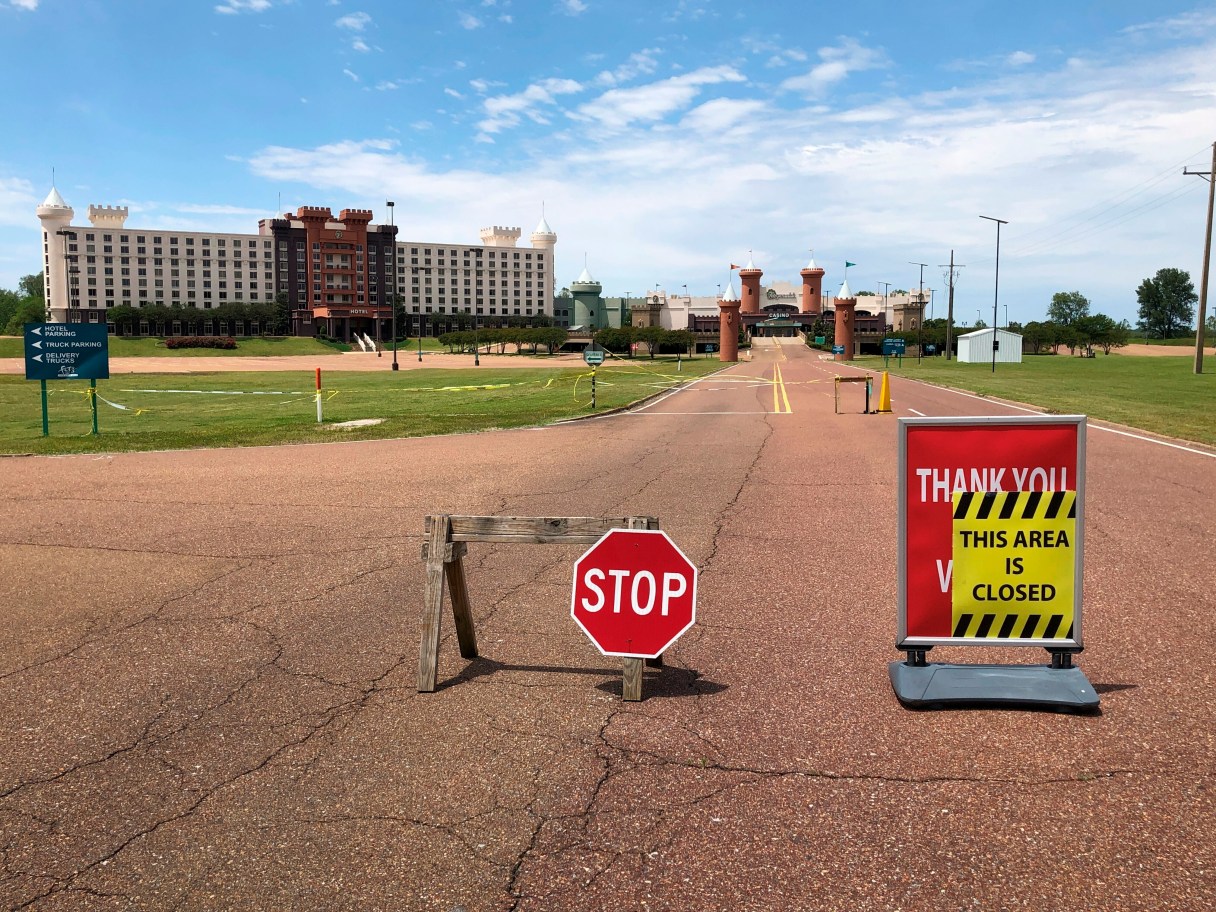
TUNICA, Miss. (AP) – Since mid-March, the wide roads leading to the gambling halls of Tunica County, Mississippi, have been devoid of cars. The bells of the slot machines and chatter from hopeful card players have gone silent. Hundreds of hotel rooms have been empty for two months, and thousands of people have lost their jobs, at least temporarily.
As it has in so many other places around the world, the new coronavirus has dealt a crippling blow to an economy that relies heavily on revenue from more than a half-dozen casinos, all of which were shuttered to help stop the virus’s spread. Even before the pandemic hit, the industry had been experiencing a slow, steady decline.
Historically impoverished and located about 30 miles (48.28 kilometers) south of Memphis, Tennessee, Tunica County sits along the Blues Highway, which draws its name from the uniquely American form of music that was born on the old plantation lands. More than a quarter of the county’s roughly 9,600 residents, 78% of whom are black, live in poverty.
“The casino area is a ghost town,” Chuck Cariker, mayor of the county’s namesake town, Tunica, said in an interview by email.
The thousands of people who depend on the gambling industry – dealers, cooks and cleaning staff, to name a few – have been out of work and out of luck since the casinos closed.