
MIAMI (AP) – It was a scene you would never expect to find in the United States, the land of hot dog eating contests and supersized Slurpees — hundreds of people wandering around forlorn, looking for food, against a backdrop of downed tree branches and a flattened gas station with no gas.
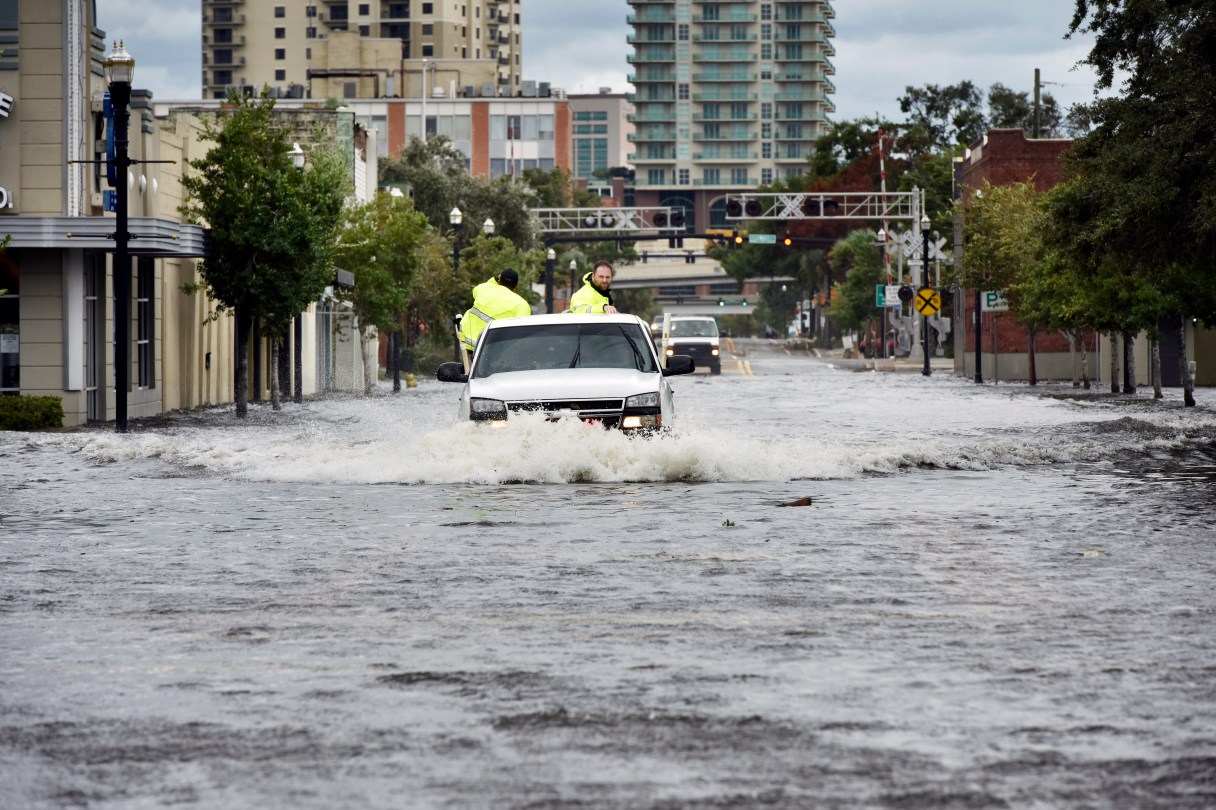
We were all refugees from Irma, which was at one point the most powerful recorded storm ever recorded in the open Atlantic. Her devastation touched much of Florida, including Jacksonville, the very place we’d escaped to from our home in Miami. Now we were hiding out in a hotel, and it looked like the only open restaurant was a Waffle House where about 200 people were waiting in line.
Then my husband and daughter spotted a small Thai restaurant with a few people in it. They pulled up quickly and asked for food. The owner said they were closed, and that he had come just to check on damage. We’ll take anything, my husband pleaded. The owner relented and they left with enough food to feed the five of us — three adults and two always-hungry teenagers. The 20 or so other people who knocked on the door behind us were turned away.
As Irma grew in the Atlantic, feeding voraciously on the warm water until it became a category 5 hurricane, the eye of the storm looked like it was headed directly for us. Miami had seen hurricanes before, of course, but this one would be different, the meteorologists warned. It could be the storm of the century, the likes of which nobody had seen in their lifetimes. You could die by wind, with speeds of up to 180 miles per hour. Or you could die by water, with storm surge predicted to be up to 15 feet in a flat, low-lying region.
Get out, the governor of Florida warned. In some zones, including ours, evacuation was mandatory, and the police went door to door urging everyone to leave. If you stay, they cautioned, we can’t be responsible for your lives.