
Friday, November 13, 2026Nov 13

Jewish heirs sue Germany in US over medieval art treasure

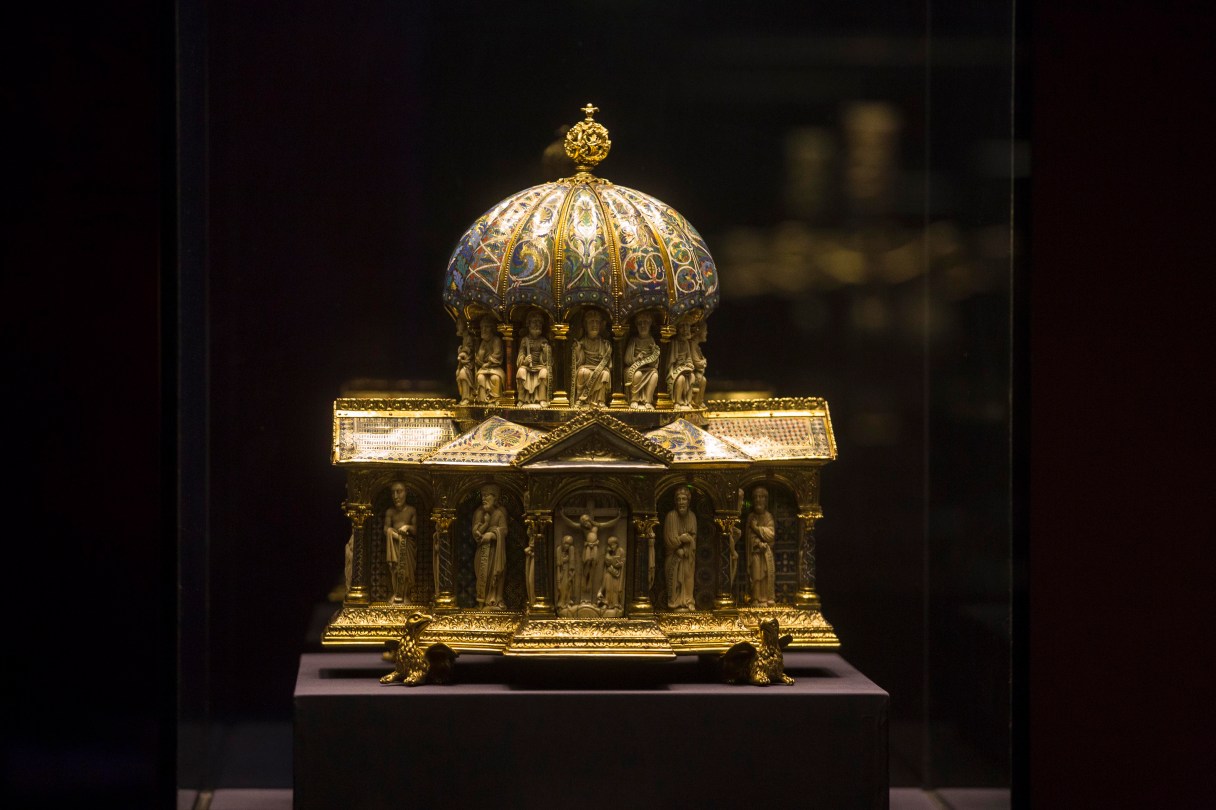
FILE - In this  Jan. 9, 2014 filr photo the medieval Dome Reliquary (13th century) of the Welfenschatz, is displayed at the Bode Museum in Berlin. The heirs of Nazi-era Jewish art dealers said they have filed a lawsuit in the U.S. suing Germany and a German museum for the return of a medieval treasure trove worth an estimated US$ 226 million. The suit, which attorneys said was filed late Monday, Feb 23, 2015 in the U.S. District Court in Washington, D.C., is the latest salvo in a long running campaign by the heirs for return of the so-called Welfenschatz, or Guelph Treasure _ which they claim their ancestors sold under Nazi pressure. (AP Photo/Markus Schreiber)
FILE - In this Jan. 9, 2014 filr photo the medieval Dome Reliquary (13th century) of the Welfenschatz, is displayed at the Bode Museum in Berlin. The heirs of Nazi-era Jewish art dealers said they have filed a lawsuit in the U.S. suing Germany and a German museum for the return of a medieval treasure trove worth an estimated US$ 226 million. The suit, which attorneys said was filed late Monday, Feb 23, 2015 in the U.S. District Court in Washington, D.C., is the latest salvo in a long running campaign by the heirs for return of the so-called Welfenschatz, or Guelph Treasure _ which they claim their ancestors sold under Nazi pressure. (AP Photo/Markus Schreiber)

BERLIN (AP) – The heirs of Nazi-era Jewish art dealers say they have filed a lawsuit in the U.S. suing Germany and a German museum for the return of a medieval treasure trove worth an estimated $226 million.

The suit, which attorneys said was filed late Monday in the U.S. District Court in Washington, D.C., is the latest salvo in a long-running campaign by the heirs for return of the so-called Welfenschatz, or Guelph Treasure – which they claim their ancestors sold under Nazi pressure.

Originally collected over centuries by the Braunschweig Cathedral, the Welfenschatz includes some of the outstanding goldsmith works of the Middle Ages, among them ornate containers in the form of cathedrals used to store Christian relics. Many of the silver and gold pieces are decorated with jewels and pearls. Some are more than 800 years old.

Attorney Nicholas O’Donnell told The Associated Press in an interview in Berlin that the suit asks the Washington court to declare an American and a British descendant of a consortium that owned the collection in 1935 – when it was sold to the German state of Prussia – the rightful owners today.

“Any transaction in 1935, where the sellers on the one side were Jews and the buyer on the other side was the Nazi state itself is by definition a void transaction,” O’Donnell said.