
Friday, October 30, 2026Oct 30

This story is free to read.

Chinese switch to flashlights, generators amid power cuts

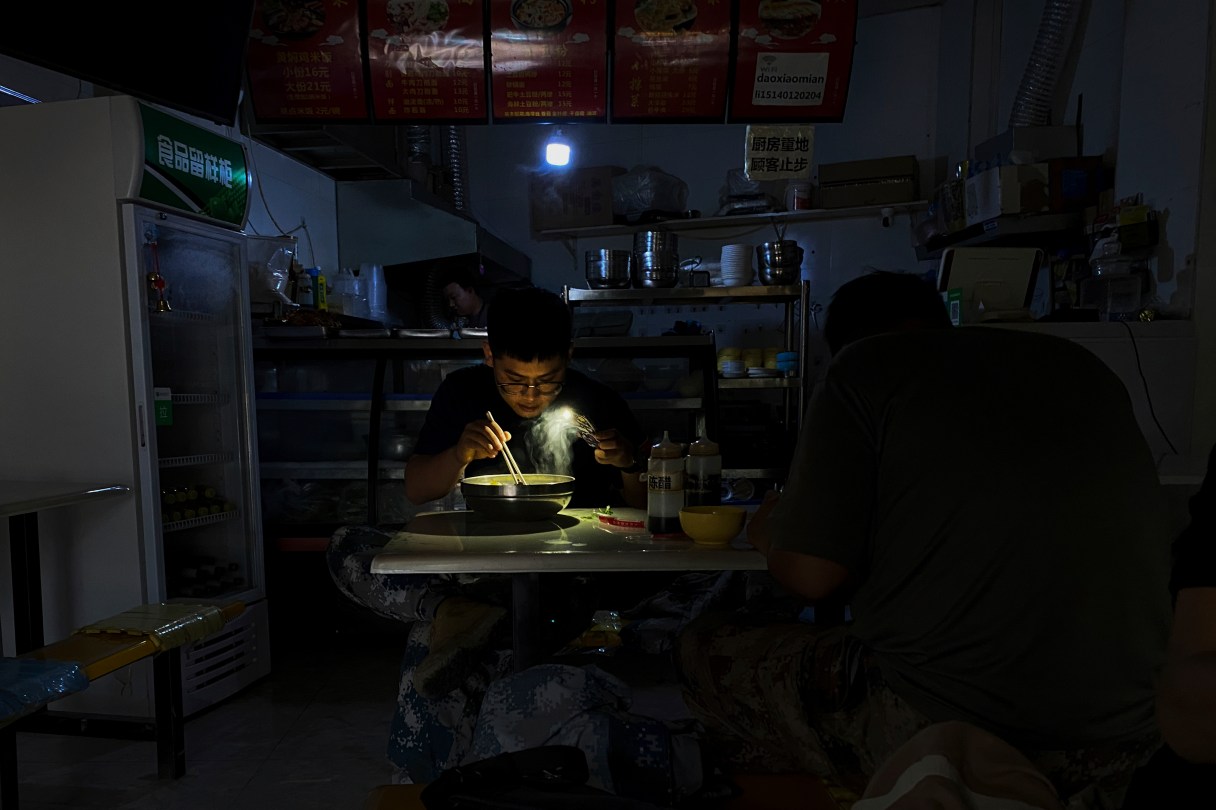
A man uses his smartphone flashlight to light up his bowl of noodles as he eats his breakfast at a restaurant during a blackout in Shenyang in northeastern China's Liaoning Province, Wednesday, Sept. 29, 2021. People ate breakfast by flashlight and shopkeepers used portable generators Wednesday as power cuts imposed to meet official conservation goals disrupted manufacturing and daily life. (AP Photo/Olivia Zhang)
A man uses his smartphone flashlight to light up his bowl of noodles as he eats his breakfast at a restaurant during a blackout in Shenyang in northeastern China's Liaoning Province, Wednesday, Sept. 29, 2021. People ate breakfast by flashlight and shopkeepers used portable generators Wednesday as power cuts imposed to meet official conservation goals disrupted manufacturing and daily life. (AP Photo/Olivia Zhang) A man uses his smartphone flashlight to light up his bowl of noodles as he eats his breakfast at a restaurant during a blackout in Shenyang in northeastern China's Liaoning Province, Wednesday, Sept. 29, 2021. People ate breakfast by flashlight and shopkeepers used portable generators Wednesday as power cuts imposed to meet official conservation goals disrupted manufacturing and daily life. (AP Photo/Olivia Zhang)

People in northeastern China ate breakfast by the light of smartphones and shopkeepers turned on generators as much of the country enforced power cuts Wednesday to meet official conservation targets and ease shortages in some areas.

News reports blame high coal prices they say make power companies reluctant to meet booming demand, while economists say the real motive is political: Officials are under pressure to curtail energy use to meet official targets.

In Shenyang, the northeast’s most populous city, restaurant owner Li Yufeng used a battery from an electric bicycle to run a pot for noodles after seeing a notice power would be switched off at 7:30 a.m. Li said he started work two hours early, at 6 a.m., to prepare chicken, sauces and other dishes.

“There are some impacts, but not a big impact,” Li said as customers ate by smartphone lights.

Factories in China’s busiest manufacturing provinces have been ordered to suspend production for up to a week, prompting concern global supplies of smartphones and other goods might be disrupted. Now, urban neighborhoods are being blacked out, triggering pleas on social media for the government to solve the problem.