
Monday, November 9, 2026Nov 9

Alabama justices: Until high court rules, we’re in charge

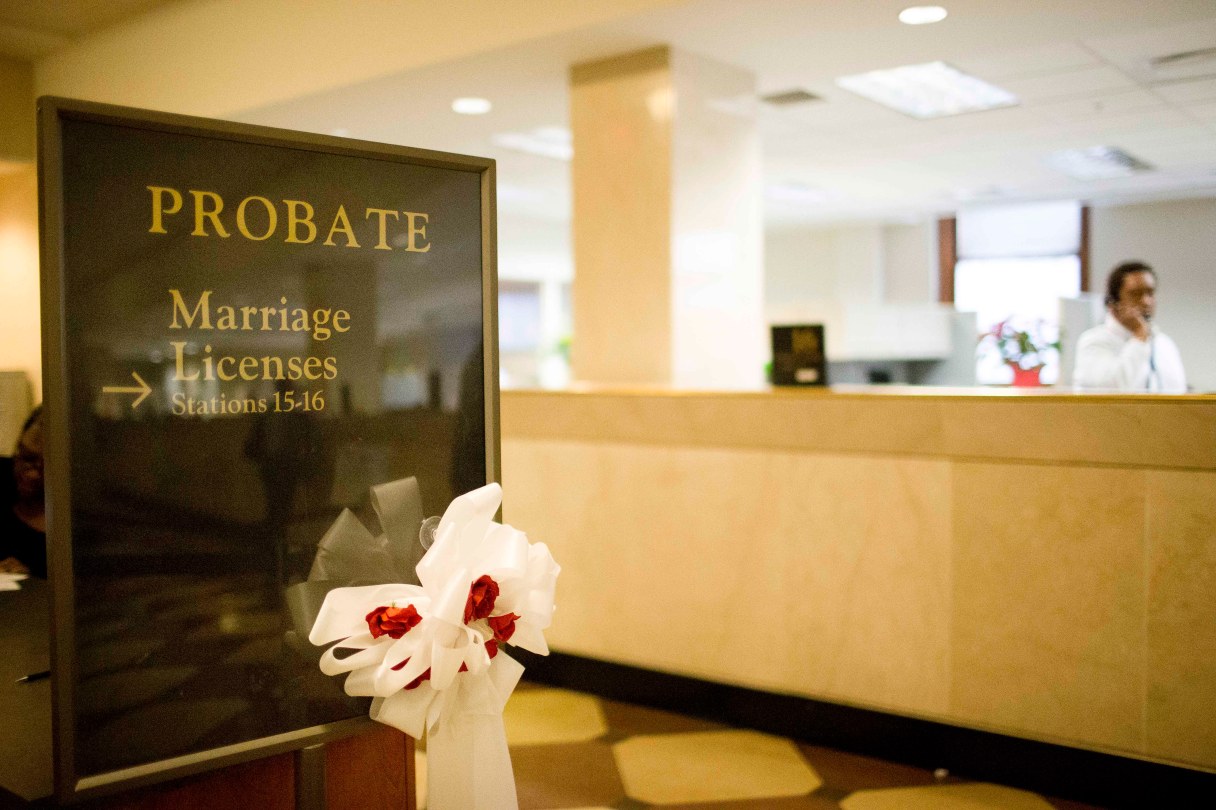
The Birmingham Probate Court sign shows a ribbon welcoming couples to get a marriage license, Wednesday, March 4, 2015, in Birmingham, Ala. Alabama's stand against same-sex marriage regained ground Wednesday after the state's highest court ruled that its ban remains legal, despite federal court pressure to begin issuing licenses to gays and lesbians. (AP Photo/Brynn Anderson)
The Birmingham Probate Court sign shows a ribbon welcoming couples to get a marriage license, Wednesday, March 4, 2015, in Birmingham, Ala. Alabama's stand against same-sex marriage regained ground Wednesday after the state's highest court ruled that its ban remains legal, despite federal court pressure to begin issuing licenses to gays and lesbians. (AP Photo/Brynn Anderson) The Birmingham Probate Court sign shows a ribbon welcoming couples to get a marriage license, Wednesday, March 4, 2015, in Birmingham, Ala. Alabama's stand against same-sex marriage regained ground Wednesday after the state's highest court ruled that its ban remains legal, despite federal court pressure to begin issuing licenses to gays and lesbians. (AP Photo/Brynn Anderson)

BIRMINGHAM, Ala. (AP) – The Alabama Supreme Court has made itself an outlier in the judicial march legalizing same-sex marriages in the United States, drawing rebukes from gay rights advocates and evoking comparisons to Alabama’s defiance of federal authorities during the civil rights movement.

The court set up a showdown with a Mobile, Alabama, federal judge this week when it ordered officials in the state to stop issuing same-sex marriage licenses pending a U.S. Supreme Court decision later this year on whether gays and lesbians have a fundamental right to marry.

The Alabama ruling contradicts U.S. District Judge Callie “Ginny” Granade, who declared in January that Alabama’s constitutional ban on same-sex marriage violates the U.S. Constitution.

“Even as nationwide marriage equality is on the horizon, the Alabama Supreme Court is determined to be on the wrong side of history,” said Shannon Minter, legal director of the National Center for Lesbian Rights.

Alabama wasn’t the first state where a federal trial or appeals court declared same-sex marriages legal, but the state justices made Alabama the only state to push back in advance of the U.S. Supreme Court settling the matter.