
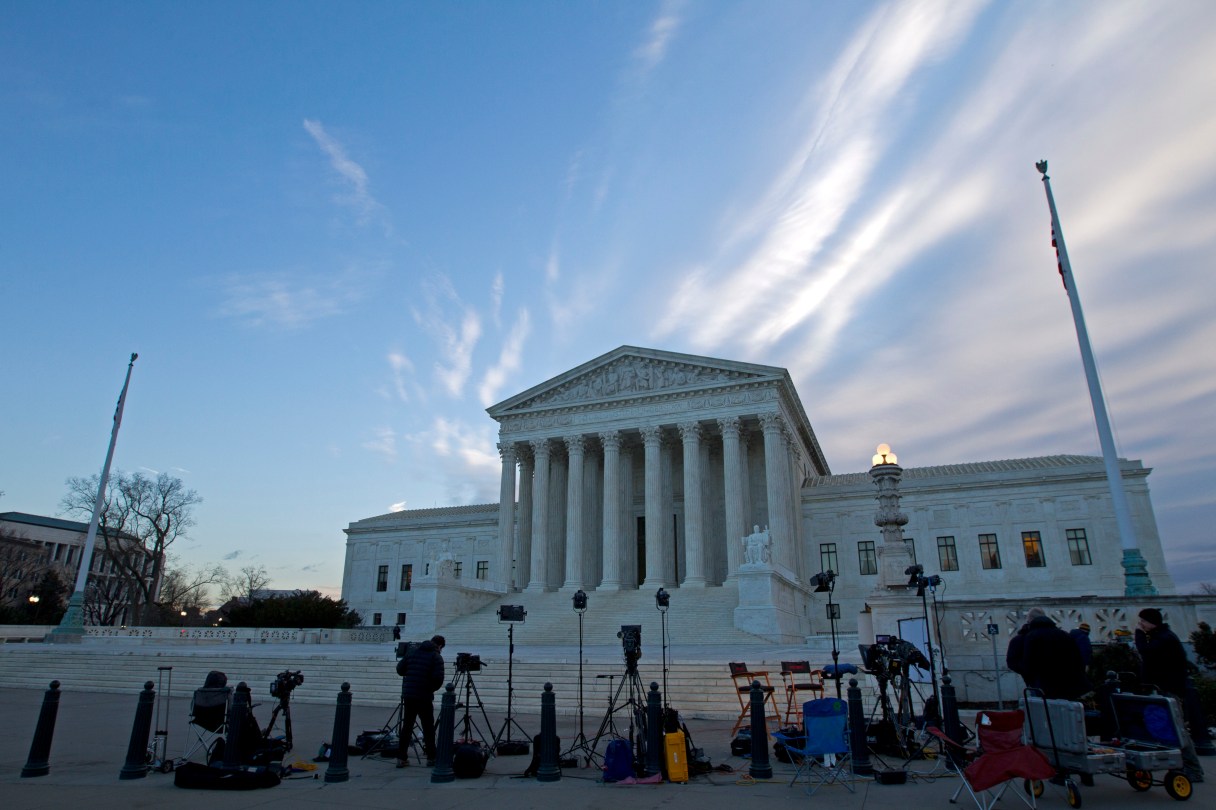
WASHINGTON (AP) – With a nod to the importance of social media in American life, the Supreme Court signaled Monday it could strike down a North Carolina law that bars convicted sex offenders from Facebook, Twitter and other popular sites.
At least five justices, a majority of the court, suggested during argument that they would rule for North Carolina resident Lester Packingham Jr. His Facebook boast about beating a traffic ticket led to his conviction for violating a 2008 law aimed at keeping sex offenders off internet sites children might use.
The state’s lawyer said the law deals with the virtual world in the same way that states keep sex offenders out of playgrounds and other places children visit. More than 1,000 people have been prosecuted under the law, Packingham said in his court filing.
Justice Samuel Alito, who has backed restrictions on speech more often than his colleagues, appeared to be more open to North Carolina’s argument.
But several justices said the law was so broad that it could violate free-speech rights, even of people convicted of sex crimes.