
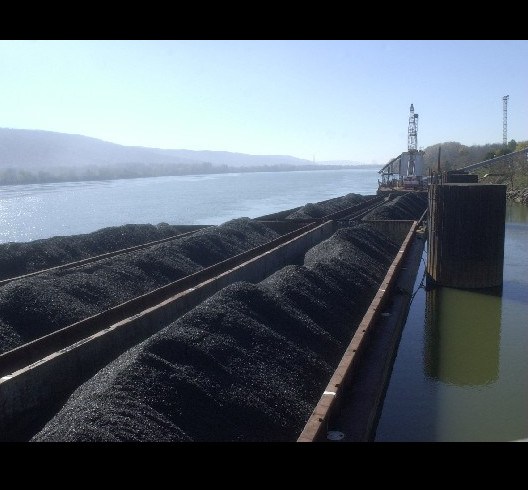
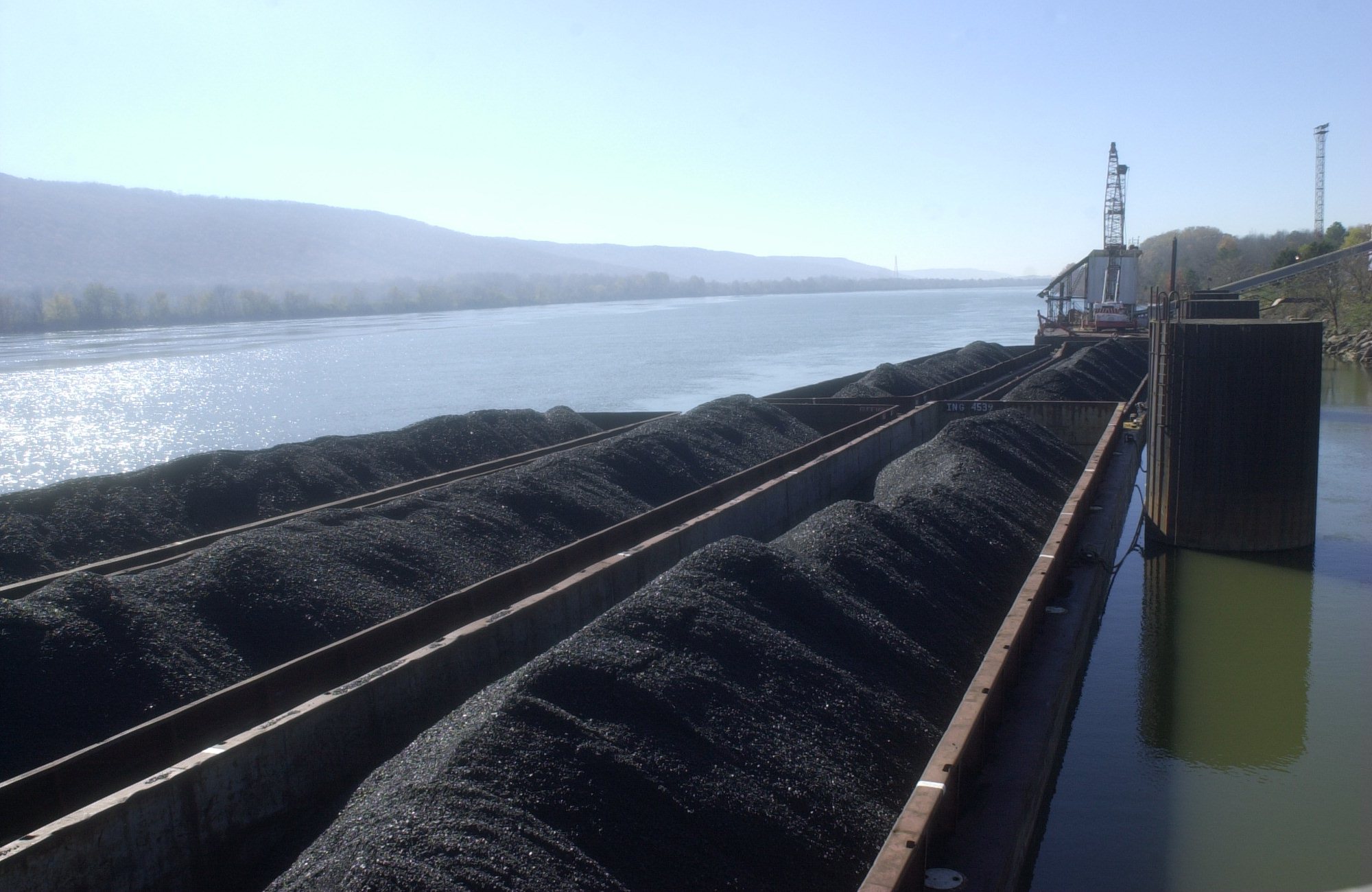
 Barges full of coal tied up on the Tennessee River by the temporary barge unloader at the Tennessee Valley Authority’s Widows Creek Fossil Plant in this file photo.
COAL CUTBACKSTVA has closed or is preparing to close more than half of the 59 coal units it once operated.Shut down• 4 units at John Sevier in Tennessee by 2014• 7 units at Widows Creek in Alabama in 2013 and 2014• 10 units at Johnsonville in Tennessee retired by the end of 2017• 3 units at Allen in Memphis by the end of 2018• 5 units at the Colbert plant in Alabama by 2015• 2 units at Paradise in Kentucky by 2016• 1 unit at Shawnee in Kentucky in 2010Keep running• 1 unit at Widows Creek in Alabama• 2 units at Cumberland near Nashville• 9 units at Kingston in Tennessee• 4 units at Gallatin in Tennessee• 1 unit at Paradise in Kentucky• Either 7 or 9 units at Shawnee in Kentucky, depending upon TVA decision next monthAbout Shawnee Fossil PlantLocation: Paducah, Ky., on the Ohio RiverSize: Nine units capable of generating 8 billion kilowatt hours of electricity a year, enough for 540,000 homes. Unit 10 was already shut down.History: Construction began in 1951 and was completed in 1956.Pollution controls: Coal scrubbers and selective catalytic control (SCR) devices were installed on seven of the nine units to limit smog emissions.Decision: For units 1 and 4, TVA must either retrofit or shut down the units by December 2017Schedule: An environmental assessment will soon be released and TVA must send letter to EPA of its decision on units 1 and 4 by Dec. 31.Source: Tennessee Valley Authority
U.S. Sen. Mitch McConnell, R-Ky., won re-election and will become Senate majority leader in 2015 with his vow to fight what he calls President Obama’s “war on coal.”
But the federal government’s biggest utility may decide next month to curb its coal use, even in McConnell’s coal-rich Kentucky, to reduce pollution and meet environmental rules.
TVA will decide whether to retrofit or shut down two of the nine units at the Shawnee Fossil Plant in Paducah, Ky. Units 1 and 4 are the only coal-fired units there still lacking scrubbers and selective catalytic control devices to control harmful smog emissions.
The utility has closed or is shutting down more than half of the 59 coal-fired units it once used to generate nearly two-thirds of its electricity at other plants in Tennessee, Alabama and Kentucky.