
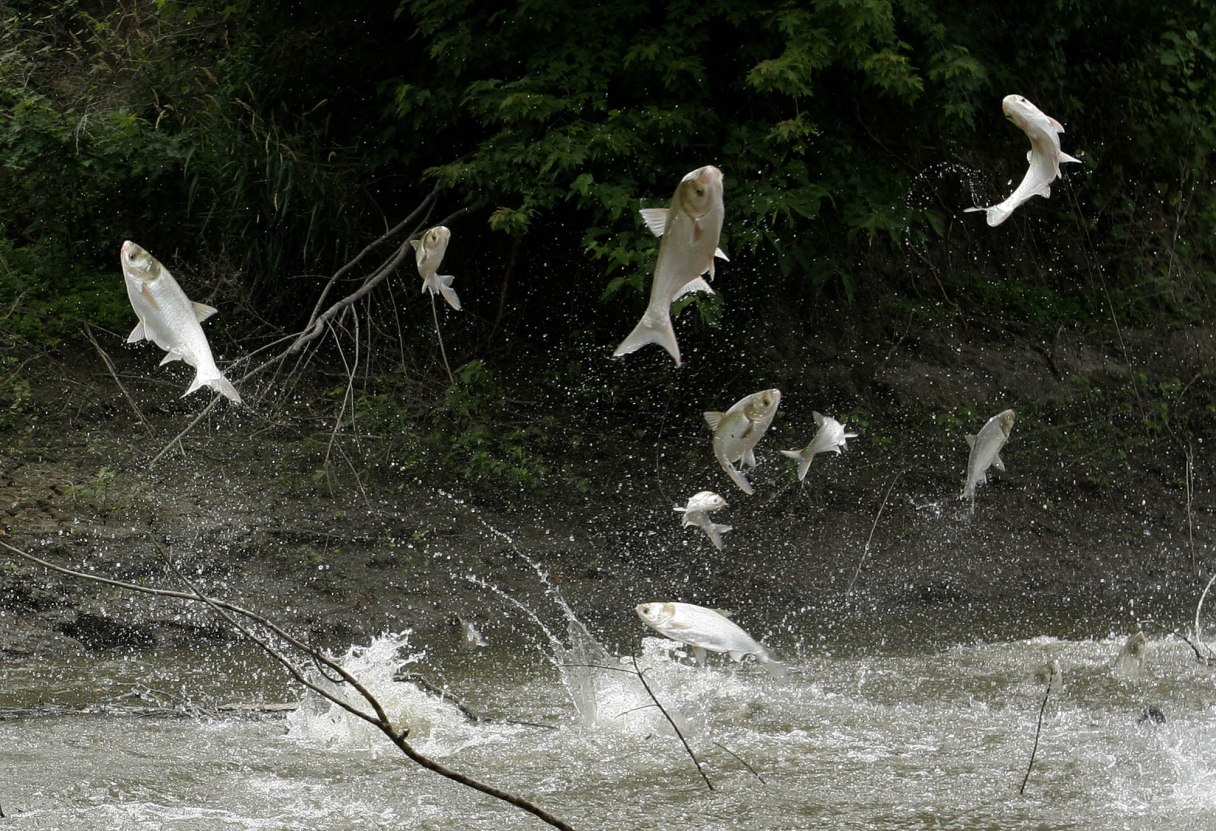
NASHVILLE, Tenn. (AP) — Tennessee Gov. Bill Lee has signed an executive order establishing a commission that will provide advice on mitigating the invasion of Asian carp into the state’s lakes and river systems, according to a news release.
Lee signed the new order on Wednesday and the new Asian Carp Advisory Commission will provide its first report in October.
Asian carp were first imported to the U.S. in the 1960s and 1970s to help clean retention ponds, but they later escaped into the Mississippi River system during flooding and have been migrating south ever since. They now threaten to upend aquatic ecosystems, starve out native fish and wipe out endangered mussel and snail populations along the Mississippi River and dozens of tributaries.
Silver and bighead carp, two species of Asian carp threatening the Southeast, are capable of eating up to 40% of their body weight each day and are thought to spread through locks, water navigation systems used in rivers and canals.
(Read more: Invasive carp endanger region’s freshwater ecosystem, recreational water users)