
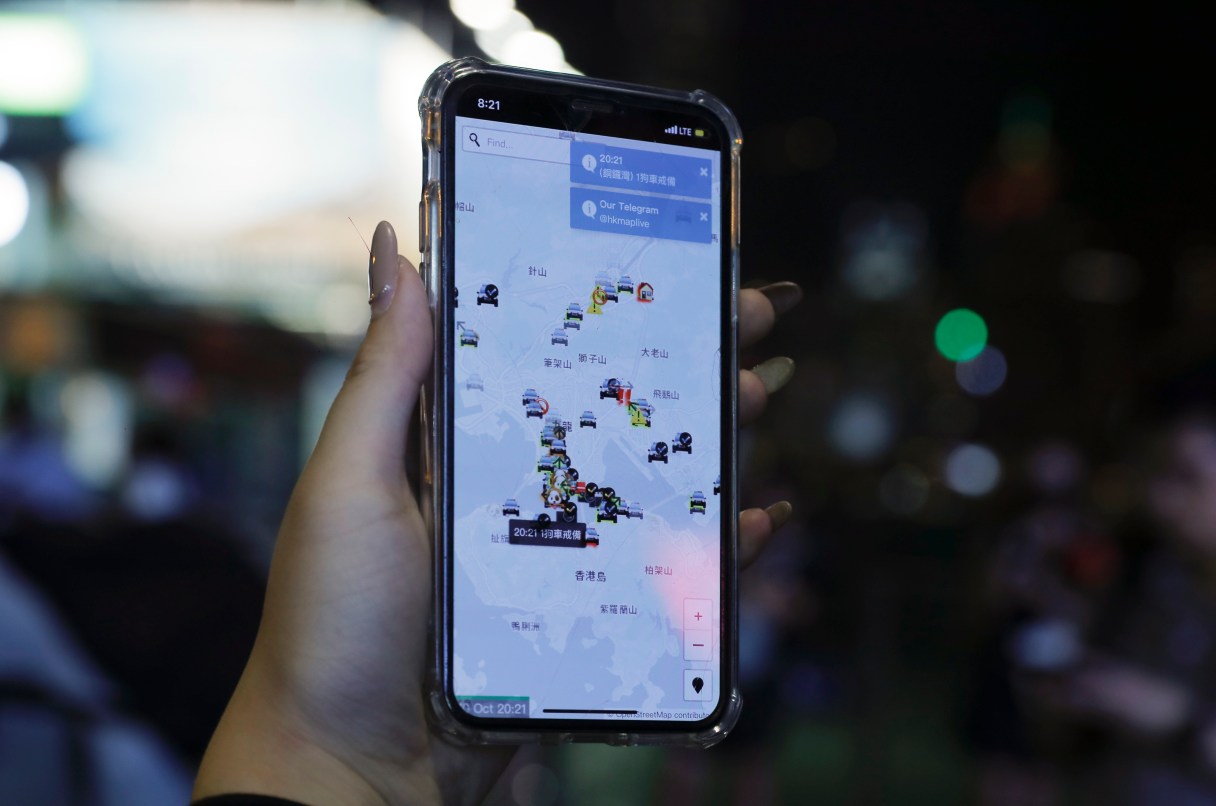
Under pressure from China, Apple has removed a smartphone app that enabled Hong Kong protesters to track police. It has cut off access in mainland China to a news app that extensively covered the anti-government demonstrations. And it has made it harder to find an emoji representing the Taiwanese national flag.
The tech company’s latest acts of capitulation to China’s ruling Communist Party have alienated some Hong Kong consumers and angered democracy activists around the world. But the truth is, few U.S. companies have as much of their business tethered to China as Apple.
“That’s the price you pay if you want to be in the market,” said Matt Schrader, a China analyst for the Alliance for Securing Democracy at the German Marshall Fund. “You have to abide by demands to censor information: anything that paints the party or its history, or its top leaders, in an unflattering light, or disagrees with their preferred portrayal of China as a country.”
Apple relies on Chinese factories to assemble iPhones, which generate most of the company’s profits. Apple has also cultivated a loyal following in the country. China has emerged as the company’s third-largest market behind the U.S. and Europe, accounting for 20% of its sales during its past fiscal year.
 FILE – In this Sept. 24, 2011, file photo, an Apple logo is displayed at the Apple store in International Financial Center (IFC) shopping Mall, in Hong Kong. Under increased pressure from China, Apple has removed a police-tracking smartphone app used by Hong Kong protesters, cut off local access to a news app that extensively covered the anti-government protests and made it harder to find an emoji representing the Taiwanese national flag. (AP Photo/Kin Cheung, File)
President Donald Trump’s trade war with China has already complicated things for Apple, raising fears that Beijing will impose measures to hurt Apple in retaliation for U.S. tariffs on Chinese products and sanctions against Huawei, the Chinese telecommunications equipment giant.