
Monday, November 16, 2026Nov 16

Israeli billionaire hopes to bring water to parched Gaza

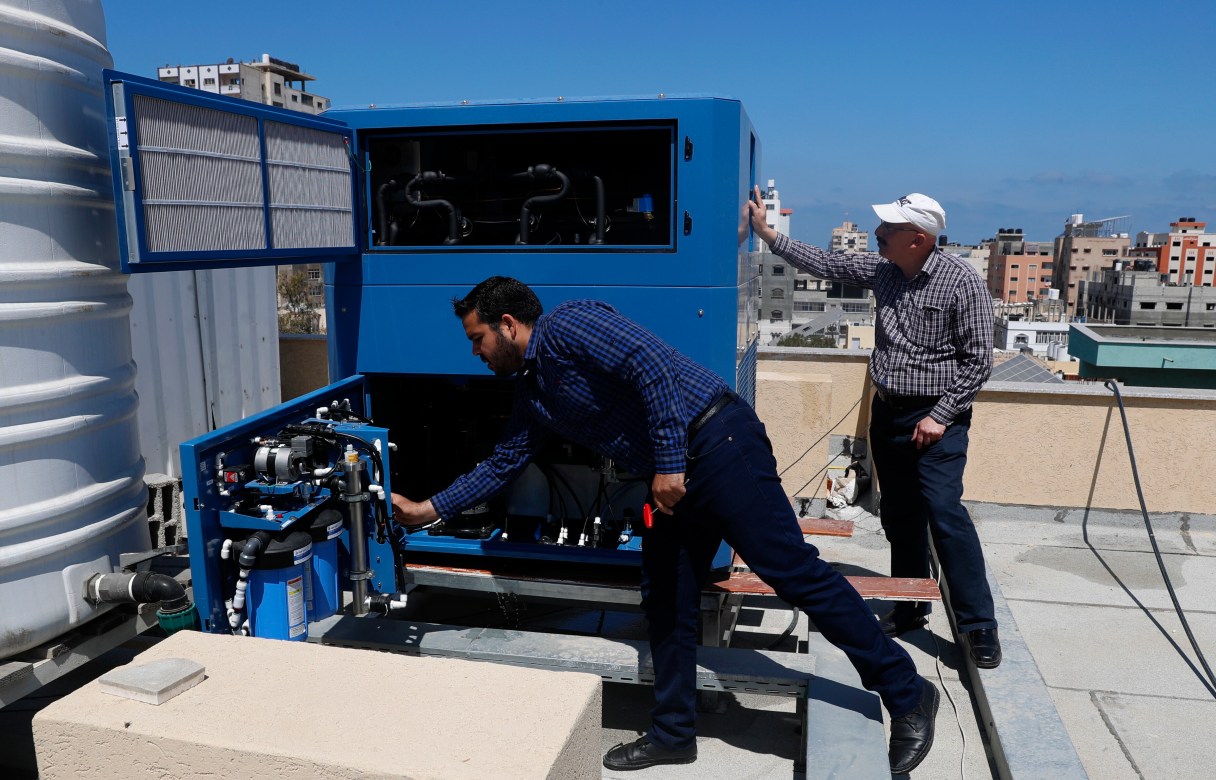
In this Thursday, April 30, 2020 photo, Palestinian engineer Raed Nakhal from Palestine Children Relief Fund, right, and engineer Abdullah Dewik, check the GEN-M machine that generates safe drinking water from air at the roof of al-Rantisi pediatric hospital in Gaza City. A Georgian-Israeli billionaire believes he has found a solution to the Gaza Strip's chronic water crisis. Michael Mirilashvili wants to deliver hundreds of generators that produce drinking water out of thin air. His company, Watergen, has already delivered two of the machines to Gaza in a rare case of Israeli-Palestinian cooperation in the Hamas-ruled enclave. (AP Photo/Adel Hana)

GAZA CITY, Gaza Strip (AP) – A Georgian-Israeli billionaire believes he has found a solution to the Gaza Strip’s chronic water crisis.

Michael Mirilashvili wants to deliver hundreds of generators that produce drinking water out of thin air. His company, Watergen, sent a machine to a Gaza hospital last week in a rare case of Israeli-Palestinian cooperation in the Hamas-ruled enclave.

Gaza’s water situation is dire. Since the 2007 Hamas takeover of the crowded Palestinian territory, Gaza’s 2 million people have endured endured a crippling border blockade by Israel and Egypt that froze virtually all trade and most travel.

The 13-year-old lockdown, along with three Israel-Hamas wars, has produced chronic power cuts and damaged Gaza’s infrastructure, contributing to water contamination.

Electricity shortages prevent proper sewage treatment, forcing the strip to spew over 100,000 cubic meters (3.5 million cubic feet) of poorly treated sewage into the Mediterranean each day, according to U.N. estimates.