
WASHINGTON (AP) – For the last years, the United States could neatly sum its objective in Syria in a single, uncontroversial bullet point: fighting the Islamic State group. Now that the extremists have been squeezed from all but the last bits of their former territory, the Trump administration is struggling to define the boundaries of its mission, and how and when America’s lengthy engagement will end.
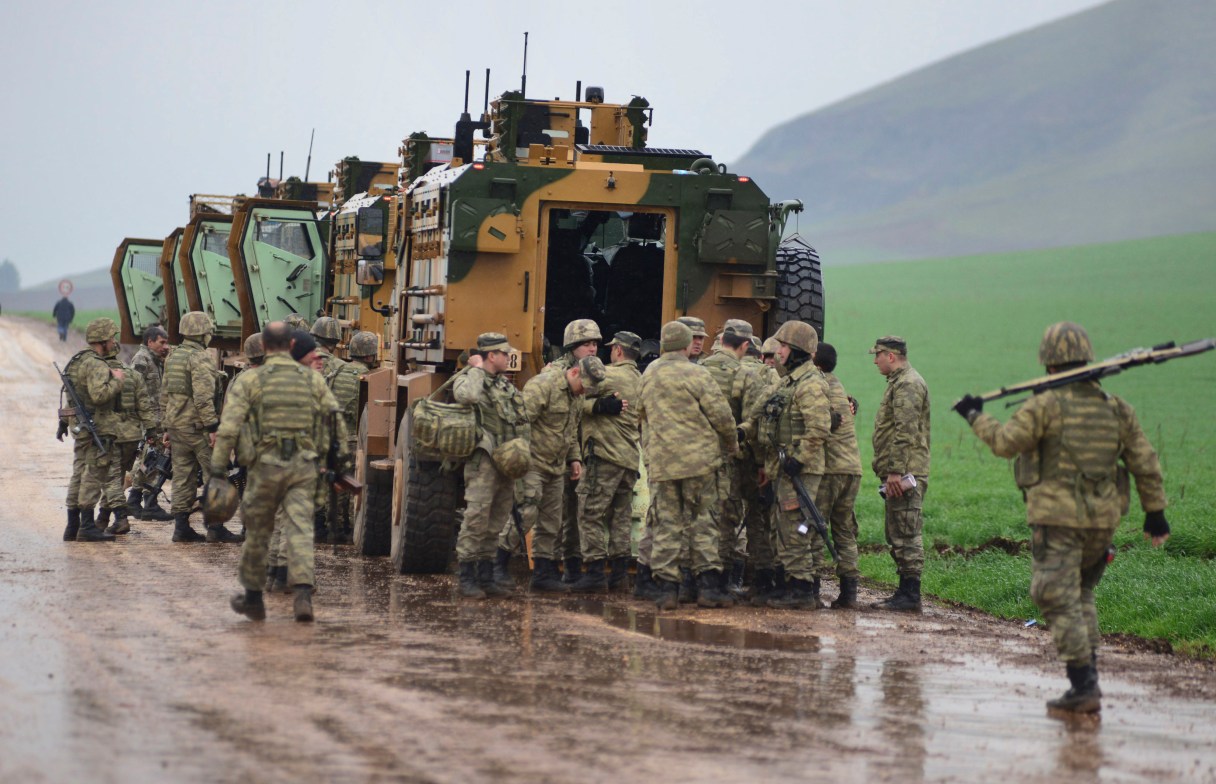
A crisis between the U.S. and Turkey, triggered by the latter’s new military offensive in Syria, has laid bare how a dizzying array of alliances in Syria is growing even more convoluted in the absence of IS as a major force. Either the Americans must abandon the Kurds who fought alongside them in Syria, or a profound rift with a NATO ally appears all but inevitable.
Although Turkey has long been incensed by U.S. military support for Syrian Kurdish fighters, calling them terrorists, the U.S. could make a compelling case while the Kurds spearheaded the anti-IS fight. As IS recedes as an immediate threat, the legs of that argument are falling away, fueling growing Turkish outrage that even the Trump administration acknowledges has some merit.
“This is a tough circle to square. It’s the ultimate in heavy diplomatic lifting,” said Frederic Hof, who oversaw Syria policy in the Obama administration’s first term and is now at the Atlantic Council.
The Islamic State’s retreat also has forced the U.S. to stretch thinner its legal rationale for operating in Syria. Doing so has raised delicate questions about whether Congress and the American people have truly signed off on a mandate for Syria that goes far beyond killing terrorists.