
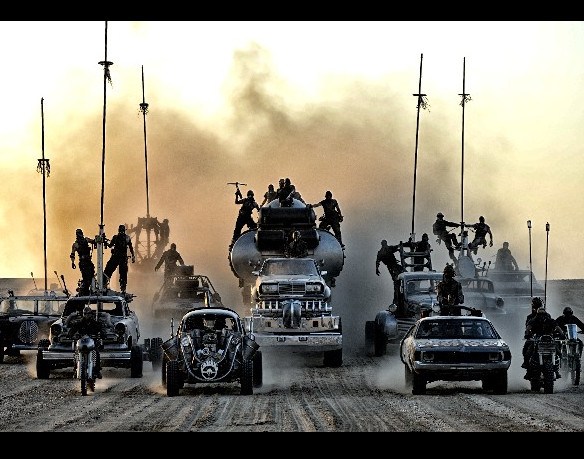
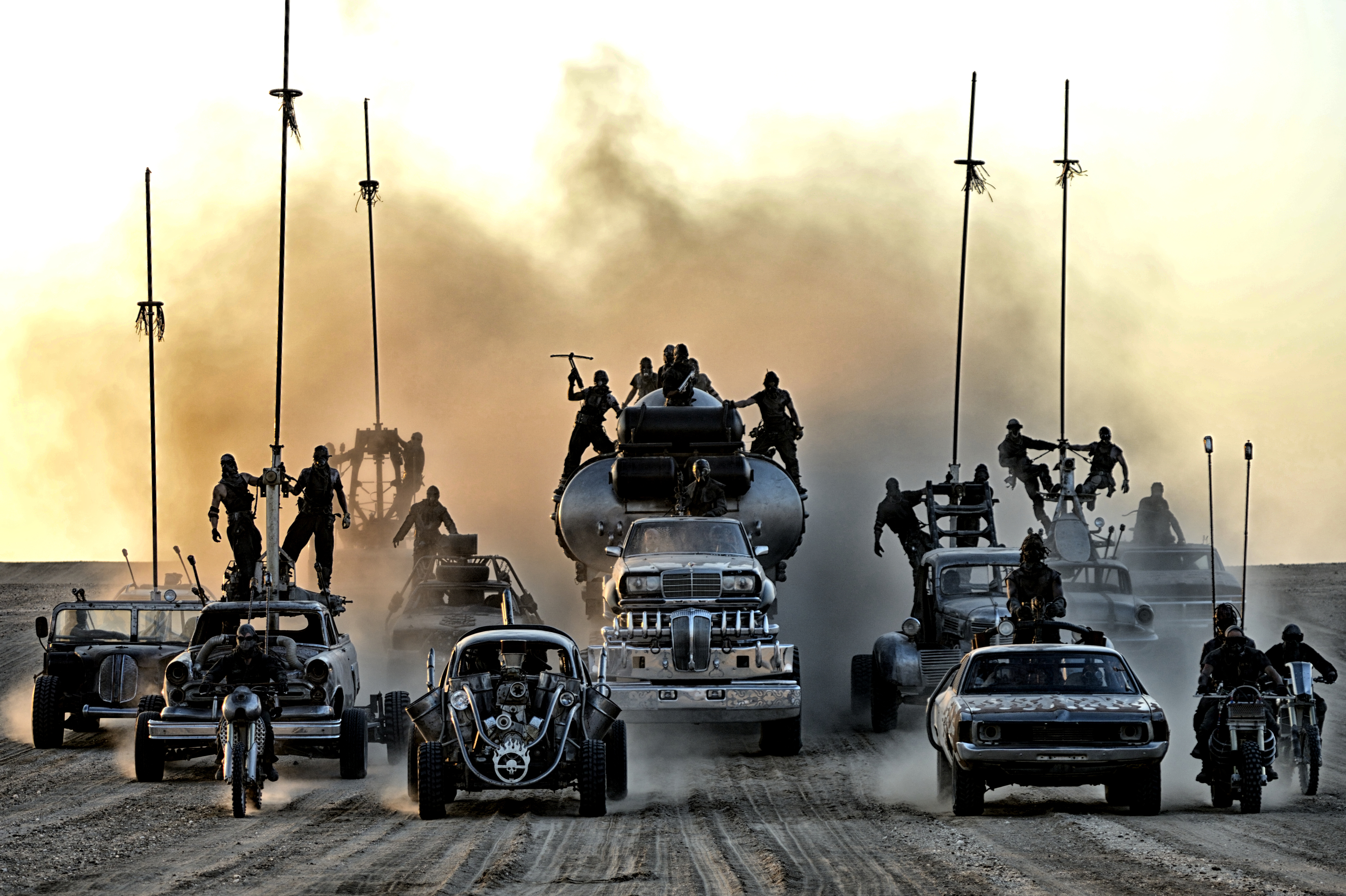
 Mad Max: Fury Road
A-POP-CALYPTIC CULTUREA tremendous number of films, TV shows, books and video games set during or after a worldwide calamity have been released in the last five years. Here are a few:Films* “Snowpiercer” (2014)* “Interstellar” (2014)* “The Colony” (2013)* “Elysium” (2013)* “How I Live Now” (2013)* “World War Z” (2013)* “This is the End” (2013)* “The Hunger Games” series (2012/2013/2014/2o15)* “Cloud Atlas” (2012)* “Seeking a Friend for the End of the World” (2012)* “The Book of Eli” (2010)TV shows* “Dominion” (2014-)* “The Leftovers” (2014-)* “The Strain” (2014-)* “Revolution” (2012-2014)* “Doomsday Preppers” (2012-)* “Falling Skies” (2011-2014)* “The Walking Dead” (2010-)* “Survivors” (2008-2010)Books* “The Decay: A Post Apocalyptic Tale of Survival” (2014)* “After: The Shock” (2014)* “Eden’s Promise” (2013)* “It’s Better This Way” (2013)* “Blood of Eden” series (2012/2013/2014)* “Wool” (2012)* “Ashfall” series (2011/2012/2014)* “The Passage” series (2010/2012/2014)Video games* “Wasteland 2” (2014)* “Metro Last Light” (2013)* “The Last of Us” (2013)* “Dead Rising 3” (2013)* “Plague, Inc.” (2012)* “Ravaged” (2012)* “Lone Survivor” (2012)* “Deadlight” (2012)* “Rage” (2011)* “Darksiders” (2010)* “Fallout: New Vegas” (2010)* “Metro 2033” (2010)* “Enslaved: Odyssey to the West” (2010)
Nobody likes a story with a dull ending.
In recent years, dozens of books, video games, movies and TV shows have depicted spectacularly horrible conclusions to humanity at the hands of zombified hordes, devastating infections, extreme climate change and nuclear war, among other calamities.
Despite millennia-old myths and legends that demonize the end times, people seem delighted by modern-day tales of the apocalypse, says James Berger, a senior lecturer at Yale University.
“There’s an impulse of pleasure in the apocalypse. There’s a fear of the end of the world, but there’s also a desire to see it happen — not happen to you — but to see it happen,” says Berger, whose 1999 book, “After the End,” analyzes fictional depictions of the aftermath of world-ending catastrophes.