
JERUSALEM (AP) – When Prime Minister Benjamin Netanyahu dissolved his unwieldy coalition and called new elections last month, he appeared almost certain to be returned once more to office. But a new center-left alliance has surged past his Likud party in the polls, turning the March 17 contest into a toss-up.
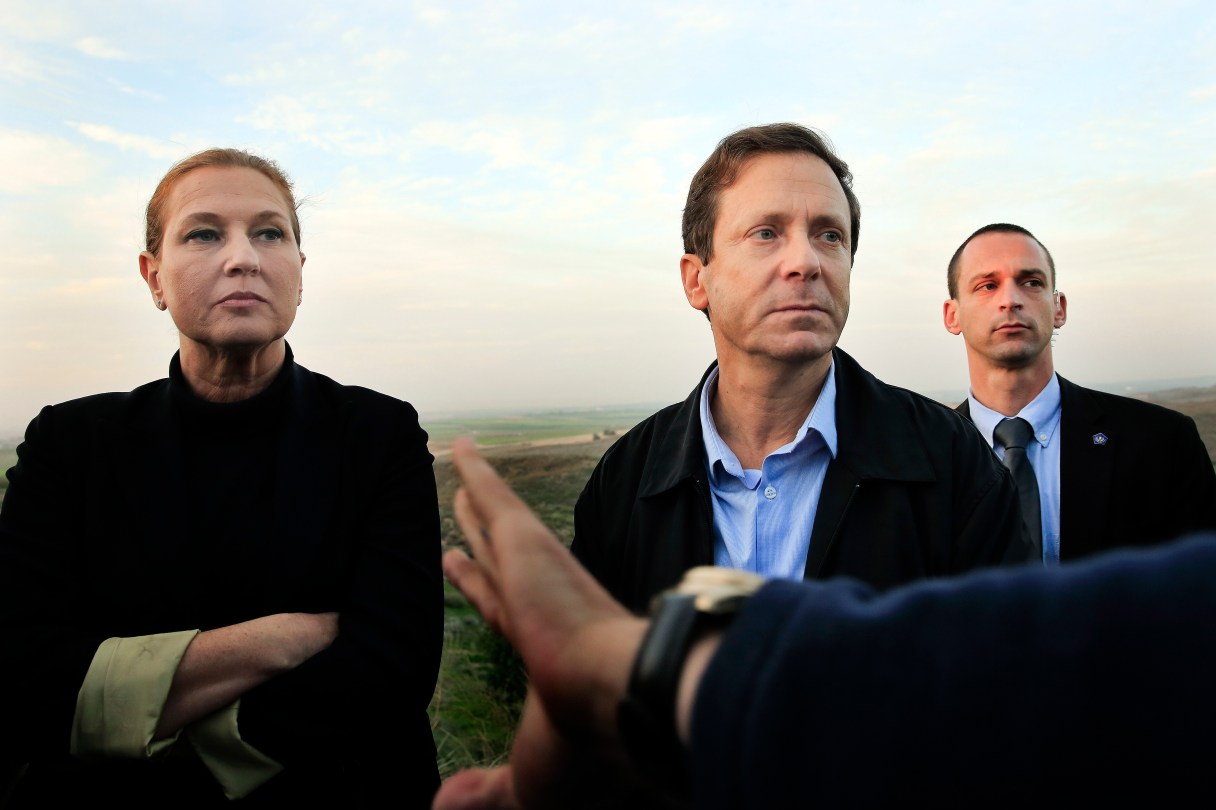
After joining forces with former Foreign Minister Tzipi Livni to create a joint grouping they call “The Zionist Camp,” Labor Party leader Isaac Herzog is looking, to increasingly many Israelis, like a viable alternative to Netanyahu. He promises to reverse the country’s slide toward international isolation and corrosive social inequality.
Much of the Israeli public has tired of Netanyahu’s lengthy rule, but many still see him as the most suitable person to fill the top job. Herzog and Livni have chipped away at this sense of Netanyahu inevitability by embracing some nationalist terminology, drafting high-profile parliamentary candidates and fomenting a snowballing sense that they might actually win.
Part of the strategy is an agreement that they would split a four-year term, with Herzog stepping aside for Livni halfway through. Few in Israel expect this to happen – there is essentially no chance for any one party to win a full majority in parliament, and coalition partners would likely then demand their own turn at a “rotation.” Yet the two-versus-one narrative, polls suggest, has bred momentum.
“It’s either him, or us,” their campaign slogan reads.