
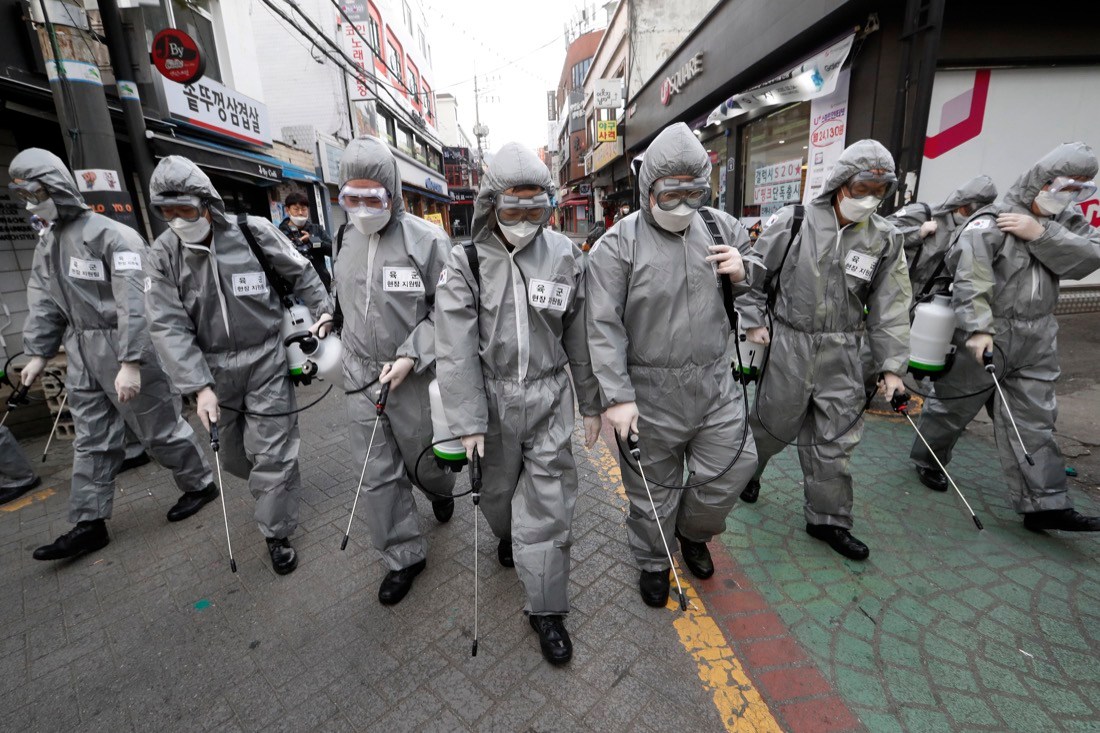
BANGKOK (AP) – South Korea struggled to find enough hospital beds for sick patients, Iran and Italy grappled with rising deaths, and Saudi Arabia banned citizens from performing the pilgrimage to Mecca as the coronavirus that tormented China acquired firm footing elsewhere in the world.
As the number of new cases drops precipitously in China, attention has shifted to South Korea, Italy and Iran, countries with major coronavirus clusters that the World Health Organization says account for 80% of new cases outside China.
“People are afraid and uncertain. Fear is a natural human response to any threat,” said WHO’s leader, Tedros Adhanom Ghebreyesus. “But as we get more data, we are understanding this virus and the disease it causes more and more.”
WHO said about 3.4% of people infected with the virus COVID-19 globally have died, making it more fatal than the common flu. A study published last week in the New England Journal of Medicine assessing data from more than 30 Chinese provinces estimated the death rate was 1.4%.
Death rates in outbreaks are likely to skew higher early on as health officials focus on finding severe and fatal cases, missing most milder cases. WHO says the majority of people with the new coronavirus experience only mild symptoms and do not require any treatment.