
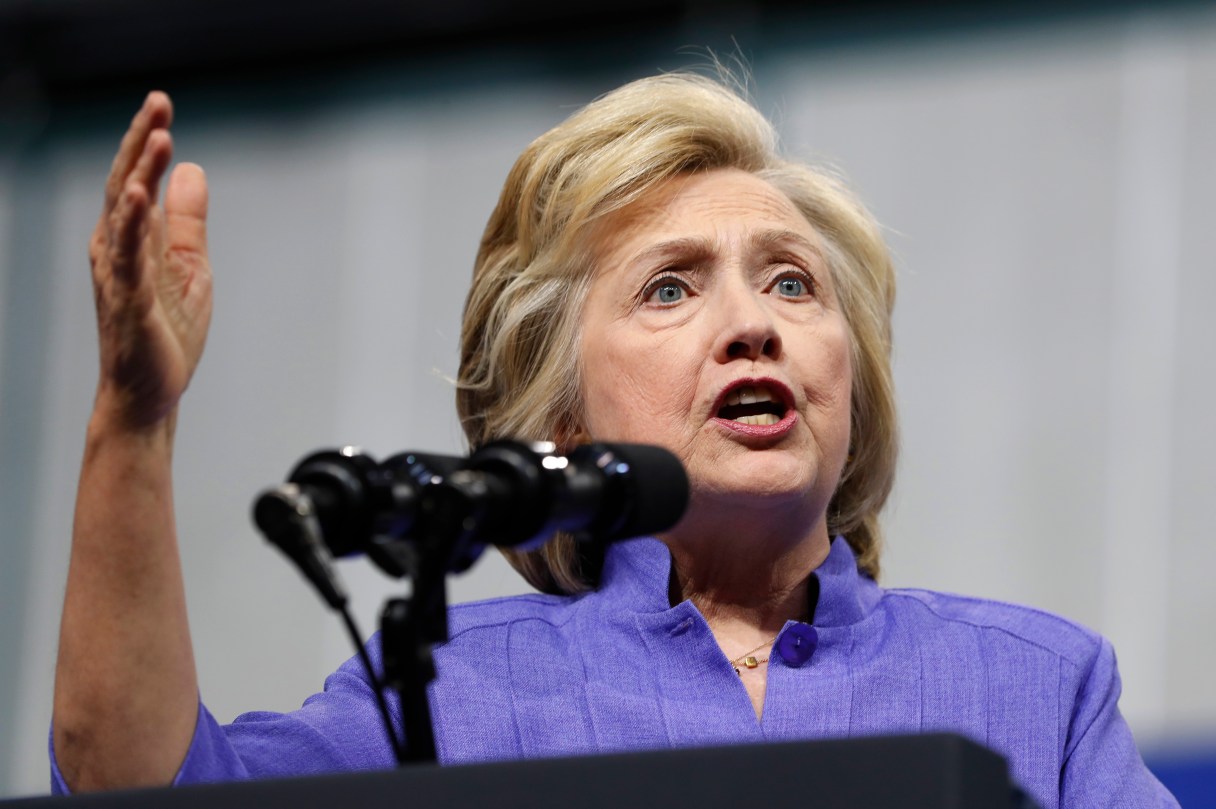

With Labor Day traditionally being the post before the sprint begins for presidential campaigns, it was stunning news last week – even in this oddest of campaigns – to read that Democrat Hillary Clinton and Republican Donald Trump have virtually identical unfavorable ratings among registered voters.
In an ABC/Washington Post poll, Clinton was viewed unfavorably by 59 percent of voters and Trump by 60 percent. That made them the two most unpopular presidential candidates in more than 30 years of polling.
Incredibly, Clinton is now viewed unfavorably by 52 percent of women and favorably by 45 percent, and unfavorably by 51 percent of those with post-graduate degrees and favorably by 47 percent. Democrats have owned those demographics for years, and the Democrat candidate’s fall in a month among voters in those categories must be shocking to her campaign.
She also is viewed unfavorably by 56 percent of moderates and favorably by just 63 percent of liberals and 62 percent of nonwhites. In those last two categories, she traditionally would be expected to be viewed favorably by 85 to 90 percent of voters.
Those polling numbers don’t necessarily translate into votes and certainly don’t mean Trump gained where Clinton plummeted. But it offers a snapshot of voter feelings just 65 days before Election Day.
Like it or not, one of them will be elected president, ensuring yet another four-year term of an unpopular national leader in a polarized nation.
– With just over two months to go until Election Day, the races for the two remaining Tennessee House seats yet to be decided among the Hamilton County delegation have seen little competitive activity.
In District 27, incumbent Rep. Patsy Hazlewood, R-Signal Mountain, has maintained a campaign website and Facebook page and updates the latter regularly. Her most recent Facebook post, which appears to be from a community or fundraising gathering, mentions “talking about the concerns of health care, a prepared workforce for gainful employment and other key issues that confront our state.”
Her opponent, Democrat Steve Gordon, who like her was unopposed in the August primary, appears to have done little campaigning or have much of an online presence.
Hazlewood received nearly 75 percent of the vote in 2014 against an active opponent, so at this juncture she appears to have little to worry about.
In District 30, incumbent Rep. Marc Gravitt, R-East Ridge, should be perceived to have an edge in a largely conservative district that includes Collegedale, Apison, a part of East Brainerd, East Ridge and East Lake. He is opposed by Democrat – or Berniecrat, as her Facebook page refers to her – community activist Katie Cowley and independent Patrick Hickey.
Gravitt, to date, appears not to have done a lot of campaigning. However, Cowley has been active on Facebook, attending the Democratic National Convention as a delegate for Sen. Bernie Sanders, I-Vt., and holding a campaign kickoff on Aug. 18 at East Lake Park.
To give people an idea where she stands on issues, she refers them to the issues page on Sanders’ presidential campaign website. However, she does mention she is “running to end our corrupt campaign finance system and gross income inequality and to fight for health care and education as a right for all.”
Hickey said on his campaign Facebook site on June 23 that – due to the recent birth of his daughter – his name would remain on the November ballot, but “I am not pushing to pursue a win in District 30 this time around.” However, on Aug. 4, he posted that “after talking to a few people and praying about it I have decided to finish the race that I started.”
– Although candidates still have three and a half months to qualify for next March’s Chattanooga mayoral election, Councilman Larry Grohn made the first leap last week, announcing his candidacy. The first-term councilman, a member of the Chattanooga Tea Party, represents a fairly conservative district but will have an uphill climb to defeat incumbent Andy Berke if the electorate isn’t split further by additional candidates.
As of his most recent campaign financial disclosure statement, Berke, a former Democratic state senator, had nearly $276,000 to spend and, despite some bumps in the road, is expected to have the backing of many Democrats and Republicans.
At his campaign launch, Grohn mentioned the city is “experiencing a tremendous renaissance” and talked about its economic development opportunities – issues that would seem to reverberate against his candidacy – but said the mayor had failed to address issues of poverty and violence and cited a “lack of transparency in local government.”
Councilman Yusuf Hakeem hasn’t announced a mayoral run, though one has been rumored, but his entry in the race would make things interesting. A three-way race, with Chattanooga’s population 34.5 percent black, would pit a white Democrat (Berke) against a black Democrat (Hakeem) against a white Republican (Grohn) in the nonpartisan election.