
ISLAMABAD (AP) – Tackling extremism is a political minefield in Pakistan, where politicians openly consort with leaders of banned militant groups and sympathy exists within the security forces and civil administration for perpetrators of crimes committed in the name of religion. As a result, many remain skeptical of the state’s ability to put an end to the militant violence that kills hundreds of Pakistani civilians each year.
A suicide bombing in a park in Lahore that killed 72 people, many of them Christians celebrating Easter Sunday, brought renewed international attention to Pakistan’s extremism problem. In the aftermath, security forces arrested hundreds of suspected militants.
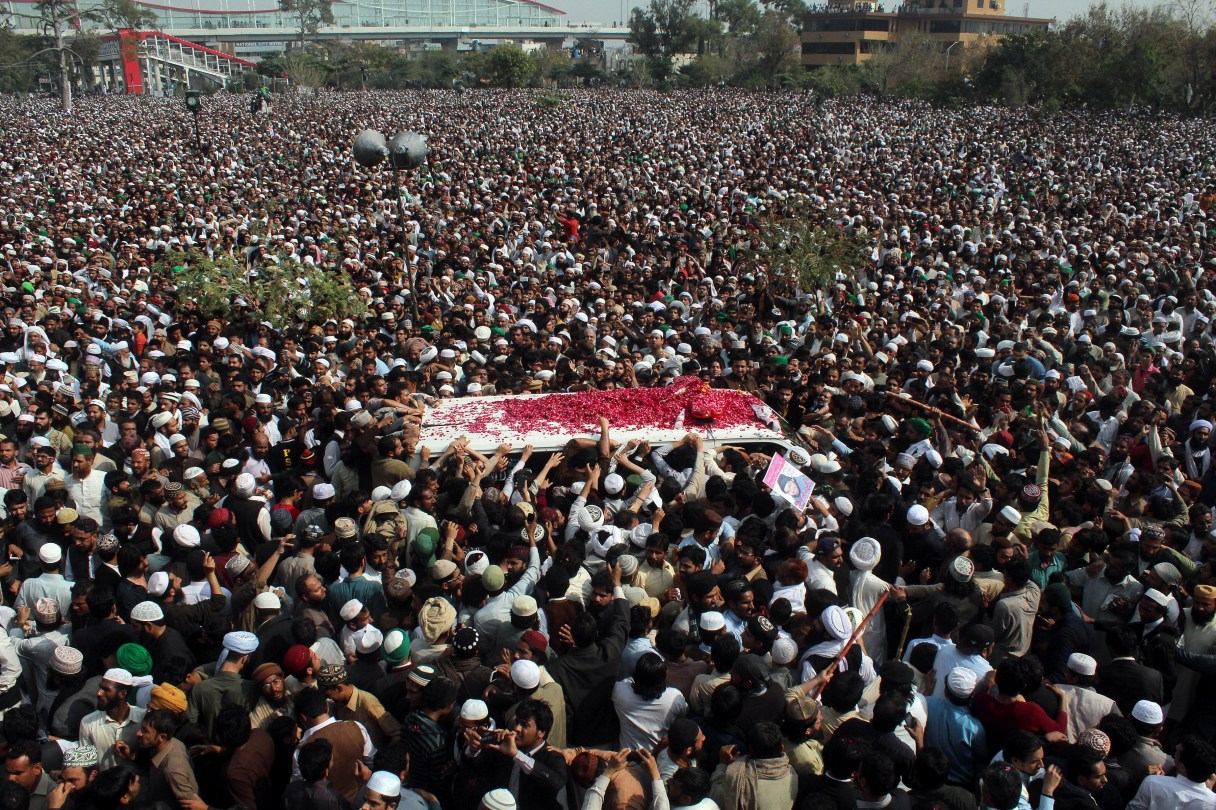
At the same time, however, demonstrators calling for the implementation of Islamic law and expressing their support for the man who murdered an anti-blasphemy campaigner were allowed to congregate freely in the capital. On social media, pictures circulated showing senior members of Pakistan’s elite police forces praying at the grave of Mumtaz Qadri, the policeman charged with killing the secular, left-leaning politician Salman Tanseer because he defended a Christian woman accused of blasphemy. When Qadri was hanged for the murder in February, tens of thousands of Pakistanis rallied in his support.
The sincerity of authorities’ efforts to tackle extremism was further called into question when Rana Sanaullah, the law minister for Punjab province – of which Lahore is the capital – issued statements denying that militant groups operated in the area.
Yet outlawed and violent Sunni Muslim militant groups are widely known to be headquartered in Punjab province, though many hide behind different names, according to Zahid Hussein, an expert on militancy in Pakistan.