
Monday, November 16, 2026Nov 16

Snowden on video at NYC forum to promote privacy treaty

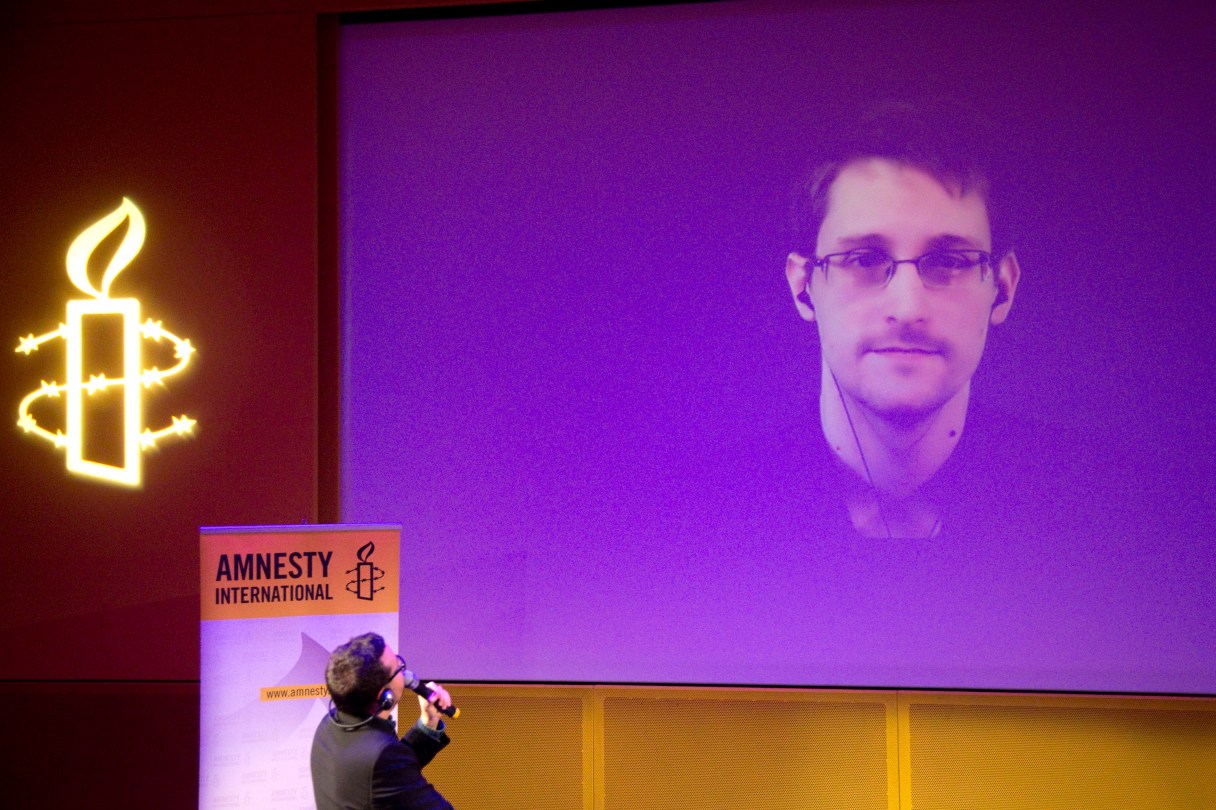
FILE - In this Dec. 10, 2014, file photo, former U.S. National Security Agency contractor Edward Snowden, who is in Moscow, is seen on a giant screen during a live video conference for an interview as part of Amnesty International's annual Write for Rights campaign at the Gaite Lyrique in Paris, France. Domestic digital spying on ordinary citizens is an international threat that will only be slowed with measures like a proposed international treaty declaring privacy a basic human right, Snowden said Thursday, Sept. 24, 2015, in a video appearance at a Manhattan forum. (AP Photo/Charles Platiau, Pool, File)

NEW YORK (AP) – Domestic digital spying on ordinary citizens is an international threat that will only be slowed with measures like a proposed international treaty declaring privacy a basic human right, Edward Snowden said Thursday in a video appearance at a Manhattan forum.

“This is not a problem exclusive to the United States. … This is a global problem that affects all of us,” Snowden, the one-time National Security Agency systems analyst, said in his brief remarks from Moscow via video link. “What’s happening here happens in France, it happens in the U.K., it happens in every country, every place, to every person.”

The key question, Snowden added, is: “How do we assert what our rights are, traditionally and digitally?”

Snowden gained notoriety in 2013 for leaking details of the once-secret U.S. surveillance programs. He fled to Russia, where he was granted asylum despite demands by the United States that he return to face espionage and other charges.

The global advocacy group Avaaz organized the gathering to promote the so-called “Snowden Treaty.” Countries who signed would be required to curtail surveillance of phone calls and online activity, and also agree to provide sanctuary for people who expose illegal domestic spying.