
Thursday, November 12, 2026Nov 12

Thailand remains blacklisted by U.S. for human trafficking

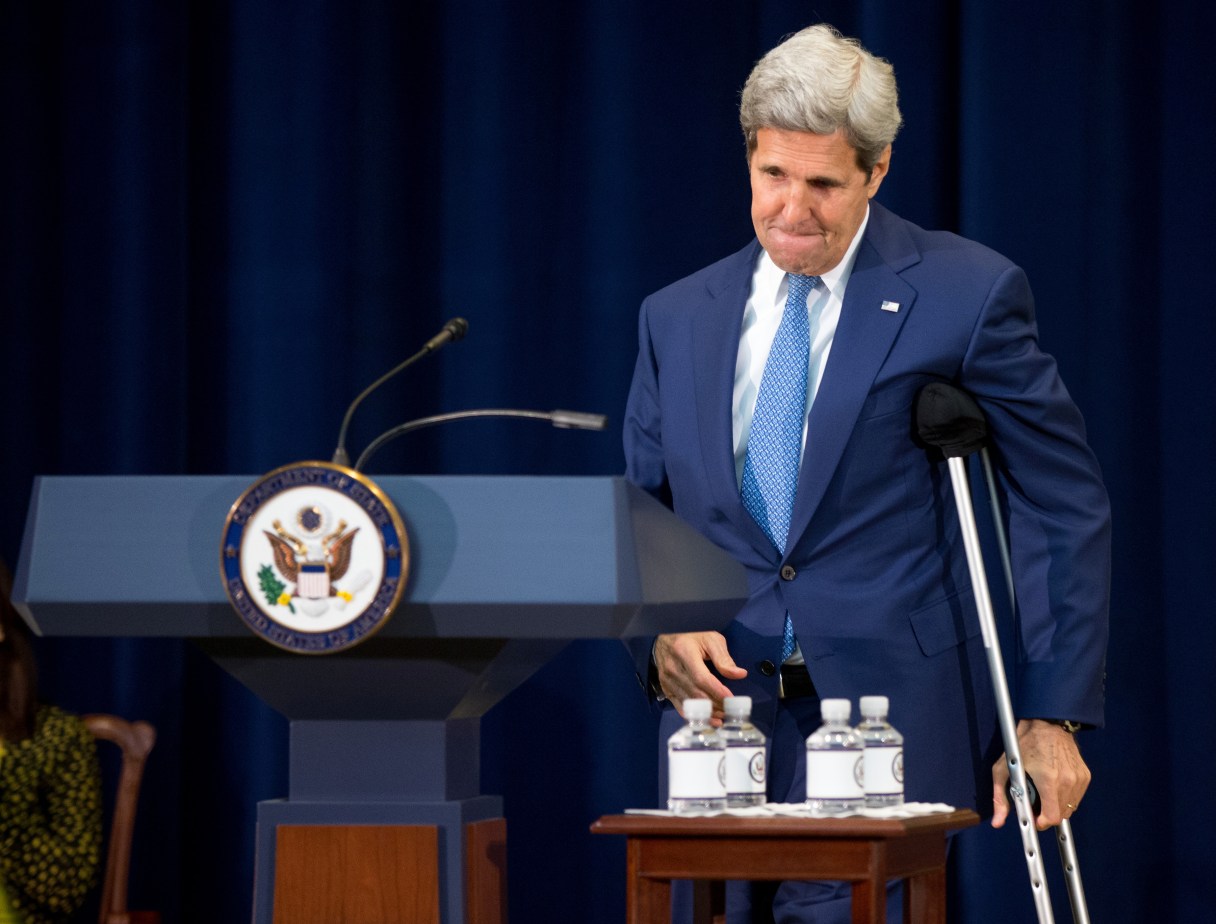
Secretary of State John Kerry arrives for a news conference at the State Department in Washington, Monday, July 27, 2015, where he released the 2015 Trafficking in Persons Report. The State Department has taken Malaysia and Cuba off its blacklist of countries failing to combat modern-day slavery, leaving the U.S. open to criticism that politics is swaying the often-contentious rankings in its annual human trafficking report. (AP Photo/Andrew Harnik)
Secretary of State John Kerry arrives for a news conference at the State Department in Washington, Monday, July 27, 2015, where he released the 2015 Trafficking in Persons Report. The State Department has taken Malaysia and Cuba off its blacklist of countries failing to combat modern-day slavery, leaving the U.S. open to criticism that politics is swaying the often-contentious rankings in its annual human trafficking report. (AP Photo/Andrew Harnik) Secretary of State John Kerry arrives for a news conference at the State Department in Washington, Monday, July 27, 2015, where he released the 2015 Trafficking in Persons Report. The State Department has taken Malaysia and Cuba off its blacklist of countries failing to combat modern-day slavery, leaving the U.S. open to criticism that politics is swaying the often-contentious rankings in its annual human trafficking report. (AP Photo/Andrew Harnik)

BANGKOK (AP) – Thai authorities are upset about being blacklisted by the U.S. for the second year in a row for failing to do enough to combat modern-day slavery.

The State Department said Monday that labor abuses in the Southeast Asian country’s seafood sector are persistent, abusive and largely ignored by the government. Those abuses have been widely documented in a series of stories this year by The Associated Press which tracked the supply chains of major U.S. retailers to Thai processors selling slave-caught seafood. Those reports have prompted rescues and repatriations of more than 800 men this year.

Thai Prime Minister Prayuth Chan-ocha said Tuesday that Thailand was working on solving the issues and that the assessment was made when his administration, which took over after a military coup last year, was beginning to address the problems.

“We just have to keep working and not to worry. It’s an issue of international rules, so we’ll have to follow,” he told reporters. “Don’t worry too much. Their assessment was up to them as they were the ones assessing, not us. We just do our job. What they said in the assessment, we fixed every part of it, but some issues are quicker to fix and some are slow.”

The State Department said Monday that Thai, Burmese, Cambodian, and Indonesian men are still subjected to forced labor on Thai fishing boats.