
Monday, November 9, 2026Nov 9

Salman Rushdie, threatened over book, defends free speech

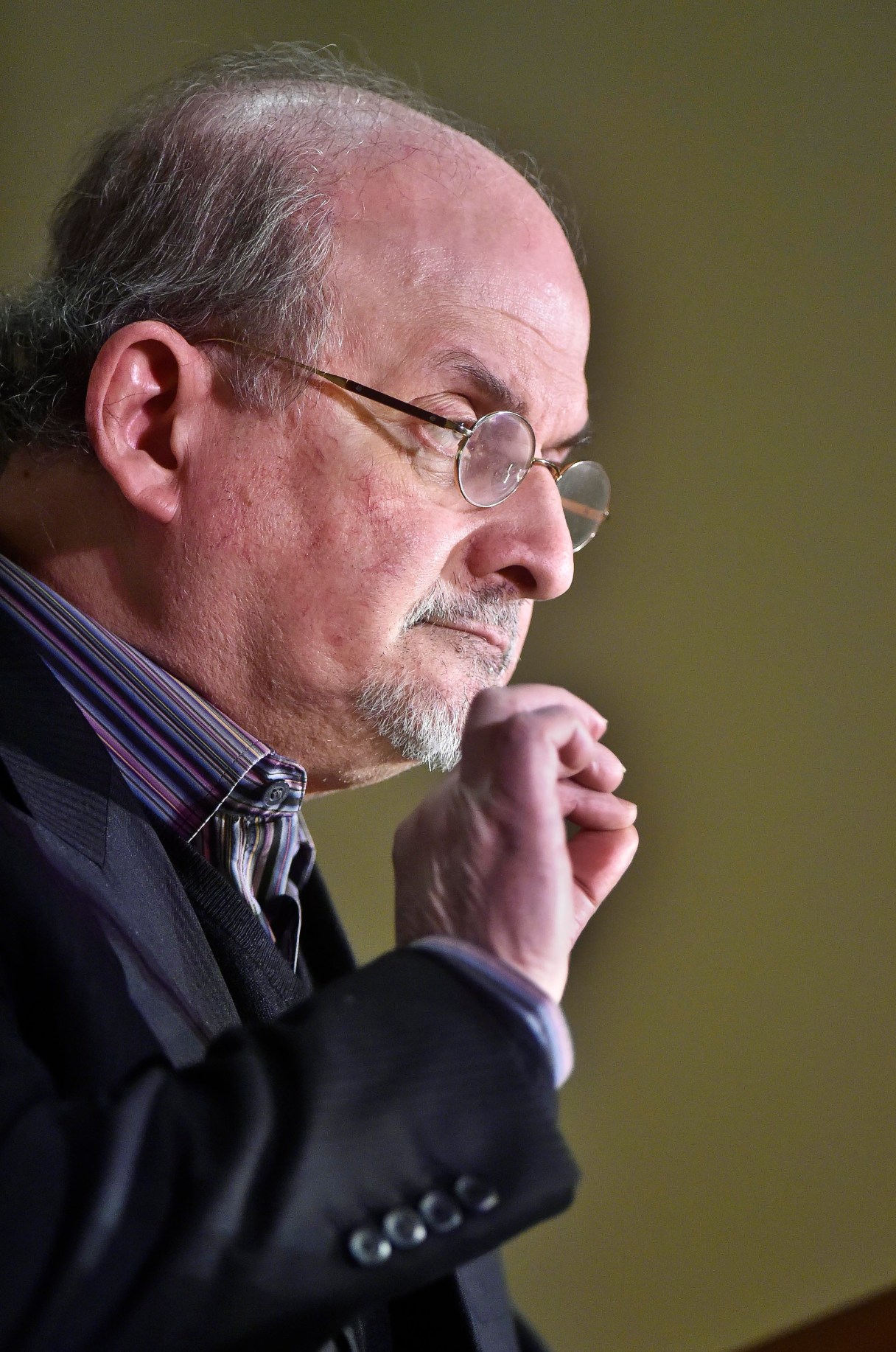
In this Tuesday, Jan. 13, 2015 photo, author Salman Rushdie speaks at the University of Vermont's Ira Allen Chapel in Burlington, Vt. Rushdie defended the absolute right of free speech during comments on Wednesday, Jan. 14, 2015 at the university after being asked about the previous week's deadly attack by Islamic extremists on the satirical newspaper Charlie Hebdo in Paris. For years, the author lived under a death threat after his 1988 book "The Satanic Verses" drew the wrath of Iranian religious leaders. (AP Photo/The Burlington Free Press, Glenn Russell)
In this Tuesday, Jan. 13, 2015 photo, author Salman Rushdie speaks at the University of Vermont's Ira Allen Chapel in Burlington, Vt. Rushdie defended the absolute right of free speech during comments on Wednesday, Jan. 14, 2015 at the university after being asked about the previous week's deadly attack by Islamic extremists on the satirical newspaper Charlie Hebdo in Paris. For years, the author lived under a death threat after his 1988 book "The Satanic Verses" drew the wrath of Iranian religious leaders. (AP Photo/The Burlington Free Press, Glenn Russell) In this Tuesday, Jan. 13, 2015 photo, author Salman Rushdie speaks at the University of Vermont's Ira Allen Chapel in Burlington, Vt. Rushdie defended the absolute right of free speech during comments on Wednesday, Jan. 14, 2015 at the university after being asked about the previous week's deadly attack by Islamic extremists on the satirical newspaper Charlie Hebdo in Paris. For years, the author lived under a death threat after his 1988 book "The Satanic Verses" drew the wrath of Iranian religious leaders. (AP Photo/The Burlington Free Press, Glenn Russell)

BURLINGTON, Vt. (AP) – Author Salman Rushdie, who lived for years under a death threat after his 1988 book “The Satanic Verses” drew the wrath of Iranian religious leaders, said the right to free speech is absolute or else it isn’t free.

Following a speech at the University of Vermont in Burlington, Rushdie on Wednesday addressed the killings last week of 12 people at the Paris satirical magazine Charlie Hebdo. He said he was angered that, in the aftermath of the shootings, some from both the left and the right began to vilify the victims.

“The French satirical tradition has always been very pointed and very harsh, and still is, you know,” Rushdie said. “The thing that I really resent is the way in which these, our dead comrades … who died using the same implement that I use, which is a pen or pencil, have been almost immediately vilified and called racists and I don’t know what else.”

He said some believe speech should be free, but it shouldn’t upset anyone or go too far.

“Both John F. Kennedy and Nelson Mandela use the same three-word phrase which in my mind says it all, which is, ‘Freedom is Indivisible,'” he said. “You can’t slice it up, otherwise it ceases to be freedom. You can dislike Charlie Hedbo. … But the fact that you dislike them has nothing to do with their right to speak.”