
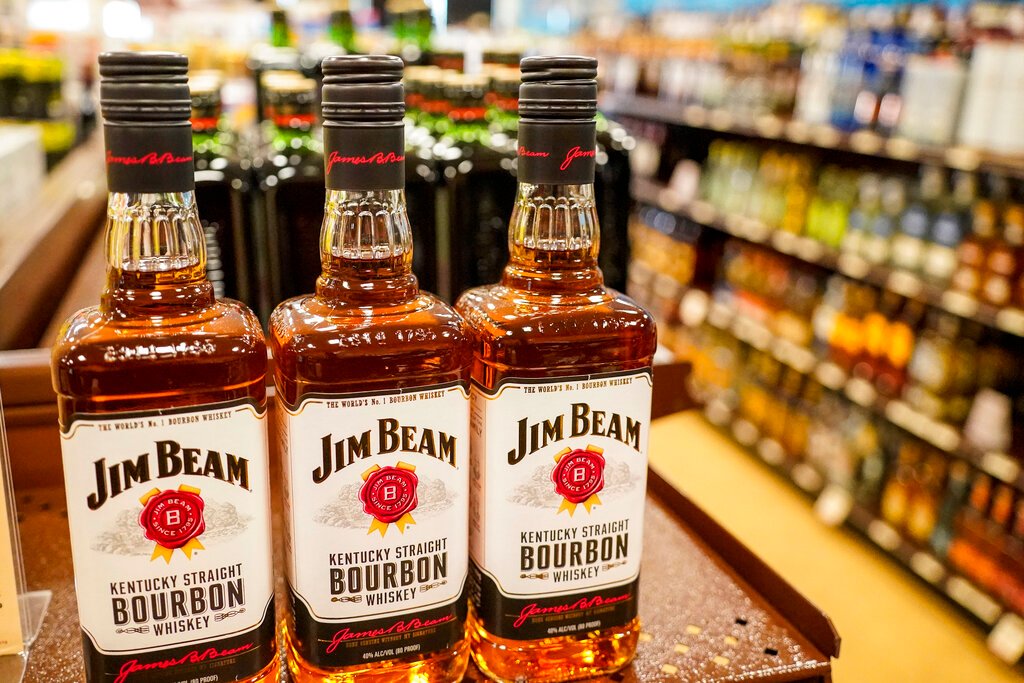
LOUISVILLE, Ky. (AP) – American whiskey exports, battered by tariffs and the COVID-19 pandemic, started rebounding in 2021, but distillers have more ground to make up to fully recover, an industry group said.
Exports of bourbon, Tennessee whiskey and rye whiskey reached $975 million in 2021, up 15% from the prior year, according to a report issued by the Distilled Spirits Council of the United States. Last year’s total was still down 18% from the record high exports – about $1.2 billion in 2018.
American whiskey distillers got caught up in a trans-Atlantic trade fight, causing deep drops in exports to the European Union – the industry’s biggest overseas market. The EU imposed a retaliatory tariff on those spirits in mid-2018 in response to then-President Donald Trump’s decision to slap tariffs on European steel and aluminum. A deal was reached in late 2021 to suspend those tariffs on American spirits.
“U.S. spirits exports are beginning to bounce back and that’s definitely a positive sign, but the value of 2021 exports remains far below levels achieved before the 2018 retaliatory tariffs kicked in,” Rob Maron, the council’s vice president of international trade, said Thursday.
But as American whiskey producers work to regrow EU market share, the sector still faces a retaliatory tariff in another key market – the United Kingdom – which continues to curtail growth, Maron said.