
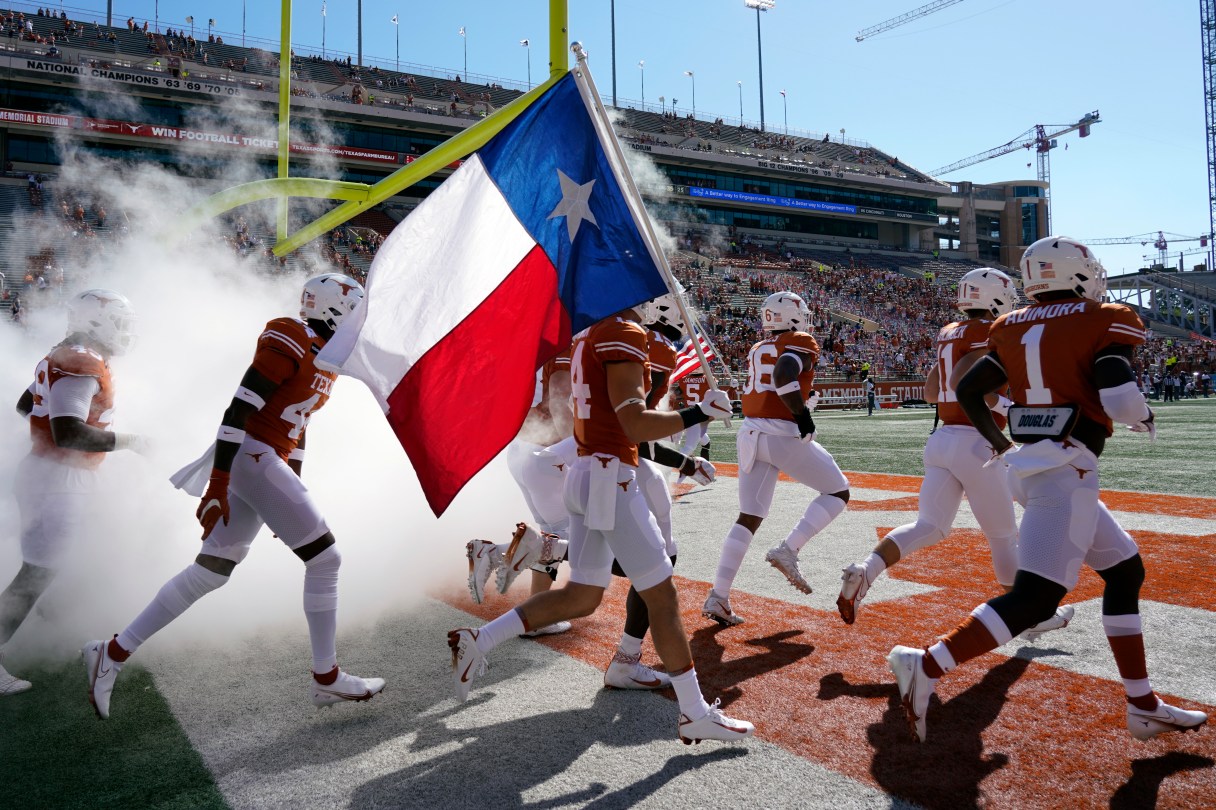
The Wild West nature of the upcoming college football season when it comes to the challenges of the continuing coronavirus pandemic can be illustrated in part by 160 miles of Texas highway that connect the trendy college city of Austin with the bustling metropolis of Houston.
At one end lies the University of Texas, where more than 100,000 fans will pack Darrell K Royal-Texas Memorial Stadium to cheer the Longhorns this fall. Many of those spectators, along with some players and coaches, are likely to be unvaccinated after Gov. Greg Abbott’s executive order prohibiting vaccine requirements for any organization that receives state funding.
At the other end of that highway is Rice University, where 40,000-plus hope to see their Owls turn things around this fall. Because it is a private research university, Abbott’s executive order does not apply and vaccine requirements put in place by the school mean just about everybody who shows up will get in only if they have received their COVID-19 shots.
That’s just two of the 130 schools that will be competing in the Football Bowl Subdivision this fall.
Each will have vaccination plans shaped by governors and state legislatures, medical officials and university leaders, and they are likely to change from week to week. Politics and policy are certain to collide as red states and blue states, often with schools playing in the very same conference, attempt to make it through an entire season without an outbreak.