
Sunday, November 1, 2026Nov 1

This story is free to read.

Ballot question Morales re-election looks to in trouble

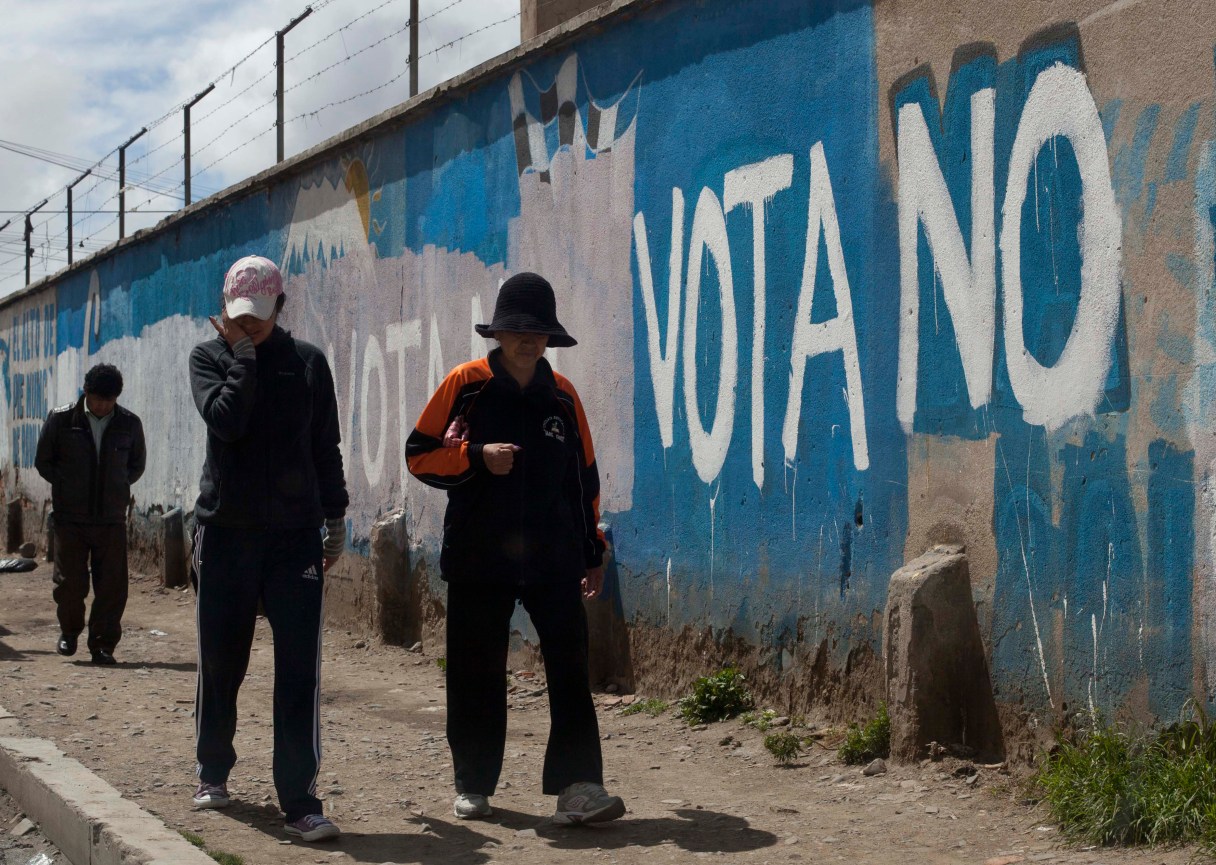
People walks past graffiti that reads in Spanish "Vote no," against President Evo Morales, in El Alto, Bolivia, Saturday, Feb. 20, 2016. Polls indicate voters are about evenly split, with some 15 percent undecided, on Sunday's referendum on whether to amend the constitution so Morales can run in 2019 for a fourth consecutive term. (AP Photo/Juan Karita)
People walks past graffiti that reads in Spanish "Vote no," against President Evo Morales, in El Alto, Bolivia, Saturday, Feb. 20, 2016. Polls indicate voters are about evenly split, with some 15 percent undecided, on Sunday's referendum on whether to amend the constitution so Morales can run in 2019 for a fourth consecutive term. (AP Photo/Juan Karita) People walks past graffiti that reads in Spanish "Vote no," against President Evo Morales, in El Alto, Bolivia, Saturday, Feb. 20, 2016. Polls indicate voters are about evenly split, with some 15 percent undecided, on Sunday's referendum on whether to amend the constitution so Morales can run in 2019 for a fourth consecutive term. (AP Photo/Juan Karita)

LA PAZ, Bolivia (AP) – Preliminary results and unofficial quick vote counts in Bolivia are pointing toward a slim defeat for an effort to amend the constitution so President Evo Morales could run for another term.

Morales has governed for a decade. A “yes” vote in Sunday’s referendum would have let him seek a fourth consecutive term in 2019.

Preliminary official results were being processed slowly, particularly in rural areas where support for Morales is strongest. With 1,369 of the 30,367 stations reporting, the “no” vote stood at 63 percent.

An unofficial quick count of ballots at one in every 15 polling stations by the Ipsos-Apoyo polling firm put the “no” vote ahead 52 percent to 48 percent.