
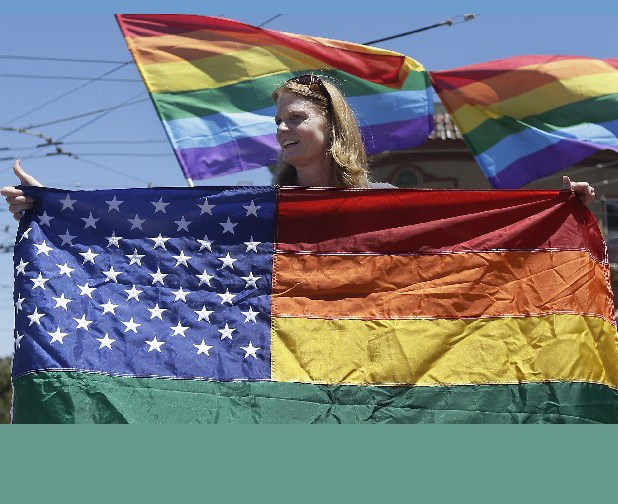
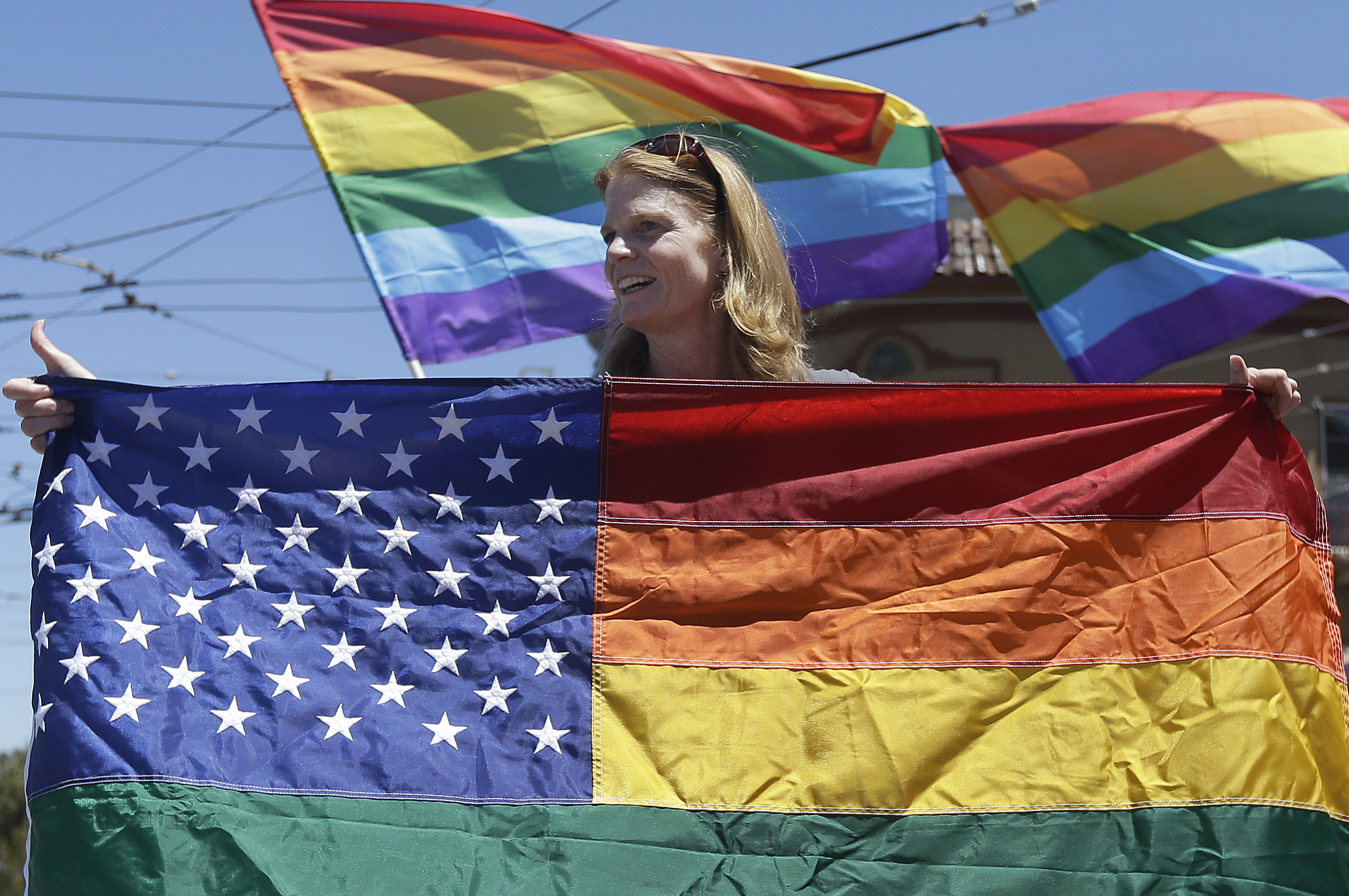
 Cissie Bonini holds up a rainbow flag as she waves to cars driving by in the Castro neighborhood in San Francisco on Wednesday. In a major victory for gay rights, the Supreme Court on Wednesday struck down a provision of a federal law denying federal benefits to married gay couples and cleared the way for the resumption of same-sex marriage in California.
NEW YORK – Even as they celebrate a momentous legal victory, supporters of gay marriage already are anticipating a return trip to the Supreme Court in a few years, sensing that no other option but a broader court ruling will legalize same-sex unions in all 50 states.
In the meantime, as one gay-rights leader said, there will be “two Americas” – and a host of legal complications for many gay couples moving between them.
Wednesday’s twin rulings from the high court will extend federal recognition to same-sex marriages in the states where they are legal, and will add California – the most populous state – to the 12 others in that category. That will mean about 30 percent of Americans live in states recognizing same-sex marriage.
But the court’s rulings have no direct effect on the constitutional amendments in 29 states that limit marriage to heterosexual couples. In a handful of politically moderate states such as Oregon, Nevada and Colorado those amendments could be overturned by ballot measures, but that’s considered highly unlikely in more conservative states.
“It would be inefficient to try to pick off 30 constitutional amendments one by one,” said Fred Sainz of the Human Rights Campaign, a national gay-rights group. “Eventually this will have to be settled by the Supreme Court.”