
Saturday, October 31, 2026Oct 31

This story is free to read.

Putin: Criticism of Russia protest arrests is ‘interference’

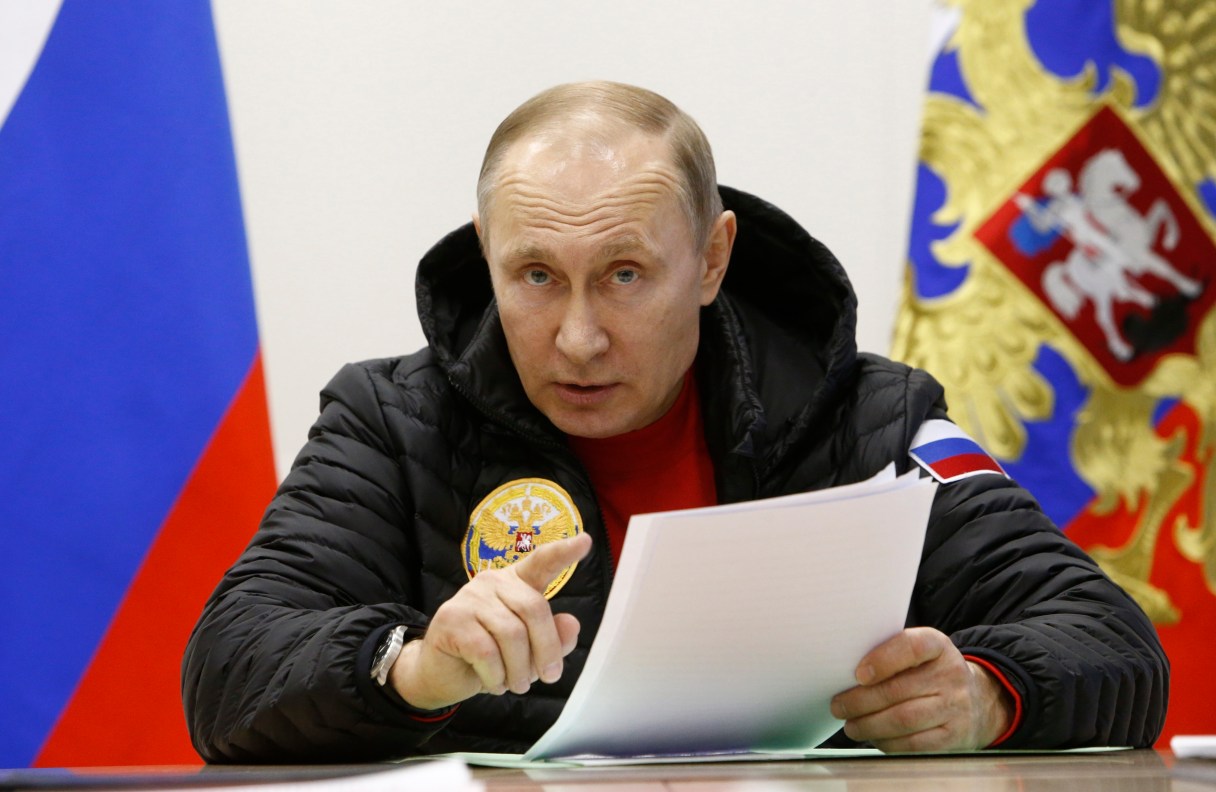
Russian President Vladimir Putin speaks during a meeting of an integrated development of the Arctic at a military base in Alexandra Land Island of Frantz Josef Land Archipelago in the Arctic, Russia, Wednesday, March 29, 2017.  Putin on Wednesday visited an Arctic archipelago, part of Russia's efforts to reaffirm its foothold in the oil-rich region. (Sergei Karpukhin/Pool Photo via AP)
Russian President Vladimir Putin speaks during a meeting of an integrated development of the Arctic at a military base in Alexandra Land Island of Frantz Josef Land Archipelago in the Arctic, Russia, Wednesday, March 29, 2017. Putin on Wednesday visited an Arctic archipelago, part of Russia's efforts to reaffirm its foothold in the oil-rich region. (Sergei Karpukhin/Pool Photo via AP) Russian President Vladimir Putin speaks during a meeting of an integrated development of the Arctic at a military base in Alexandra Land Island of Frantz Josef Land Archipelago in the Arctic, Russia, Wednesday, March 29, 2017. Putin on Wednesday visited an Arctic archipelago, part of Russia's efforts to reaffirm its foothold in the oil-rich region. (Sergei Karpukhin/Pool Photo via AP)

MOSCOW (AP) – Russian President Vladimir Putin has rejected Western calls for the release of jailed protesters, in his first public comments about a wave of nationwide rallies against government corruption.

Hundreds of Russians were arrested on Sunday in unsanctioned protests, the largest and most geographically extensive demonstrations in five years. Many Western countries have condemned the arrests and called for the release of those sentenced to jail, including opposition leader Alexei Navalny, Putin’s most prominent foe.

Putin said Thursday at a forum of Arctic region leaders in Arkhangelsk that “we consider appeals of this sort to be purely politicized questions with the goal of putting some kind of pressure on the internal political life of the country.”

Russian officials routinely characterize foreign criticism as interference in domestic matters.