
East Brainerd arts activist Daisy Pratt’s new fable for all ages, “The Bee and the Bear,” is now out of hibernation after it was inspired in the 1980s by a childhood friend’s imprisonment during the Israeli-Palestinian-Arab conflicts.
“This is very geopolitical,” said Pratt, 63, who said many Americans of that decade were blind to the full story, a story that continues today. “It’s very personal and very powerful and I had to let it go. There are these bright young generations behind me and they’re ready to take the torch.”
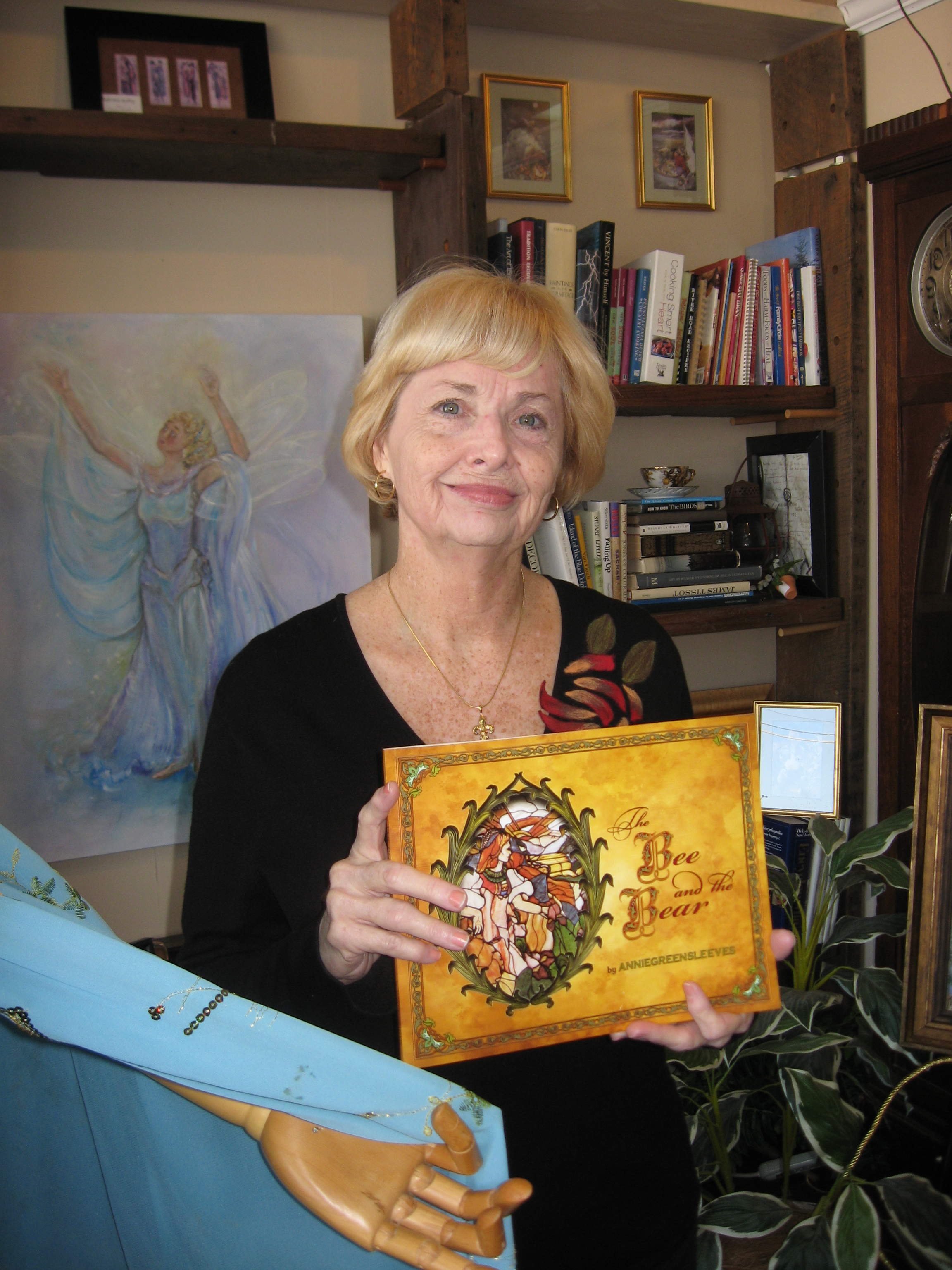 Daisy Pratt, of East Brainerd, was inspired to write her newly published book “The Bee and the Bear” in 1988 after a childhood friend was imprisoned during Israeli-Palestinian-Arab conflicts.
Pratt’s book, in the voice of Anniegreensleeves, tells of a forest bee whose honey becomes so famous that a king and a bear will stop at nothing to get it.
Reflections Gallery on Lee Highway, which hosted a December book signing for Pratt, is the only place to get the book.
“I think it gives you an idea of the importance of wisdom over violence and the downfalls of greed,” said administrative assistant Summer Fisher, whose family owns the gallery. She cited a favorite line: “All the smaller animals fled in fear, except for the Sly-Old-Fox-That-Knew-Wisdom-Was-Magic.”
“It’s life lessons that you need to remember at any age,” Fisher said.
Pratt met Mubarak Awad, nicknamed Moby, when she was a 16-year-old student at Lee College’s high school academy and he was a 19-year-old freshman at the college. She remembers talking with him about her dreams to become an artist and listening to his hopes to “bring peace to his homeland.”
Awad, who Pratt calls “The Gandhi of the Middle East,” was a boy in Jerusalem during the 1948 Arab-Israeli War. Pratt said he would collect body parts from the streets and bring them home to his mother, a nurse, to “fix.” He went on to translate the writings of Martin Luther King Jr. and Mahatma Gandhi into Arabic to promote nonviolent methods.
In 1988 he was thrown into prison for broadcasting Palestinian sympathies and immediately fasted in protest, losing 40 pounds before he was released a couple of months later.
“The Bee and the Bear” came to Pratt during those uncertain months, while she was living on a private island in the Gulf of Mexico. She awoke one morning struck that she could do nothing for Awad though she’d called every contact she had as a former morale support director for the North Atlantic Treaty Organization.
“He’s my friend and I couldn’t help him except for my art,” Pratt said.
Pratt introduces Anniegreensleeves at the beginning of the book; a fair maiden able to draw old tales out of a grandfather tree and in possession of a Moroccan leather-covered book of more ancient stories.
Pratt thought her own illustrations would be too “Disney-esque” for the book so she engaged an amateur artist who grew up on St. Thomas in the U.S. Virgin Islands to pencil the full-page, detailed black-and-white pictures.
But the book’s cover is adorned with the image of a Tiffany-style window Pratt made after serving out a German apprenticeship in medieval stained glass while working for NATO.
“The Bee and the Bear” was published by In Circle Flight Design, a Chattanooga company that subsidizes one project a year.
Pratt, who directed the Native American stage drama “Black Elk Speaks” and whose diverse artwork is exhibited at Reflections Gallery, will continue her interest in the local cultural scene as a newly elected board member of the Chattanooga Office of Multicultural Affairs.