
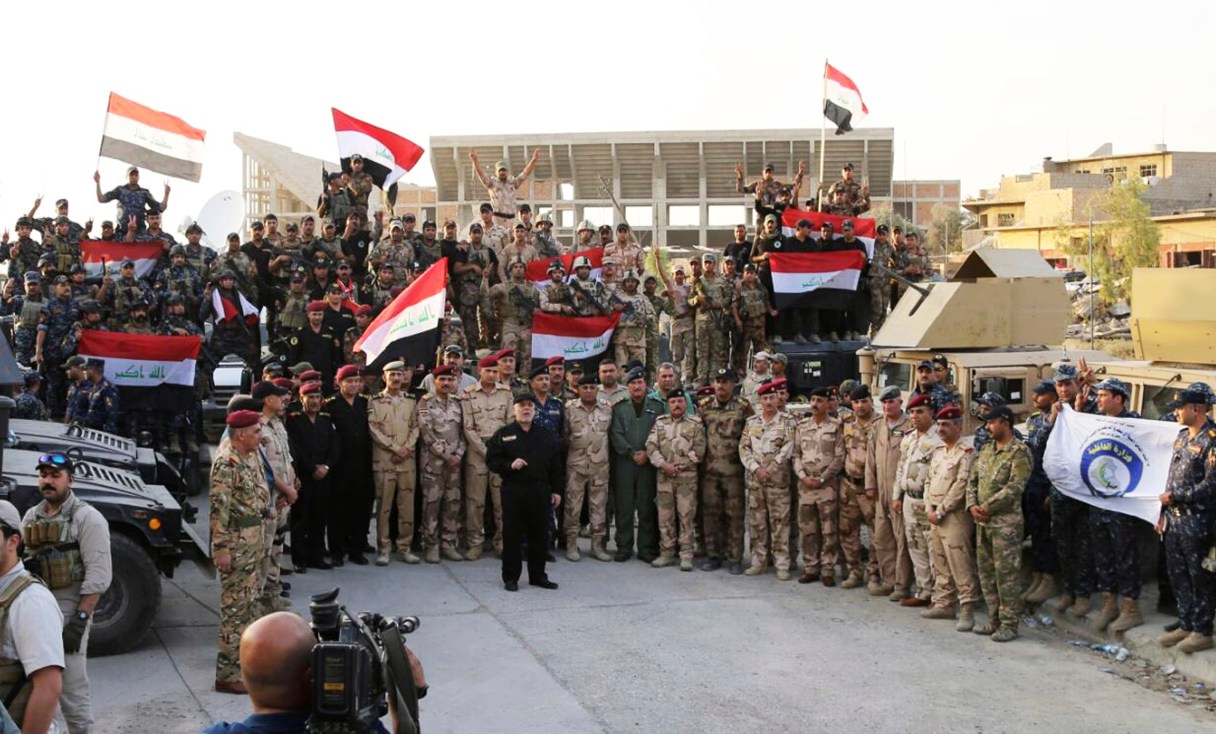
MOSUL, Iraq – Sporadic clashes continued on Tuesday in Mosul, even after Iraq’s prime minister declared a “total victory” over the Islamic State group in the city and at least one airstrike hit the Old City neighborhood that was the scene of the fierce battle’s final days.
A plume of smoke rose into the air from the strike. IS mortar shells landed near Iraqi positions and heavy gunfire could be heard on the western edge of the Old City.
The developments underscore the dangers still posed by the militants after Iraqi forces announced they retook full control of Mosul, the country’s second-largest city, three years after it was seized by extremists bent on building a global caliphate.
Amnesty International warned in a report released on Tuesday that the conflict in Mosul has created a “civilian catastrophe,” with the extremists carrying out forced displacement, summary killings and using civilians as human shields. The report also detailed violations by Iraqi forces and the U.S.-led coalition.
“The scale and gravity of the loss of civilian lives during the military operation to retake Mosul must immediately be publicly acknowledged at the highest levels of government in Iraq and states that are part of the U.S.-led coalition,” said Lynn Maalouf, the research director for Mideast at Amnesty.